Prelims: Falkland Islands (Malvinas), South Atlantic Ocean, Argentina–UK Dispute, British Overseas Territory, 1982 Falklands War, Sea Lion Oilfield, UN Decolonisation, Self-Determination
Mains: GS Paper II International Relations, Territorial Disputes, United Nations, Decolonisation GS Paper I World Geography and Mapping GS Paper III Energy Resources and Geopolitics |
Why in News?
Argentine President Javier Milei has intensified Argentina’s sovereignty claim over the Falkland Islands, known in Argentina as Islas Malvinas, by announcing plans for tougher sanctions against companies involved in oil development around the British-administered islands.
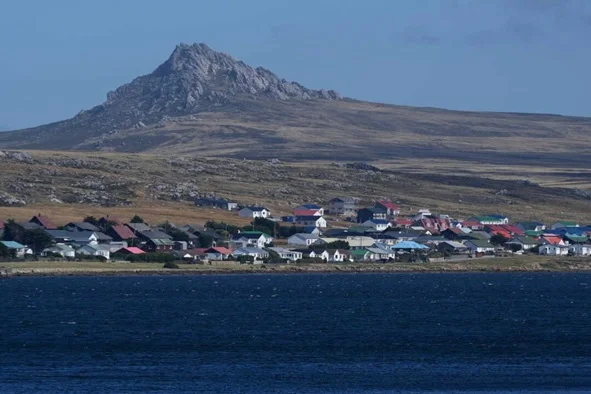
What are the Falkland Islands?
The Falkland Islands are an archipelago located in the South Atlantic Ocean, approximately 500 km east of the Argentine mainland.
The territory consists of:
- East Falkland
- West Falkland
- Around 778 smaller islands
The islands are located roughly 13,000 km from Britain, making their geographical proximity to Argentina a major element of Argentina's sovereignty argument. The Falklands are presently administered by the United Kingdom as a British Overseas Territory, but Argentina claims sovereignty over them and calls them Islas Malvinas.
2013 Referendum: Why is it Important?
- In 2013, Falkland Islanders were asked whether they wanted the islands to retain their existing political status as an Overseas Territory of the United Kingdom.
- Britain uses the referendum as strong evidence for its argument that the wishes of Falkland Islanders must be respected.
- Argentina rejected the referendum, arguing that Britain cannot use a population established after its 1833 takeover to determine sovereignty over disputed territory.
What Does the United Nations Say?
- The Falkland Islands are included on the United Nations list of Non-Self-Governing Territories.
- The UN framework recognises the existence of a sovereignty dispute between Argentina and the United Kingdom and has repeatedly encouraged the two governments to resume negotiations to find a peaceful solution.
Why Has the Dispute Escalated Again in 2026?
The immediate trigger is oil. President Javier Milei announced plans in September 2026 to introduce legislation imposing stronger penalties on companies operating around the Falkland Islands without Argentine authorisation.
The proposed measures could target:
- Oil companies
- Investors/shareholders
- Company directors
- Suppliers and contractors
Why Doesn't Argentina Use Military Force?
President Milei has explicitly favoured a diplomatic route rather than military action. The lessons of the 1982 war remain important, while Britain continues to maintain substantial defence capabilities on the islands.
Significance for International Relations
- Self-Determination vs Territorial Integrity: Britain stresses the political wishes of the islanders, while Argentina emphasises territorial integrity and decolonisation.
- Colonial Legacy: The dispute demonstrates how colonial-era territorial arrangements continue to influence contemporary international relations.
- Resource Geopolitics: Offshore oil and fisheries have added an economic dimension to the sovereignty dispute.
- Great-Power Politics: The positions of the United States and China can influence the diplomatic environment surrounding the dispute.
- Maritime Geopolitics: Control over islands can create wider strategic, economic and security significance far beyond their physical size.
India Relevance
India does not have a direct role in the Falklands dispute, but the issue has conceptual relevance for Indian foreign-policy studies.
It illustrates the importance of:
- Territorial sovereignty
- Peaceful resolution of disputes
- UN mechanisms
- Maritime jurisdiction
- Island geopolitics
- Natural-resource competition
- Colonial legacies
Challenges in Resolving the Dispute
- The dispute remains difficult because the two sides begin from fundamentally different principles.
- Britain considers the wishes of the islanders central to any settlement.
- Argentina disputes the applicability of self-determination in this case and considers the matter one of territorial decolonisation.
- Meanwhile, offshore energy development, fisheries, military presence and involvement of external powers increase the strategic stakes.
Way Forward
- A sustainable solution requires both sides to avoid military escalation and maintain diplomatic engagement.
- Possible confidence-building measures can include cooperation on fisheries, transportation, humanitarian issues and regional connectivity.
- The UN framework continues to emphasise peaceful negotiations, while any durable arrangement would need to address the deep disagreement between Argentina's sovereignty claim and the political wishes expressed by the Falkland Islanders.
Conclusion
- The Falkland Islands dispute has evolved from a historic Argentina–Britain territorial conflict into a wider geopolitical issue involving self-determination, decolonisation, maritime resources, oil, military strategy and great-power diplomacy.
- The latest confrontation over the Sea Lion oilfield demonstrates how natural resources can revive long-standing territorial disputes. With Argentina intensifying diplomatic and economic pressure, Britain defending the islanders' right to self-determination, China supporting Argentina's position and the United States reviewing its policy, the Falklands are once again becoming an important geopolitical flashpoint in the South Atlantic.
Prelims MCQs
Q. The Falkland Islands, are located in:
A. North Atlantic Ocean
B. South Atlantic Ocean
C. South Pacific Ocean
D. Southern Indian Ocean
Mains Question
“The Falkland Islands dispute represents not merely an unresolved colonial legacy but an intersection of territorial sovereignty, self-determination, energy resources and great-power geopolitics.” Discuss.
|
FAQs
What are the Falkland Islands called in Argentina?
Argentina calls them the Islas Malvinas.
Which country currently controls the Falkland Islands?
They are currently administered by the United Kingdom as a British Overseas Territory.
Which country claims the islands?
Argentina claims sovereignty over them.
Where are the Falkland Islands located?
They are located in the South Atlantic Ocean, approximately 500 km east of mainland Argentina.
When did Argentina and Britain fight the Falklands War?
The war took place in 1982.
Why is the issue again in the news in 2026?
Argentina has announced plans for stronger sanctions against companies participating in oil development around the islands without Argentine authorisation, particularly in connection with the Sea Lion oilfield.
|






 Contact Us
  New Batch : 9555124124/ 7428085757
  Tech Support : 9555124124/ 7428085757