Prelims: Art & Culture | Kakatiya Architecture | ASI | AMASR Act, 1958
Mains: GS-I – Indian Heritage & Culture | Temple Architecture | Conservation of Cultural Heritage
Keywords: Gollala Gudi, Palampet, Mulugu, Telangana, Kakatiya Dynasty, Trikutalaya, Ramappa Temple, Archaeological Survey of India, AMASR Act, 1958, Monument of National Importance |
Why in News?
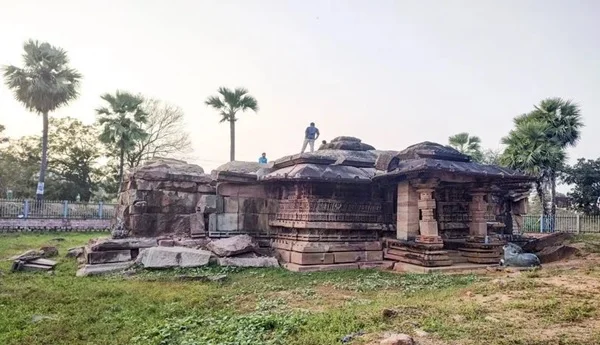
The Archaeological Survey of India (ASI) has declared the historic Gollala Gudi Temple at Palampet village in Mulugu district, Telangana, a Monument of National Importance.
Important Point
- The government had earlier issued a preliminary notification in March 2026, and no objections were received against the proposal.
- The development is particularly significant because Gollala Gudi is situated close to the UNESCO World Heritage Site Kakatiya Rudreshwara (Ramappa) Temple.
About Gollala Gudi Temple
- Gollala Gudi is a historic temple associated with the Kakatiya architectural tradition. It is located at Palampet village in Mulugu district of Telangana, to the south-west of the famous Ramappa Temple.
- The temple represents the sophisticated temple-building traditions that flourished under the Kakatiya rulers in the Deccan region.
What is a Trikutalaya Temple?
- One of the most important architectural features of Gollala Gudi is its Trikutalaya plan.
- The term broadly refers to a three-shrine temple arrangement. At Gollala Gudi, an east-facing mandapa forms part of the temple complex, while three garbhagrihas (sanctums) are positioned towards the north, south and west.
- The main portico leads into a central hall connected with these three shrines through ante-chambers.
Thus, the basic architectural arrangement can be understood as:
Portico → Central Hall/Mandapa → Three Ante-chambers → Three Garbhagrihas
Architectural Features of Gollala Gudi
Gollala Gudi is important not merely because of its age but also because of its elaborate sculptural and architectural decoration.
- Carved Hamsas: The temple's entablature and doorways contain rows of intricately carved hamsas (swans). These decorative elements are among the distinctive features of the structure.
- Jali Work: Fine jali or perforated stonework can be seen around the temple's architectural elements. Such stone screens demonstrate the craftsmanship associated with the temple.
- Sculptured Parapet: The temple's parapet contains elaborate sculptures, adding to the ornamental character of the structure.
- Dvarapala Sculptures: Two detached shrines are situated in front of the main temple. They are decorated with finely carved figures of dvarapalas or doorway guardians.
- High Plinth: The temple stands on a high decorated plinth featuring representations of animals and floral motifs.
Sculptures and Deities
The walls of Gollala Gudi contain several niches housing images associated with Hindu religious traditions.
Important figures represented at the temple include:
- Vishnu
- Lakshmi
- Ganesha
- Mahishasuramardini
The presence of different deities also demonstrates the rich iconographic programme associated with the temple complex.
Connection with the Kakatiya Dynasty
- The temple belongs to the wider architectural landscape associated with the Kakatiya dynasty, which emerged as an important political power in the Deccan during the medieval period.
- The Kakatiyas made significant contributions to temple construction, irrigation infrastructure, fortifications, sculpture and regional cultural traditions.
Relation with Ramappa Temple
- Gollala Gudi is located to the south-west of the Kakatiya Rudreshwara Temple, popularly known as the Ramappa Temple, at Palampet.
- Ramappa Temple was inscribed on the UNESCO World Heritage List in 2021 and is one of the finest surviving examples of Kakatiya architecture.
- The proximity of Gollala Gudi to Ramappa highlights that Palampet should be understood not merely through a single famous monument but as part of a larger Kakatiya cultural and architectural landscape.
What is a Monument of National Importance?
- A Monument of National Importance is an ancient monument, archaeological site or remains that has been legally declared to be nationally significant under the Ancient Monuments and Archaeological Sites and Remains Act, 1958.
- Such monuments come under a stronger statutory framework for their protection, preservation and conservation.
- The ASI is responsible for the conservation and maintenance of centrally protected monuments and archaeological sites.
- According to the Ministry of Culture, India had 3,688 ancient monuments and archaeological sites and remains declared to be of national importance as of August 2026.
Archaeological Survey of India (ASI)
- The Archaeological Survey of India functions under the Ministry of Culture, Government of India.
- It is India's principal organisation concerned with the archaeological research, conservation and protection of centrally protected monuments and archaeological sites.
- Its responsibilities include conservation, maintenance, archaeological exploration and excavation, and protection of monuments under the AMASR framework.
- ASI periodically inspects protected monuments and undertakes preservation, restoration and conservation according to their requirements and the availability of resources.
Significance of the Declaration
- Protection of Kakatiya Heritage: National importance status provides Gollala Gudi with stronger legal protection and places greater responsibility on institutions for its long-term conservation.
- Expands Palampet's Heritage Importance: Palampet is already internationally known because of the UNESCO-listed Ramappa Temple. Protection of Gollala Gudi strengthens recognition of the wider heritage landscape surrounding Ramappa.
- Conservation of Temple Architecture: Features such as Trikutalaya planning, hamsa carvings, jali work, dvarapalas and decorated plinths provide valuable evidence for studying medieval Deccan temple architecture.
- Cultural Tourism Potential: Conservation of associated monuments around Ramappa can help develop Palampet as a broader heritage destination rather than tourism remaining concentrated around a single monument.
Challenges in Heritage Conservation
- India's large number of protected monuments creates several conservation challenges, including encroachments, environmental degradation, weathering, urbanisation and pressure from tourism.
- As of August 2026, the government reported encroachments at 414 monuments and archaeological sites declared to be of national importance.
- Therefore, simply declaring a monument nationally important is not sufficient. Regular conservation, scientific preservation, documentation and community participation remain necessary.
Way Forward
- The declaration should be followed by scientific conservation and systematic documentation of the temple and its sculptures. Heritage management of Gollala Gudi should also be integrated with the conservation of the wider Ramappa-Palampet cultural landscape.
- Improved visitor facilities, digital documentation, local community participation and responsible tourism can help ensure that increased visibility does not damage the site's architectural integrity.
Prelims MCQ
Q. Consider the following statements regarding Gollala Gudi Temple:
- It is located in Mulugu district of Telangana.
- It follows a Trikutalaya architectural plan.
- It is situated near the UNESCO-listed Ramappa Temple.
- It has recently been declared a Monument of National Importance by the Archaeological Survey of India.
Which of the statements given above are correct?
(a) 1 and 2 only
(b) 1, 2 and 3 only
(c) 2, 3 and 4 only
(d) 1, 2, 3 and 4
Mains Question
The protection of individual monuments must increasingly be accompanied by conservation of the wider cultural landscape in which they are located. Discuss with reference to the Kakatiya heritage of Telangana.
|
FAQs
Where is Gollala Gudi located?
Gollala Gudi is located at Palampet village in Mulugu district of Telangana.
Which dynasty is Gollala Gudi associated with?
It is associated with the Kakatiya architectural tradition.
What is special about its architecture?
It is a Trikutalaya, or three-shrine temple, and is notable for its carved hamsas, jali work, sculptures, dvarapalas and decorated high plinth.
Which famous temple is located nearby?
The Kakatiya Rudreshwara (Ramappa) Temple, a UNESCO World Heritage Site, is located nearby.
Which law protects monuments of national importance?
Such monuments are protected under the Ancient Monuments and Archaeological Sites and Remains Act, 1958.
|






 Contact Us
  New Batch : 9555124124/ 7428085757
  Tech Support : 9555124124/ 7428085757