
- UPSC Exam
- State PCS
- One Day Exam
- Current Affairs
- PT Quiz
- Downlaods
- About Coaching
- Blog
- Videos

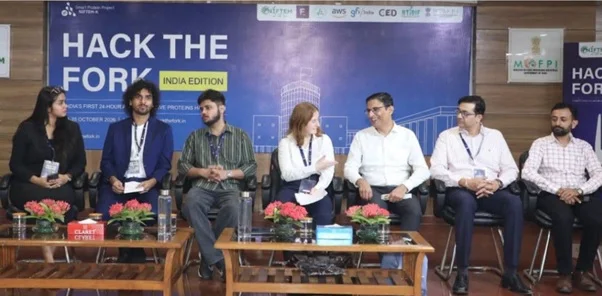
| Prelims: Hack the Fork; NIFTEM-K; Alternative Proteins; Precision Fermentation; Artificial Intelligence. Mains: GS Paper III—Food Processing, Science and Technology, Biotechnology, Food Security and Environmental Sustainability. Keywords: Hack the Fork 2026, NIFTEM-K, AI in food technology, alternative proteins, precision fermentation, sustainable food systems, food innovation. |
|
Aspect |
Details |
|
Host institution |
NIFTEM-K, Kundli, Haryana |
|
Dates and duration |
October 24–25, 2026; 24 hours |
|
Organisers |
France-based non-profit initiative Hack the Fork, in collaboration with NIFTEM-K |
|
Central focus |
AI applications in alternative proteins and sustainable food systems |
|
Applications |
More than 85 teams applied; 25 were shortlisted |
|
Final participation |
22 teams comprising over 90 participants from 10 states |
|
Participating institutions |
Included IITs, IIITs and the University of Delhi |
|
Inauguration |
Alice Pjie, Director of Hack the Fork |
|
Coordination |
Dr Vimal Pant, Professor at NIFTEM-K and CEO of NTIBIF |
|
Rewards |
₹1.5 lakh prize pool and opportunities to enter NIFTEM-K’s Startup Incubation Programme |
Alternative proteins are foods or ingredients developed as alternatives to conventional animal-derived products such as meat, dairy and eggs. Three major technological approaches are plant-based production, fermentation and animal-cell cultivation. These approaches differ in their raw materials and production processes.
|
Category |
How it works |
Illustrative products |
|
Plant-based proteins |
Plant ingredients are processed and combined to achieve desired nutritional and functional properties |
Soy- or pea-based meat alternatives |
|
Fermentation-derived proteins |
Microorganisms produce protein-rich biomass or specific food ingredients |
Fungal protein and fermentation-produced dairy proteins |
|
Cultivated meat |
Animal cells are grown under controlled conditions to produce meat |
Cell-cultivated meat products |
The following are illustrative applications, rather than confirmed outcomes of the participating teams.
|
Area |
Potential AI application |
Practical value |
|
Product formulation |
Predict suitable ingredient combinations |
Reduce trial-and-error experimentation |
|
Nutritional optimisation |
Compare formulations against nutritional targets |
Support better-balanced product development |
|
Fermentation |
Analyse production data and predict process performance |
Improve consistency and identify problems early |
|
Food safety |
Flag unusual patterns in sensor or inspection data |
Support timely investigation |
|
Shelf-life management |
Estimate deterioration using storage and product data |
Improve inventory decisions |
|
Food waste reduction |
Forecast demand and identify surplus |
Reduce avoidable losses |
|
Consumer preferences |
Analyse feedback on taste, texture and price |
Guide product improvements |
|
Challenge |
Why it matters |
|
Limited quality data |
AI predictions may be unreliable when datasets are small or unrepresentative |
|
High development costs |
Equipment, experimentation and pilot production can be expensive |
|
Scale-up difficulties |
A process that works in a laboratory may behave differently at industrial scale |
|
Taste and affordability |
Consumers assess products through everyday experience and price |
|
Nutritional variation |
Products differ in protein quality, sodium, fat and other nutrients |
|
Safety validation |
Novel ingredients and processes require appropriate scientific assessment |
|
Environmental uncertainty |
Energy sources, ingredients and production methods influence actual impacts |
|
Access for smaller firms |
Technical expertise and infrastructure may remain concentrated in larger organisations |
Prelims MCQWith reference to alternative proteins, consider the following statements:
Which of the statements given above are correct? (a) 1 and 2 only Mains Practice Question“Artificial intelligence can support sustainable food innovation, but technological potential alone cannot ensure food and nutritional security.” Discuss with reference to alternative proteins in India. |
1. What is Hack the Fork 2026?focusing on AI applications in alternative proteins and food systems. 2. Where is NIFTEM-K located?The National Institute of Food Technology Entrepreneurship and Management, Kundli, is located in Kundli, Haryana. 3. What are alternative proteins?They are foods or ingredients developed as alternatives to conventional animal-derived products. 4. How can AI help the food industry?AI can support ingredient selection, process optimisation, demand forecasting, quality monitoring and food-waste reduction. 5. Are alternative proteins always healthier and more sustainable?No |


Our support team will be happy to assist you!

 Contact Us
 New Batch : 9555124124/ 7428085757
 Tech Support : 9555124124/ 7428085757
