
New
Hindi Medium: (Delhi) - GS Foundation (P+M) : 21st Sept. 2026, 11:30 AM Hindi Medium: (Prayagraj) - GS Foundation (P+M) : 20th Sept. 2026, 8:00 AM English Medium: (Delhi) - GS Foundation (P+M) : 6th Aug 2026 English Medium: (Prayagraj) - GS Foundation (P+M) : 19th Aug 2026, 11:00 AM Hindi Medium: (Delhi) - GS Foundation (P+M) : 21st Sept. 2026, 11:30 AM Hindi Medium: (Prayagraj) - GS Foundation (P+M) : 20th Sept. 2026, 8:00 AM English Medium: (Delhi) - GS Foundation (P+M) : 6th Aug 2026 English Medium: (Prayagraj) - GS Foundation (P+M) : 19th Aug 2026, 11:00 AM

India-Belgium Relations: MoUs on Renewable Energy, Defence, Semiconductors and Critical Minerals

Prelims: India-Belgium Relations, IMEC, Green Hydrogen, Critical Minerals, Zorawar Light Tank
Mains: GS Paper II – International Relations | GS Paper III – Energy, Defence, Science & Technology
Keywords: India-Belgium Relations | IMEC | Semiconductor Ecosystem | Critical Minerals | Green Hydrogen | Renewable Energy | Defence Industrial Cooperation | Zorawar Light Tank | Migration and Mobility Partnership | India-EU Relations | Critical Mineral Recycling

Why in News?

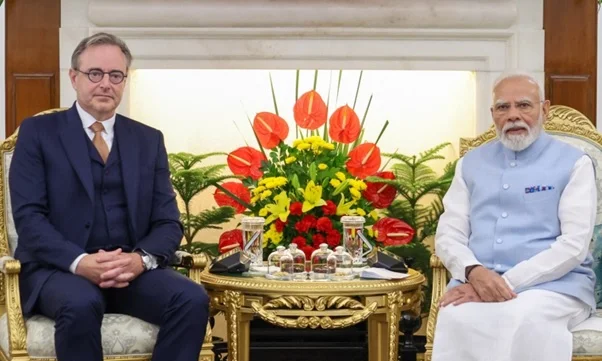
India and Belgium signed multiple Memoranda of Understanding (MoUs) and agreements during bilateral engagements in New Delhi. Prime Minister Narendra Modi and Belgian Prime Minister Bart De Wever held bilateral talks at Hyderabad House.
Important Point

  • The cooperation covers several strategic sectors, including renewable energy, defence-industrial cooperation, semiconductors, migration and mobility, and critical minerals processing and recycling.
  • Both countries also set an objective of doubling bilateral trade over the next five years.
  • Bart De Wever’s three-day visit is significant as it marks the first official visit by a Belgian Prime Minister to India in around two decades.

Background: India-Belgium Relations

  • India and Belgium share longstanding diplomatic and economic relations. Belgium is an important European partner for India and is strategically located at the heart of Western Europe.
  • Economic relations have traditionally been supported by trade in diamonds, pharmaceuticals, chemicals, machinery and engineering products. In recent years, bilateral engagement has expanded into emerging strategic sectors such as clean energy, defence manufacturing, semiconductor technology and critical minerals.
  • The latest agreements indicate a shift in the relationship from primarily trade-oriented cooperation towards a broader technology and strategic partnership.

Why is it important for India?

  • India has set ambitious renewable energy and decarbonisation targets. European technological expertise can complement India's large domestic renewable-energy market and manufacturing capacity.
  • Cooperation in green hydrogen and energy storage is particularly important because these technologies can help decarbonise sectors where direct electrification is difficult.

Zorawar Light Tank

  • Zorawar is India's indigenous light tank project designed to provide greater mobility and operational flexibility, particularly in challenging high-altitude terrain.
  • For India, international technological partnerships combined with domestic manufacturing can contribute to the broader objective of Atmanirbhar Bharat in defence.

Significance for India

1. Clean Energy Transition

Cooperation in green hydrogen, solar power, offshore wind and energy storage can support India's transition towards a low-carbon economy.

2. Defence Indigenisation

Belgian technological expertise combined with India's manufacturing capacity can contribute to indigenous defence production and reduce external dependence.

3. Semiconductor Ecosystem

Engagement with IMEC can strengthen India's efforts to build capabilities across the semiconductor value chain.

4. Critical Mineral Security

Processing and recycling cooperation can help diversify India's critical-mineral supply chains and improve resource security.

5. Skilled Mobility

A Migration and Mobility Partnership can provide greater opportunities for Indian students, professionals and researchers in Europe.

6. Stronger India-Europe Partnership

Belgium is an important member of the European Union. Stronger India-Belgium relations can therefore complement India's wider engagement with Europe.

India-Belgium Cooperation at a Glance

Sector

Key Cooperation

Renewable Energy

Green Hydrogen, Solar, Offshore Wind, Energy Storage

Defence

Industrial cooperation, technology and training

Semiconductors

Cooperation involving IMEC

Critical Minerals

Processing and recycling

Mobility

Professionals, students and researchers

Trade

Objective to double bilateral trade in five years

Maritime Cooperation

Planned visit of Belgian frigate LEOPOLD I

Challenges

Despite the growing partnership, several challenges need attention.

  • Technology transfer: Advanced technologies, particularly in defence and semiconductors, often involve intellectual-property and export-control concerns.
  • Implementation: Signing MoUs alone does not guarantee outcomes. Cooperation needs to translate into investments, joint research and commercially viable projects.
  • Critical-mineral supply chains: Processing and recycling infrastructure requires substantial investment, technology and environmental safeguards.
  • Mobility regulations: Differences in immigration, qualification recognition and labour regulations may affect implementation of mobility arrangements.

Way Forward

  • India and Belgium should move from broad agreements towards specific projects, investment commitments and technology partnerships.
  • Joint research programmes involving universities, companies and research institutions can strengthen cooperation in semiconductors and clean energy.
  • In defence, collaboration should focus on co-development, co-production and integration with India's domestic defence manufacturing ecosystem.
  • Both countries can also develop circular-economy partnerships for recovering critical minerals from electronic waste and batteries.
  • A structured mobility agreement can further strengthen people-to-people relations and connect India's skilled workforce with Belgium's research and industrial ecosystem.

Prelims MCQs

Q. IMEC, recently seen in the context of India-Belgium relations, is primarily associated with:

A. Nuclear energy
B. Semiconductor and nanoelectronics research
C. Critical mineral mining
D. Naval shipbuilding

Mains Question

Q. India-Belgium relations are gradually expanding from traditional trade ties to cooperation in strategic technologies. Discuss with reference to renewable energy, defence, semiconductors and critical minerals.

FAQs

Why were India and Belgium in the news in September 2026?

India and Belgium signed and announced agreements covering renewable energy, defence-industrial cooperation, semiconductors, critical minerals and mobility during high-level bilateral engagements in New Delhi.

What is IMEC?

IMEC is a Belgium-based research and innovation institution known globally for advanced semiconductor and nanoelectronics research.

Why are critical minerals important for India?

Critical minerals are required for batteries, electric vehicles, renewable-energy technologies, electronics, semiconductors and defence systems. Secure and diversified supplies are therefore strategically important.

What is the significance of renewable-energy cooperation?

It can facilitate cooperation in green hydrogen, solar energy, offshore wind, energy storage and pumped-storage technologies while supporting India's clean-energy transition.

What is the target for India-Belgium bilateral trade?

The two countries have set an objective of doubling bilateral trade over the next five years.

Have any Query?

Our support team will be happy to assist you!

OR


