|
Prelims: HPAI (Bird Flu), H5N1 Virus, Clade 2.3.2.1a, Inactivated Vaccine, ICAR-NIHSAD, Zoonotic Diseases, One Health Approach.
Mains:
GS Paper III: Biotechnology, indigenous vaccine development, animal husbandry, agricultural economy and disease management.
GS Paper II: Government policies and interventions related to public health and disease prevention.Keywords: Indigenous H5N1 Vaccine, Bird Flu, HPAI, Clade 2.3.2.1a, ICAR-NIHSAD, Poultry Health, Zoonotic Diseases, One Health Approach, Animal Healthcare, Vaccine Development, Agricultural Economy, Biosecurity.
|
Why in News?
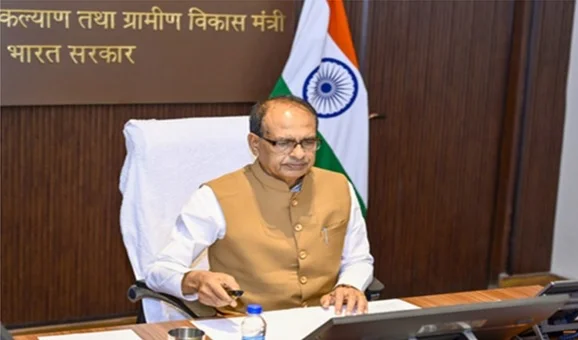
- Union Agriculture Minister Shivraj Singh Chouhan is scheduled to dedicate India's first indigenous inactivated H5N1 Highly Pathogenic Avian Influenza (HPAI) vaccine for chickens, targeting Clade 2.3.2.1a, to the nation on November 20, 2026.
- The vaccine has been developed by the ICAR-National Institute of High Security Animal Diseases (ICAR-NIHSAD), Bhopal. It aims to protect poultry against the H5N1 virus strain responsible for most bird flu outbreaks in India.
What is the H5N1 Bird Flu?
- Highly Pathogenic Avian Influenza (HPAI), commonly known as bird flu, is a serious viral disease that mainly affects chickens and other birds.
- Key features include:
- It can cause mortality of nearly 100% among infected birds.
- It can spread across poultry farms and cause major economic losses.
- Outbreaks may lead to the large-scale culling of birds and restrictions on poultry trade.
- Some strains can also infect mammals and humans, making the disease a public health concern.
About India's Indigenous H5N1 Vaccine
- The vaccine has been developed indigenously by ICAR-NIHSAD, Bhopal.
- Its major features include:
- It is an inactivated H5N1 HPAI vaccine.
- It targets Clade 2.3.2.1a of the H5N1 virus.
- It has been developed specifically for chickens.
- It aims to protect poultry against the virus circulating in India.
- According to the Ministry of Agriculture and Farmers Welfare, no specific commercial vaccine was available for protection against this particular clade of H5N1 in the country.
Why is the Vaccine Important for India?
- Protection of Poultry Farms: It can help control bird flu outbreaks and reduce poultry mortality.
- Economic Security: Bird flu outbreaks cause financial losses for poultry farmers due to bird culling and trade restrictions.
- Protection of Livelihoods: The poultry sector supports the income of farmers and people associated with poultry businesses.
- Public Health: Controlling the virus in poultry can help reduce the risk of its spread to other animals and humans.
- Self-Reliance: Indigenous vaccine development can strengthen India's capacity to respond to animal disease outbreaks.
Impact of Bird Flu on India's Economy
Bird flu outbreaks can have serious economic consequences.
- Since its first detection in India in 2006, more than 500 combined outbreaks of H5N1 and H5N8 have been reported.
- A major bird flu outbreak could reduce India's GDP growth by up to 1.5%, according to the estimates cited in the source.
- More than 20% of the country's poultry population could be at risk if the disease spreads uncontrollably.
- The 2006 outbreak caused estimated direct and indirect losses of ₹2,200–3,000 crore.
- A bird flu outbreak in Manipur caused losses equivalent to 0.5% of the state's GDP.
H5N1 and Human Health Concerns
- H5N1 is not limited to birds. Recent infections have also been reported in different animal species, including mammals.
- According to the World Health Organization (WHO), since 2003, 25 countries, including India, have reported 1,003 human cases of H5N1 infection, resulting in 479 deaths.
- The detection of human infections highlights the importance of controlling the virus in poultry and other animals.
Conclusion
India's indigenous H5N1 vaccine is an important development in strengthening animal disease management and protecting the poultry sector. It can help reduce economic losses, support farmers' livelihoods and strengthen the country's preparedness against bird flu outbreaks.
The development also supports India's efforts towards self-reliance in veterinary healthcare and animal disease control.
Prelims Practice Question
Which institution has developed India’s indigenous H5N1 bird flu vaccine?
(a) Indian Council of Medical Research (ICMR)
(b) ICAR-NIHSAD
(c) Indian Agricultural Research Institute (IARI)
(d) National Dairy Research Institute (NDRI)
Mains Practice Question:
Discuss the importance of indigenous veterinary vaccines in strengthening India's animal healthcare system, protecting farmers' livelihoods and preventing zoonotic diseases.
|
FAQs
1. What is the H5N1 virus?
H5N1 is a type of avian influenza virus that can cause severe infection in birds. It is commonly known as bird flu.
2. Which institution developed India’s indigenous H5N1 vaccine?
The vaccine was developed by ICAR-NIHSAD, located in Bhopal.
3. Which birds is the vaccine designed for?
The vaccine has been developed for chickens and targets H5N1 Clade 2.3.2.1a.
4. How does bird flu affect the poultry industry?
Bird flu outbreaks can cause high mortality among birds, mass culling and trade restrictions. These measures can lead to significant financial losses for poultry farmers.
5. Why is the indigenous H5N1 vaccine important for India?
It can strengthen disease prevention in the poultry sector, protect farmers' livelihoods and improve animal healthcare and food security.
|