Prelims: Exercise KAZIND, India–Kazakhstan Relations, Joint Military Exercises, Garhwal Rifles, Counter-Terrorism, Central Asia, United Nations Peacekeeping, Unmanned Aerial Systems (UAS).
Mains: GS Paper II: India and its Neighbourhood, Bilateral Relations and Regional Cooperation; GS Paper III: Security Challenges, Terrorism, Defence Cooperation and Emerging Security Technologies. |
Why in news?
The India–Kazakhstan Joint Military Exercise is being conducted from 28 September to 11 October 2026.
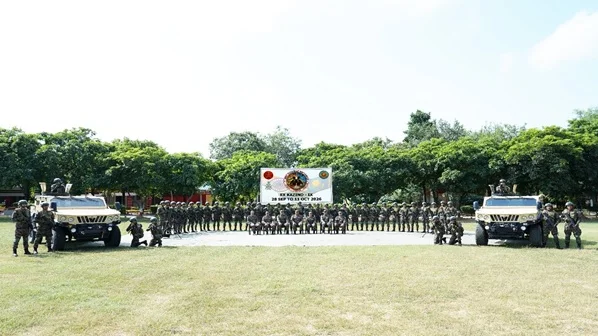
Key Facts
|
Particular
|
Details
|
|
Exercise
|
KAZIND-2026
|
|
Participating countries
|
India and Kazakhstan
|
|
Edition
|
9th
|
|
Date
|
28 September–11 October 2026
|
|
Venue
|
Oskemen, Kazakhstan
|
|
Indian contingent
|
60 personnel
|
|
Main Indian Army unit
|
Garhwal Rifles
|
|
Other Indian participants
|
Personnel from other arms and services and the Indian Air Force
|
|
Kazakhstan contingent
|
Matching strength, mainly from Kazakhstan Land Forces
|
|
Main focus
|
Joint Counter-Terrorism Operations
|
|
Operational environment
|
Sub-conventional environment under a UN mandate
|
|
Terrain
|
Semi-urban and mountainous terrain
|
|
Major technology focus
|
UAS and Counter-UAS capabilities
|
What is Exercise KAZIND?
- KAZIND is a joint military exercise between India and Kazakhstan. It provides a platform for the armed forces of both countries to train together and exchange operational experience.
- The exercise primarily focuses on improving interoperability, coordination and joint operational capability. Counter-insurgency and counter-terrorism operations under a UN mandate have been important components of previous editions.
- The exercise has gradually expanded to incorporate air-force participation and emerging technologies.
Indian Contingent in KAZIND-2026
- India has deployed a 60-member Armed Forces contingent. The contingent is primarily drawn from a battalion of the GARHWAL RIFLES.
- Personnel from other arms and services of the Indian Army are also participating. The contingent also includes personnel from the Indian Air Force.
- Kazakhstan is fielding a contingent of matching strength, consisting primarily of personnel from its Land Forces.
Major Objectives of KAZIND-2026
- Enhance Interoperability: Improve the ability of Indian and Kazakh forces to operate together. Develop better coordination in planning and execution of joint missions.
- Counter-Terrorism Preparedness: Improve joint capability to respond to terrorist threats. Practise counter-terrorism operations in a sub-conventional environment.
- Exchange Operational Experience: Enable both forces to learn from each other's operational experience. Exchange tactics, techniques and procedures used in counter-terrorism operations.
- Strengthen Defence Cooperation: Build professional bonds between the armed forces. Strengthen mutual trust and military-to-military cooperation.
Major Activities during KAZIND-2026
- Joint Response to Terrorist Actions: Troops will practise coordinated responses to simulated terrorist threats.
- Raids: Joint teams will practise raids against identified targets.
- Search-and-Destroy Missions: Forces will train to locate and neutralise simulated hostile elements.
- Cordon-and-Search Operations: Troops will practise securing an area and conducting systematic searches.
- Securing Helipads and Landing Sites: Training will include securing areas required for helicopter-based operations.
- Special Heliborne Operations: Personnel will practise the rapid deployment of troops using helicopters.
Focus on Drones and Counter-Drone Capabilities
- Unmanned Aerial Systems: Support military operations through surveillance, reconnaissance, situational awareness and monitoring of operational areas.
- Counter-UAS: Designed to identify and respond to hostile or unauthorised unmanned aerial systems.
- Joint Command Post: It will facilitate coordinated planning between the participating contingents, support joint decision-making and execution of operations and provides experience in integrating the command structures of two different armed forces.
- Intelligence and Surveillance Centre: It will support coordinated operational planning and execution. Intelligence and surveillance are important for identifying threats and improving situational awareness during counter-terrorism operations.
- Comprehensive Validation Exercise: Indian and Kazakh contingents will jointly respond to a simulated terrorist threat. They will apply the tactics, techniques and procedures (TTPs) practised during the exercise. It will test the ability of the two contingents to integrate their training into a coordinated operation.
India-Kazakhstan Defence Cooperation
- The current framework is based on the Agreement on Defence and Military Technical Cooperation, signed in July 2015.
- Defence cooperation includes Joint military exercises, Military education and training, Military-technical cooperation, Bilateral military visits, Joint sports and adventure activities and Youth exchanges.
- India also provides training to personnel of the Kazakh Armed Forces under the Indian Technical and Economic Cooperation (ITEC) programme.
- The two countries have institutional mechanisms such as the Joint Working Group on Defence Cooperation.
UN Peacekeeping Cooperation
- India and Kazakhstan have also cooperated in United Nations peacekeeping operations. In 2018, the two countries agreed on the deployment of a Kazakh contingent under an Indian battalion in the United Nations Interim Force in Lebanon (UNIFIL).
- This cooperation provided personnel from both countries experience in operating together in a multinational UN environment.
Significance of Exercise KAZIND-2026
- Counter-Terrorism Cooperation: Strengthens coordination between India and Kazakhstan in responding to terrorism and other sub-conventional security threats.
- Military Interoperability: Regular joint training helps the armed forces understand each other's operational procedures and improves their ability to conduct coordinated missions.
- Modern Warfare Preparedness: Training involving UAS, Counter-UAS, intelligence, surveillance and air mobility provides exposure to technologies increasingly relevant to contemporary military operations.
- Defence Diplomacy: Joint military exercises provide an institutional mechanism for building trust and professional relationships between armed forces.
- Regional Peace and Stability: KAZIND reinforces the shared commitment of India and Kazakhstan towards regional peace, stability and collective security.
Prelims MCQ
Q. With reference to Exercise KAZIND-2026, consider the following statements:
- It is a joint military exercise between India and Kazakhstan.
- Its 2026 edition focuses on joint counter-terrorism operations.
- 3Personnel of the Indian Air Force are participating in the exercise.
Which of the statements given above are correct?
(a) 1 and 2 only
(b) 2 and 3 only
(c) 1 and 3 only
(d) 1, 2 and 3
Mains Practice Question
Q. How do joint military exercises such as KAZIND contribute to India's defence cooperation and security engagement with Central Asia?
|
FAQs
What is Exercise KAZIND?
KAZIND is a joint military exercise conducted between India and Kazakhstan.
Where is KAZIND-2026 being held?
It is being held at Oskemen in Kazakhstan.
When is KAZIND-2026 being conducted?
From 28 September to 11 October 2026.
Which edition of KAZIND is being held in 2026?
The 9th edition.
How many Indian personnel are participating?
A 60-member Indian Armed Forces contingent is participating.
|






 Contact Us
  New Batch : 9555124124/ 7428085757
  Tech Support : 9555124124/ 7428085757