Prelims: NO₂ emissions
Mains: Major crops- Cropping pattern in different parts of the country- Different types of irrigation and irrigation systems- Storage, transportation and marketing of agricultural produce, related issues and constraints; E-technology to aid farmers. |
Why in the NEWS?
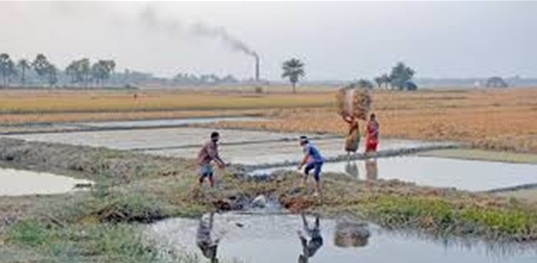
- Recently, a study by Stanford University in the United States found that India could avoid crop losses worth about $1 billion (Rs 8,000 crore) every year by controlling nitrogen dioxide (NO₂) emissions from coal-fired power plants.
Key Points:
- The study was conducted by researchers from the Stanford Doerr School of Sustainability.
- Its main objective was to understand the relationship between NO₂ emissions from coal power plants and crop production in India.
- NO₂ is a major air pollutant that enters the atmosphere and impedes crop growth and reduces their productivity.
What will you read next in this topic?
- Economic impact of NO₂ emissions and crop losses
- State-wise contribution of coal power plants to NO₂ pollution
- Nitrogen Dioxide (NO₂) Emissions: Sources, Effects and Solutions
- Major sources of NO₂ emissions
- Effects of NO₂ emissions
- Measures to reduce NO₂ emissions
Economic impact of NO₂ emissions and crop losses
- Considering the important role of agriculture in India's economy, it was estimated that if NO₂ emissions were reduced, rice and wheat production could increase significantly each year.
- The value of rice production in India could increase by $420 million per year.
- The value of wheat production could increase by $400 million per year.
- Overall, India could avoid annual crop losses of about $800 million.
Study methodology and research model
- The researchers used an advanced statistical model that combined several key elements:
- Information from 144 coal power plants that have a major impact in India.
- Daily data on power plant operations and emissions.
- Wind direction and drift patterns, which helped understand how NO₂ spreads.
- Measurements of NO₂ concentrations in crop fields using satellite imagery.
- Annual rice and wheat yield data.
- This analysis showed that NO₂ has a profound impact on crop yields in areas extending up to 100 kilometres (62 miles) from power plants.
State-wise contribution of coal power plants to NO₂ pollution
|
State
|
Contribution of coal plants to NO₂ pollution (%)
|
Major coal power plants
|
|
Chhattisgarh
|
13-19%
|
Korba, SIPAT, Hasdeo
|
|
Jharkhand
|
10-15%
|
Bokaro, Koderma, Tandwa
|
|
Madhya Pradesh
|
8-12%
|
Singrauli, Satpura, Amarkantak
|
|
Maharashtra
|
6-10%
|
Chandrapur, Koradi, Parli
|
|
Uttar Pradesh
|
3-5%
|
Anpara, Obra, Rosa
|
|
West Bengal
|
4-7%
|
Farakka, Bakreshwar, Durgapur
|
|
Tamil Nadu
|
2-5%
|
Neyveli, NTPC Rameswaram
|
|
Gujarat
|
2-4%
|
Vadodara, Utran, Gandhinagar
|
Nitrogen Dioxide (NO₂) Emissions: Sources, Effects and Solutions
- Nitrogen dioxide (NO₂) is a dangerous air pollutant, which enters the atmosphere mainly due to coal power plants, vehicle smoke and industrial processes.
- It has serious impacts on health, environment and agriculture.
Major sources of NO₂ emissions
- NO₂ emissions are mainly generated from anthropogenic activities. Its major sources are as follows:
Coal-based power plants
- Burning coal to generate electricity emits a large amount of NO₂.
- According to a Stanford study, NO₂ emitted from coal plants in India can reduce crop yields by up to 10%.
- Nitrogen oxide (NOₓ) present in coal gets converted into NO₂ when it goes into the atmosphere, causing poor air quality.
Smoke from vehicles
- Nitrogen oxide (NOₓ) is emitted from diesel and petrol vehicles, which is a major source of NO₂.
- NO₂ concentrations are found to be higher in big cities due to vehicles, which increases respiratory diseases.
- Older vehicles, trucks and buses emit more pollution because they do not have modern emission control technology.
Industrial emissions
- Steel, cement, oil refineries and chemical industries emit large amounts of NO₂.
- Air pollution is high in industrial areas, affecting the local environment and agricultural production.
Burning of fuel and stubble
- Burning of wood, crop residue (stubble), cow dung cakes and other organic fuels emits NO₂.
- Burning of stubble during winters in North India increases air pollution, leading to smog in Delhi and surrounding states.
Domestic and commercial activities
- Burning of coal and wood for domestic use produces NO₂.
- Construction work and other commercial activities also increase the amount of pollutants in the air.
Effects of NO₂ emissions
- NO₂ emissions adversely affect the environment, human health and agriculture.
Effects on agriculture
- NO₂ emissions disrupt the photosynthesis process of crops, reducing their growth.
- NO₂ causes oxidative damage on the surface of leaves, weakening the crop.
- According to a Stanford study, reducing NO₂ pollution in India could increase wheat and rice production by up to $800 million (about Rs 8000 crore).
- This could pose a threat to food security, as wheat and rice are India's major food crops.
Effects on human health
- NO₂ severely affects the respiratory system, increasing asthma, bronchitis and other lung diseases.
- Children, the elderly and asthma patients are particularly affected by NO₂ pollution.
- Long-term exposure to NO₂ increases the risk of cardiovascular diseases and lung cancer.
- According to WHO, millions of people die prematurely every year due to diseases related to NO₂ pollution.
Effect on the environment
- Acid Rain:
- NO₂ combines with water vapour to form nitric acid (HNO₃), which causes acid rain.
- Water pollution:
- Acid rain pollutes the water of rivers and lakes and is dangerous for aquatic organisms.
- Effect on biodiversity:
- NO₂ pollution negatively affects flora, fauna and the ecosystem.
Measures to reduce NO₂ emissions
- The government, industries and the general public will have to make joint efforts to control NO₂ emissions.
Controlling coal power plants
- Increasing the use of clean energy, such as solar and wind energy.
- Installing modern technology (Flue Gas Desulfurization - FGD) in coal plants, which can reduce NO₂ emissions.
- Closing old and highly polluting plants.
Reducing pollution from vehicles
- Promoting electric vehicles (EVs).
- Improving public transport, which reduces the use of private vehicles.
- Strictly implementing BS-VI standards, which can reduce vehicle emissions.
Use of green technologies in industries
- Using smoke scrubbers and other emission control technologies.
- Strictly following the rules of the Pollution Control Board (CPCB).
Preventing the burning of stubble and other organic fuels
- Providing alternative solutions to farmers instead of burning stubble.
- Distribution of government subsidies and machines for stubble management.
- Promoting organic fertilizer and biogas production.
Afforestation and development of green areas
- Planting trees and developing green belts in cities.
- Increasing NO₂ absorption by increasing the number of trees in agricultural areas.
|
Q. NO₂ pollution affects the yield of which crops the most in India?
(a) Maize and millets
(b) Wheat and rice
(c) Pulses and oilseeds
(d) Sugarcane and cotton
|







 Contact Us
  New Batch : 9555124124/ 7428085757
  Tech Support : 9555124124/ 7428085757