In the Indian artistic tradition, dance is not merely a medium of expression but a vibrant form of spiritual experience, cultural continuity, and aesthetic refinement. The concept of classical dance in India is fundamentally based on the “Natya Shastra”, written by Sage Bharata Muni around the 2nd century BCE. The Natya Shastra is considered the first scientific treatise on dance, music, drama, stagecraft, and expression.
According to the Government of India (Sangeet Natak Akademi – National Academy of Performing Arts), 8 classical dances are officially recognized:
- Bharatanatyam
- Kuchipudi
- Kathak
- Kathakali
- Mohiniyattam
- Odissi
- Manipuri
- Sattriya
Fundamental Features of Classical Dance
1. Classical Scripture Base
Each classical dance form draws its theoretical foundation from:
- Natya Shastra
- Abhinaya Darpana
- Sangam literature
- Other regional classical texts
2. Integration of Nritta, Nritya, and Natya
- Nritta – Pure dance movements without any interpretative meaning
- Nritya – Expressive dance involving emotions, facial expressions, and hand gestures
- Natya – Dramatic element involving storytelling, acting, and character portrayal
3. Raga–Ragini and Tala System
Each dance form follows a structured musical tradition:
- Carnatic music (South India)
- Hindustani classical music (North India)
4. Hand Gestures (Mudras)
Mudras are based on the Natya Shastra and Abhinaya Darpana and are used to convey emotions, objects, actions, and storytelling.
5. Guru–Shishya Parampara
A deep, traditional teacher–student lineage that ensures discipline, technique, and cultural transmission.
1. Bharatanatyam (Tamil Nadu)
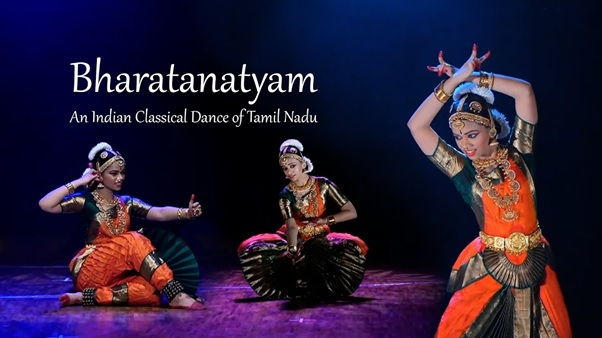
Origin:
- Bharatanatyam developed in the Shiva temples of Tamil Nadu.
- It is associated with the Devadasi tradition, where female dancers performed in temples to worship deities and depict religious stories.
- Etymology:
- Bha – Bhava (expression)
- Ra – Raga (melody)
- Ta – Tala (rhythm)
- Natyam – Dance
- Meaning: Bharatanatyam is the dance of expression, melody, and rhythm.
Features:
- Gestures and Style:
- Extremely geometric, rigid, and balanced gestures.
- Postures, expressions, and footwork are highly organized and precise.
- Main Performance Items:
- Alarippu – Opening piece to warm up the body and prepare for the performance.
- Jatiswaram – Technical dance piece combining rhythm and melody.
- Varnam – The central piece featuring narrative and emotional expression.
- Padam – Lyrical stage, where emotions and stories are acted out.
- Tillana – Energetic concluding piece with intricate rhythmic patterns.
- Music:
- Primarily uses Carnatic music.
- Costume and Jewelry:
- Pleated sari arranged to accentuate body movements.
- Intricate ankle bells (ghungroo), jewelry, crown, and waistbelt.
- Facial and eye makeup enhances emotional expression.
Prominent Artists:
- Rukmini Devi Arundale – Popularized Bharatanatyam on the modern stage.
- Balasaraswati – Master of the traditional style, renowned dancer.
Cultural and Religious Significance:
- Bharatanatyam is not just a dance; it depicts Hindu religious stories, especially of Shiva and various goddesses.
- Performed in temples for worship and devotional storytelling.
- Today, it is practiced in both temple (traditional) and stage (classical) formats.
2. Kuchipudi (Andhra Pradesh)
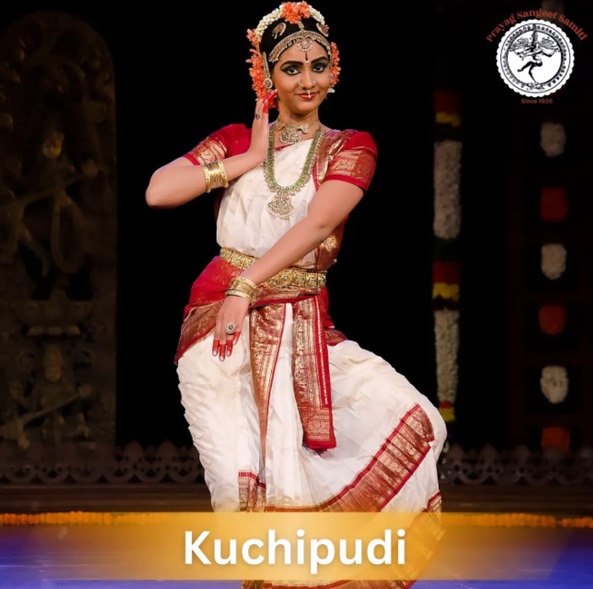
Origin:
- The name Kuchipudi comes from the village Kuchelapuram/Kuchipudi in Krishna district, Andhra Pradesh.
- It developed from the Bhagavata Mela tradition, where stories of Krishna and other Hindu deities were performed.
- Initially, it was mainly performed in temples and religious fairs.
Features:
- Style:
- Kuchipudi is a dance-drama style combining dialogue (Bhava), singing, and dance (Nritya/Nritta).
- Storytelling and acting hold greater importance compared to Bharatanatyam.
- Tarangam:
- Dancers perform on copper plates, known as Tarangam.
- This is the most distinctive and visually striking technique of Kuchipudi.
- Music:
- Primarily based on Carnatic music.
- Dialogue and Acting:
- Characters and stories are expressed through facial expressions, eye movements, and hand gestures.
- Combination of dialogue and singing is used to narrate the story to the audience.
Prominent Artists:
- Vempati Chinna Satyam – Major artist who popularized both the traditional and modern forms of Kuchipudi on stage.
- Other traditional gurus and dancers have contributed significantly to the development and propagation of the Kuchipudi style.
Cultural and Religious Significance:
- Kuchipudi is not just a dance; it is a theatrical representation of Bhagavata stories.
- Brings stories of Krishna, Rama, and other deities to life for the audience.
- Today, it is extremely popular in stage performances and classical dance festivals.
3. Kathak (Northern India)
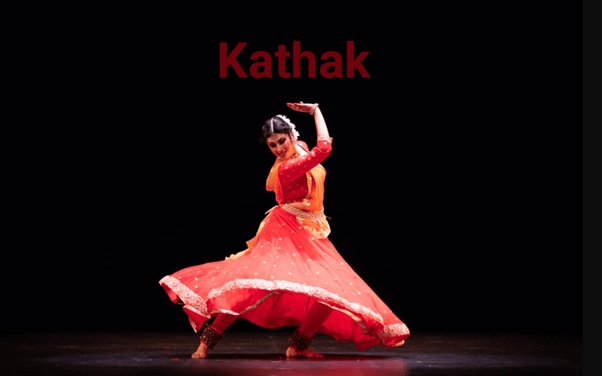
Origin:
- Kathak developed in the temples of North India from storytellers called Kathakars.
- Initially, it was performed to depict religious stories, especially from the Ramayana and Krishna’s tales.
- Later, it also developed in Mughal courts, where it became a royal entertainment and an artistic dance form.
Features:
- Spins (Chakkars) and Technique:
- Kathak emphasizes fast and intricate spins (Chakkars).
- Key elements include Tihai (rhythmic patterns), Paran, Aamad, and footwork.
- Expression (Bhava):
- Stories are expressed through emotions, gestures, and postures.
- Mainly portrays Ramayana and Krishna stories.
- Music:
- Uses Hindustani classical music.
- Gharanas (Styles):
- Major Kathak gharanas are:
- Jaipur
- Lucknow
- Banaras
- Raigarh
-
- Each gharana has distinct style, technique, and presentation.
Prominent Artists:
- Birju Maharaj – Leading exponent of the Lucknow gharana, world-renowned Kathak dancer.
- Sitara Devi – Prominent Kathak dancer and a celebrated figure in classical dance.
Cultural and Historical Significance:
- Kathak has been an important dance form in religious, cultural, and royal settings.
- It is not just a dance, but a live medium of storytelling.
- Today, Kathak is popular in stage performances, competitions, and classical dance festivals.
4. Kathakali (Kerala)
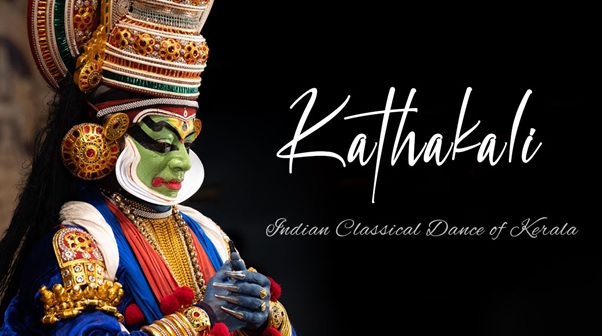
Origin:
- Kathakali developed from the traditional Koodiyattam and Krishnanattam dance-drama forms of Kerala.
- It was established in the 17th century.
- Primarily developed to depict religious stories and epics on stage.
Features:
- Costume and Makeup:
- Kathakali makeup is highly elaborate and colorful.
- Main characters use green face paint (Pacha) or other colors to denote specific character types.
- Extensive costumes and jewelry are used.
- Performance Style:
- Kathakali is entirely drama-oriented.
- Stories are portrayed through facial expressions (Bhava) and body gestures (Mudras).
- Music:
- Based on traditional Kerala music.
- Music and percussion instruments (drums, talavadyas) bring the performance to life.
- Stories:
- Mainly from Mahabharata and Ramayana.
- Other mythological and religious stories are also performed.
Prominent Artists:
- Kalmandalam Krishnan Nair – Renowned Kathakali dancer and expert in the style.
Cultural and Religious Significance:
- Kathakali is not just a dance; it is a comprehensive theatrical and religious storytelling art form.
- Holds a very important place in Kerala’s cultural heritage.
- Today, it is world-famous as a stage performance, cultural festival highlight, and tourist attraction.
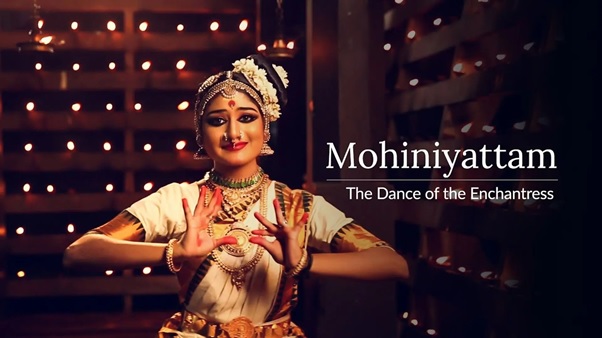
5. Mohiniyattam (Kerala)
Origin:
- Mohiniyattam derives its name from “Mohini”, the female avatar of Lord Vishnu.
- Developed in Kerala and is especially known as a female-centric dance style.
- It showcases the beauty, femininity, and gentle emotions of the dancer.
Features:
- Movement Style:
- Mohiniyattam features soft, graceful, and circular movements.
- The dance flows slowly and gracefully, emphasizing Lasya (feminine grace).
- Costume:
- Dancers wear white Kasavu sarees with golden borders.
- Jewelry and adornments are simple yet elegant.
- Music:
- Primarily based on Carnatic music.
- Songs and music are presented according to emotion and narrative.
- Expression (Bhava) and Storytelling:
- Mohiniyattam conveys stories and divine themes through facial expressions, gestures, and graceful movements.
- Highlights femininity, beauty, and devotion.
Prominent Artists:
- Kalmandalam Sugandha – Leading Mohiniyattam dancer and expert of the style.
Cultural and Religious Significance:
- Mohiniyattam is not only a form of artistic expression but also an integral part of Kerala’s cultural and religious tradition.
- Being a female dance style, it presents an excellent blend of emotion, beauty, and Lasya.
- Today, it is popular in stage performances, classical dance festivals, and educational institutions.
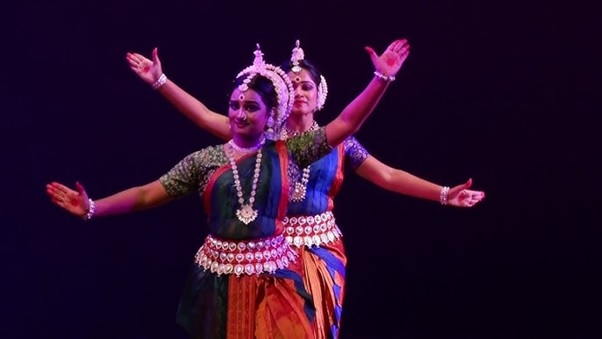
6. Odissi (Odisha)
Origin:
- Odissi developed in the Jagannath Temple, Puri, Odisha.
- Initially associated with the Mahari (female temple dancers) and Gotipua (young male dancers) traditions.
- Used to depict stories of Lord Jagannath and other deities in temples.
Features:
- Posture and Body Structure:
- Tribhangi (three-bend) posture is prominent, bending the body at three points:
- Head
- Chest
- Waist / Hip
- This posture gives the dance fluidity and aesthetic beauty.
- Stability and Stance:
- Dancer’s stability and coordination resemble a sculpture.
- Chauka (Square stance) and Tribhangi (Three-bend stance) are significant elements of Odissi.
- Music and Raga:
- Primarily based on Odia music tradition and classical ragas.
- Narrative Presentation:
- Enacts stories from Ramayana, Mahabharata, and Puranas.
- Narratives are expressed through facial expressions (Bhava) and gestures (Mudras).
Prominent Gurus and Artists:
- Jahnavi Kumari Devi – Renowned for traditional Odissi style.
- Kelucharan Mahapatra – Leading guru, contributed to the development of Odissi on modern stages.
Cultural and Religious Significance:
- Odissi is an integral part of religious, cultural, and temple traditions.
- It presents a beautiful blend of Shringara (beauty), Bhava (expression), and Tala (rhythm).
- Today, Odissi is popular in stage performances, classical dance festivals, and national & international platforms.
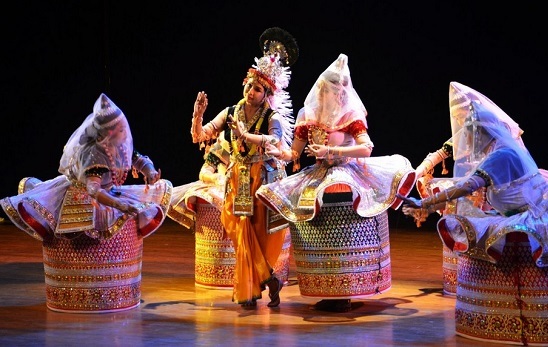
7. Manipuri (Manipur)
Origin:
- Manipuri dance developed in the state of Manipur.
- Influenced by the Vaishnavite Bhakti movement.
- Raslila (the divine play of Krishna and Radha) is the foundation of Manipuri dance.
- Initially performed in temples to depict devotional and religious stories.
Features:
- Movement Style and Gestures:
- Features very gentle, slow, and circular movements.
- Limbs and feet move in a light, flowing, and graceful manner.
- Costume and Ornamentation:
- Women wear Potloi (cylindrical, bell-shaped skirt).
- Jewelry and head crowns are religious and cultural symbols.
- Music and Instruments:
- Uses traditional instruments such as dholak, manjira, and pakhawaj.
- Singing is primarily based on Vaishnavite devotional songs.
- Narrative Theme:
- Main theme revolves around the leelas of Krishna and Radha.
- During Raslila, dancers perform in a circular formation, symbolizing love and devotion.
Prominent Artists:
- Mātr̥bhūmi Devi – Leading Manipuri dancer and guardian of the style.
- Guru Bipin Singh – Contributed to the modern stage development and popularization of Manipuri dance.
Cultural and Religious Significance:
- Manipuri dance is a wonderful blend of devotion, beauty, and narrative performance.
- Brings Vaishnavite devotion to life through Krishna–Radha Raslila.
- Today, it is popular in stage performances, religious festivals, and national & international platforms.
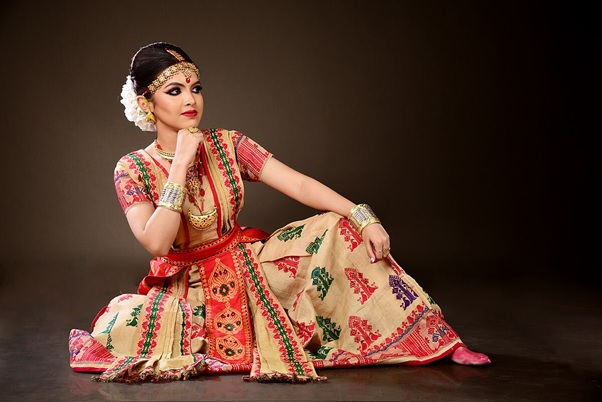
8. Sattriya (Assam)
Origin:
- Sattriya dance developed in Assam.
- It was established by the great saint Srimanta Sankardev in the 15th century.
- The dance was primarily performed in Vaishnavite monasteries (Sattras) for devotional and religious storytelling, which is why it is called Sattriya.
Features:
- Performance Style:
- Sattriya is not only a dance but also incorporates drama and music.
- It is a narrative and devotional dance form.
- Stories and Themes:
- Mainly based on Ramayana, Krishna–Radha Leela, and other Vaishnavite stories.
- Expressions, gestures, and postures bring the stories to life.
- Music and Instruments:
- Uses traditional instruments such as dhol, tala, and flute (bansuri).
- Songs are primarily based on Vaishnavite devotional music.
- Classical Recognition:
- In 2000, Sattriya was officially recognized as a classical Indian dance form.
- Since then, it has gained recognition on national and international stages as a classical style.
Cultural and Religious Significance:
- Sattriya is an integral part of Assam’s cultural and religious heritage.
- Provides audiences with a devotional and spiritual experience through Bhakti, storytelling, and music.
- Today, it is popular in stage performances, classical festivals, and educational institutions.
Additional Recognized Semi-Classical Dance
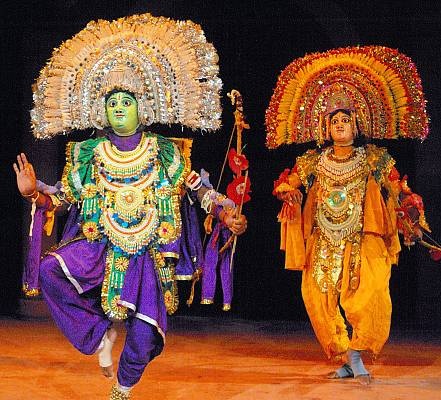
Chhau Dance (Semi-Classical)
Recognized by the Ministry of Culture as a semi-classical dance combining martial, tribal, and folk elements.
Major Features
1. Styles and Regions
Three major styles:
- Purulia Chhau – West Bengal
- Seraikela Chhau – Jharkhand
- Mayurbhanj Chhau – Odisha
2. Themes
- Martial movements, acrobatics, and vigorous choreography
- Themes from Shaivism, Shaktism, Vaishnavism
- Stories from Ramayana, Mahabharata, Puranas
3. Masks and Costumes
- Masks used prominently in Purulia and Seraikela styles
- Mayurbhanj Chhau uses no masks
- Vibrant costumes, warrior-like energy
4. Social Aspects
- Traditionally performed by male dancers
- Major performances occur during spring festivals
- Blends classical traditions with tribal culture
- Unites communities through ritual and celebration







 Contact Us
  New Batch : 9555124124/ 7428085757
  Tech Support : 9555124124/ 7428085757