Prelims: Barak Point Defence Missile System, Barak-8, LR-SAM, MR-SAM, Israel Aerospace Industries
Mains: GS Paper II – India–Israel relations, GS Paper III – Maritime security, defence modernisation and indigenisation
Keywords: Indian Navy Barak missile upgrade, India–Israel defence deal, naval air defence, Israel Aerospace Industries, Barak-8, obsolescence management |
Why in News?
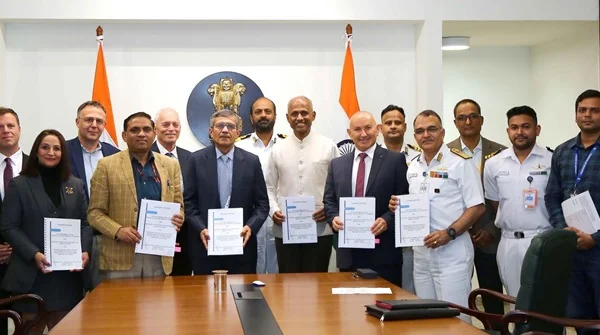
- On 18 November 2026, the Ministry of Defence signed a ₹1,976.40 crore contract with Israel Aerospace Industries (IAI) to upgrade the Barak Point Defence Missile System aboard Indian Navy ships.
- The deal, worth approximately US$211.48 million, covers a comprehensive upgrade of hardware and software as well as management of ageing and outdated components. It was signed in New Delhi under the Other Capital Procurement Procedure.
What Is the Barak Missile System?
- Barak is a family of surface-to-air missile systems of Israeli origin. In the naval context, a surface-to-air missile is launched from a ship to intercept an aerial threat. The Barak Point Defence Missile System provides close-range air defence for the naval platform carrying it. The Indian Navy also operates the jointly developed Barak-8 naval system, which serves a wider air-defence role.
- A missile system includes more than the missile itself. On a warship, sensors help detect and track aerial threats, and the ship’s combat and fire-control systems help the crew assess them. The launcher and interceptor are the components that carry out an engagement. The performance and serviceability of this equipment therefore depend on how well its hardware and software work together.
What Does Point Defence Mean?
- Point defence protects a specific asset, such as a warship, airbase or other critical installation. On a warship, its purpose is to provide protection in the ship’s immediate vicinity.
- Area defence covers a wider zone and can help protect several vessels operating together. A naval force can use both roles as part of layered air defence, with different systems providing protection at different distances.
Barak Point Defence, Barak-8 and MR-SAM
The names can be confusing because they all appear in discussions about the Barak family. The easiest way to distinguish them is by their role and launch platform.
|
System
|
Platform and role
|
|
Barak Point Defence Missile System
|
Shipborne system for close-range protection. This is the system named in the November 2026 upgrade contract.
|
|
Barak-8 / LR-SAM
|
The ship-launched version of the jointly developed Barak-8 system. LR-SAM stands for Long Range Surface-to-Air Missile.
|
|
MR-SAM
|
The land-launched version of the jointly developed Barak-8 programme, as described by India’s Ministry of Defence. MR-SAM stands for Medium Range Surface-to-Air Missile.
|
India’s Defence Research and Development Organisation (DRDO) and Israel Aerospace Industries (IAI) jointly developed LR-SAM and MR-SAM. In January 2019, the Indian Navy successfully test-fired the ship-launched LR-SAM from INS Chennai.
Key Points of the November 2026 Contract
|
Parameter
|
Details
|
|
Contract value
|
₹1,976.40 crore, approximately US$211.48 million
|
|
Signing date and place
|
18 November 2026, New Delhi
|
|
Contracting parties
|
Ministry of Defence and Israel Aerospace Industries
|
|
System covered
|
Barak Point Defence Missile System aboard Indian Navy ships
|
|
Scope
|
Comprehensive hardware and software upgrade and obsolescence management
|
|
Procurement route
|
Other Capital Procurement Procedure
|
What Is Obsolescence Management?
Obsolescence management means preparing for parts, software or test equipment to become outdated, unavailable or unsupported. For example, if a manufacturer discontinues an electronic component, the Navy may need to identify a compatible replacement and verify that it works with existing equipment. If software support ends, an upgrade may be needed to keep the system maintainable. Addressing these issues in advance helps prevent a shortage of spares from turning into prolonged downtime.
Significance for India
- Keeping existing warships ready: Sustaining air-defence equipment helps the Navy get more operational use from vessels already in service. It also supports fleet readiness while new ships are being built and inducted.
- Maintaining layered naval air defence: Close-range protection has a specific role alongside systems that cover wider areas. That combination matters when ships operate individually or as part of a group during patrol, escort or other naval missions.
- Deepening India–Israel defence cooperation : The relationship includes both joint development, as seen in LR-SAM and MR-SAM, and long-term support for equipment already in service, as seen in the latest Barak contract.
- Supporting defence indigenisation : The Barak-8 programme’s use of Indian industry for production and integration shows how a foreign partnership can build domestic capabilities. For future procurements, local access to diagnostics, repair facilities and spares can also improve India’s ability to sustain equipment over time.
Challenges
- Integration with existing ships : New hardware and software must work reliably with equipment already aboard, which can vary across ships.
- Balancing refits and deployments : The Navy must coordinate upgrade work with maintenance windows and operational commitments.
- Dependence on suppliers : Proprietary parts and software can require overseas support, particularly for specialist repairs and replacement components.
- Managing lifetime costs : Training, spares, repairs and software support can add to the cost of keeping a system operational for years.
Way Forward
- The Navy can align upgrades with planned refits to limit ship downtime and use acceptance trials to verify that upgraded systems work with existing equipment.
- Future contracts can specify how long suppliers will provide spares and software support and how discontinued parts will be replaced.
- India can also expand domestic testing and repair capacity wherever technical access and contractual terms permit. These steps would make it easier to sustain the fleet between major upgrades.
Conclusion
- The Barak deal addresses an immediate requirement of naval modernisation: keeping existing warships equipped with serviceable air-defence systems. It also highlights two aspects of India–Israel defence cooperation.
- The latest agreement focuses on upgrading equipment already in service, while the Barak-8 programme shows how joint development can involve Indian research, manufacturing and integration. For the Navy, the lasting value of both approaches depends on reliable support throughout a ship’s operational life.
Prelims Practice Questions
Q. India signed the November 2026 Barak upgrade contract with which company?
A. Elbit Systems
B. Rafael Advanced Defense Systems
C. Israel Aerospace Industries
D. Bharat Dynamics Limited
Mains Practice Question
How does lifecycle management of shipborne air-defence systems contribute to naval readiness? Discuss with reference to India’s Barak upgrade contract and the role of international partnerships in defence indigenisation.
|
FAQs
1. What is the Barak Point Defence Missile System?
It provides close-range air defence aboard naval vessels.
2. How much is India’s Barak upgrade contract worth?
India’s Barak upgrade contract is worth ₹1,976.40 crore.
3. Which company will upgrade India’s naval Barak system?
Israel Aerospace Industries will upgrade the Navy’s system.
4. Who jointly developed the Barak-8 variants for India?
DRDO and Israel Aerospace Industries jointly developed them.
5. What does obsolescence management address?
It addresses outdated, unavailable or unsupported system components.
|