Prelims: Natural gas, LNG and regasification, PNGRB, common carrier capacity, and pipeline geography.
Mains: GS Paper III—Energy infrastructure, industrial development, energy security and environmental sustainability. |
Why in News?
Indian Oil Corporation’s board has approved an investment of ₹2,448.70 crore for the Kochi–Kanyakumari–Thoothukudi Natural Gas Pipeline (KTPL). The investment was announced on 21 September 2026. The proposed project will strengthen natural gas transmission infrastructure in Kerala and southern Tamil Nadu.
Background
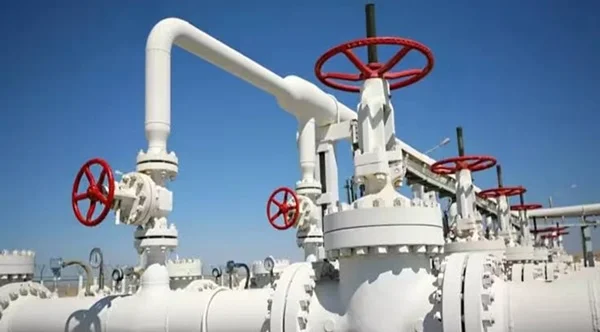
- Natural gas infrastructure requires a connected network of supply sources, transmission pipelines and local distribution systems. LNG terminals receive liquefied natural gas, while pipelines transport the gas after it has been converted back into gaseous form.
- According to the supplied report, the Petroleum and Natural Gas Regulatory Board (PNGRB) had earlier authorised IndianOil to lay, build, operate and expand KTPL. The proposed pipeline will originate at the Kochi LNG terminal and extend to Thoothukudi, connecting demand centres across Kerala and southern Tamil Nadu.
Key Features of the Project
|
Feature
|
Details
|
|
Project
|
Kochi–Kanyakumari–Thoothukudi Natural Gas Pipeline (KTPL)
|
|
Developer
|
Indian Oil Corporation Limited
|
|
Approved investment
|
₹2,448.70 crore, approximately ₹2,449 crore
|
|
Length
|
424.65 km
|
|
States covered
|
Kerala and Tamil Nadu
|
|
Proposed origin
|
Kochi LNG terminal
|
|
Destination
|
Thoothukudi, also known as Tuticorin
|
|
System capacity
|
6.84 million metric standard cubic metres per day (MMSCMD)
|
|
Common carrier capacity
|
At least 1.71 MMSCMD
|
|
Expected users
|
City gas distribution networks, industries, power plants and other downstream consumers
|
The announcement concerns investment approval; it does not mean that the pipeline has been commissioned. The supplied report does not specify a commissioning date.
What Does Common Carrier Capacity Mean?
- Common carrier capacity allows eligible third parties to use pipeline transportation services, subject to applicable access conditions. It helps gas suppliers reach consumers without each supplier having to construct a separate pipeline.
- For KTPL, the stated minimum of 1.71 MMSCMD represents 25% of its total 6.84 MMSCMD capacity. This is transportation capacity available for third-party access, rather than free gas reserved for consumers.
How Will the Pipeline Supply Gas?
- Kochi LNG terminal, liquefied natural gas will be converted back into gaseous form through regasification. The resulting regasified LNG, or R-LNG, can then be transported through the pipeline to connected demand centres.
- Industrial customers may receive gas through dedicated connections. City gas distribution networks can supply piped natural gas (PNG) to households and commercial users, and compressed natural gas (CNG) for vehicles. These benefits depend on the development of local distribution infrastructure.
Significance of the Project
- Improved regional connectivity: The pipeline is expected to improve access to natural gas across Kerala and southern Tamil Nadu, linking an LNG import terminal with downstream markets.
- Support for industries: Reliable pipeline access can give industrial consumers an additional fuel option. Actual adoption will depend on delivered gas prices, supply reliability and conversion costs.
- Expansion of city gas distribution: The project can provide a transmission backbone for local gas networks. Household PNG connections and CNG stations will require additional distribution investment.
- Better use of LNG infrastructure: Connecting the Kochi terminal with more demand centres can widen its potential customer base and support the use of regasification facilities.
- Potential environmental benefits: Switching from more polluting fuels to natural gas can improve local air quality. However, natural gas remains a fossil fuel, and its climate performance also depends on methane leakage and emissions across the supply chain.
Relevance for India
- The project supports the expansion of India’s gas transmission network and can improve fuel choices for consumers in southern India. It also illustrates why LNG terminal investment must be accompanied by pipelines and last-mile distribution networks.
- According to the supplied report, Indian Oil already operates the Ennore–Tuticorin–Bengaluru R-LNG Pipeline, with an installed capacity of 34.67 MMSCMD, serving industrial consumers and city gas distribution networks in Tamil Nadu. KTPL is expected to strengthen connectivity within the region’s wider gas network.
- However, improved gas access should be distinguished from energy self-sufficiency: a pipeline carrying imported LNG can strengthen domestic distribution while retaining exposure to international fuel prices and supply disruptions.
Major Challenges
- Land access and clearances: Securing the pipeline corridor and coordinating approvals may affect construction schedules.
- Gas affordability: International LNG prices and transportation costs influence whether consumers find gas competitive.
- Last-mile connectivity: Transmission capacity alone cannot deliver household connections or operational CNG stations.
- Demand uncertainty: Industries may delay switching fuels if conversion costs are high or supply terms are unattractive.
- Safety and environmental management: Construction, maintenance and operations require effective safeguards, including leak detection and emergency response.
These are general implementation considerations; the supplied announcement does not establish that KTPL has encountered these problems.
Way Forward
- IndianOil and the relevant authorities should coordinate construction with industrial connections and city gas distribution expansion. Early consultation with affected communities, timely approvals and appropriate compensation can support implementation.
- Transparent access arrangements, reliable gas supply and competitive delivered prices will be important for attracting users. Strong maintenance, methane monitoring and emergency response systems should accompany network expansion.
Prelims MCQs
Q. The Kochi–Kanyakumari–Thoothukudi Natural Gas Pipeline will connect locations in which states?
(a) Karnataka and Andhra Pradesh
(b) Kerala and Tamil Nadu
(c) Kerala and Telangana
(d) Tamil Nadu and Odisha
Mains Practice Question
“Natural gas transmission infrastructure can support industrial development, but its benefits depend on affordability and last-mile connectivity.” Discuss with reference to the Kochi–Kanyakumari–Thoothukudi pipeline.
|
FAQs
1. What is the KTPL project?
KTPL is IndianOil’s proposed 424.65-km natural gas pipeline connecting Kochi in Kerala with Thoothukudi in Tamil Nadu through Kanyakumari.
2. How much investment has IndianOil approved?
IndianOil’s board has approved ₹2,448.70 crore, approximately ₹2,449 crore.
3. What is the pipeline’s planned capacity?
Its system capacity will be 6.84 MMSCMD, including at least 1.71 MMSCMD of common carrier capacity.
4. Who is expected to benefit?
Expected users include industries, power plants and city gas distribution networks. Household and transport benefits will depend on local connections and distribution infrastructure.
5. Is the pipeline already operational?
The announcement relates to investment approval. It does not establish that the pipeline is operational, and the supplied report gives no commissioning date.
|






 Contact Us
  New Batch : 9555124124/ 7428085757
  Tech Support : 9555124124/ 7428085757