
- UPSC Exam
- State PCS
- One Day Exam
- Current Affairs
- PT Quiz
- Downlaods
- About Coaching
- Blog
- Videos

| Prelims: (International Relations + CA) Mains: (GS 2 – International Institutions; GS 3 – Energy Security, Climate Change & Energy Transition) |
At its recent ministerial meeting in Paris, the International Energy Agency acknowledged progress on India’s request for full membership.
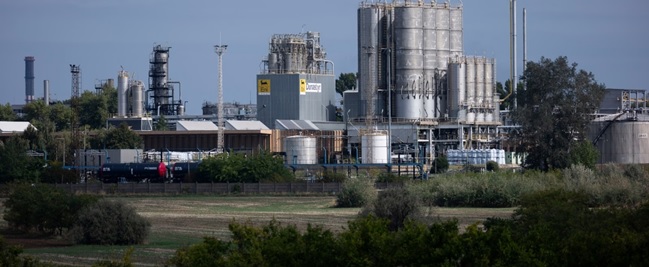
The IEA was established in 1974 in response to the global oil crisis triggered by the Arab oil embargo during the Yom Kippur War.
Core Mandate
Emergency Mechanism
A key requirement for members is maintaining minimum strategic oil stocks.
This mechanism has been activated during:
Membership Structure
Expansion of IEA Membership
In 2015, the IEA created the Associate Membership category for non-OECD countries.
Associate members:
India became an associate member in 2017, marking a significant shift in the IEA’s engagement with emerging economies.
Over time, the IEA’s mandate expanded beyond oil security to include:
At its founding, IEA members accounted for over 60% of global energy demand.
That share declined to around 40% a decade ago.
However, when associate members such as India, China, Brazil, South Africa, Indonesia, Egypt, and Thailand are included, the broader IEA framework now represents nearly 80% of global energy demand.
This expansion underscores the IEA’s evolving global relevance.
India formally submitted its request for full membership in October 2023.
The issue has also featured prominently in India–US bilateral discussions.
Why India Seeks Full Membership
Decision-Making Power: As an associate member, India participates in discussions but lacks voting rights.
Strategic Influence: Full membership would allow India to shape global energy governance rules.
Access to Data and Knowledge: The IEA maintains one of the world’s most comprehensive energy databases and policy platforms.
Energy Security Coordination: Membership enhances coordination during global supply disruptions.
The major challenge lies in the IEA’s founding charter, which restricts membership to OECD countries.
Since India does not intend to join the OECD, full membership would require:
Both options involve political consensus among current members, making the process complex and time-consuming rather than automatic.
Brazil, another non-OECD country, has also sought full membership, adding to the broader debate on reforming the IEA’s structure.
The IEA has expressed strong support for India’s bid, recognising:
Growing India–IEA Engagement
LiFE Initiative Collaboration
The IEA prepared a special report on India’s LiFE (Lifestyle for Environment) initiative, estimating that widespread lifestyle changes could avoid up to 2 billion tonnes of global emissions by 2030.
FAQs1. What is the IEA? An intergovernmental organisation established in 1974 to ensure global energy security and coordinate oil supply responses. 2. Why can’t India easily become a full member? Because IEA membership is legally restricted to OECD countries. 3. What is India’s current status in the IEA? India is an associate member since 2017. 4. Why does India want full membership? To gain voting rights and influence global energy governance decisions. 5. How has the IEA’s role evolved? It has expanded from oil security to renewable energy, decarbonisation, and critical minerals governance. |



Our support team will be happy to assist you!

 Contact Us
  New Batch : 9555124124/ 7428085757
  Tech Support : 9555124124/ 7428085757