Prelims
Environment & Ecology + Economy + Current Affairs – Carbon Credit Trading Scheme (CCTS), Carbon Markets, Emissions Trading System (ETS), Green Steel, Climate Change, and Steel Industry.
Mains
GS Paper III : Environment – Climate Change, Carbon Markets, Carbon Credit Trading Scheme (CCTS), Green Steel and Sustainable Development
GS Paper III : Economy – Industrial Growth, Energy Efficiency, Steel Industry and Low-Carbon Transition.
|
Why is it in News ?
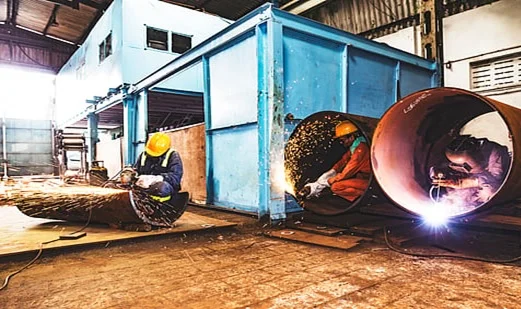
- India has taken a major step towards operationalising its carbon market by notifying draft emission-intensity targets for the iron and steel sector under the Carbon Credit Trading Scheme (CCTS). The notification covers 255 steel plants and marks the beginning of compliance for one of India's most carbon-intensive industries.
- As the world's second-largest steel producer, India's steel sector contributes 10–12% of the country's total CO₂ emissions, making its decarbonisation crucial for achieving India's climate commitments.
What is the Carbon Credit Trading Scheme (CCTS) ?
- The Carbon Credit Trading Scheme (CCTS) is India's domestic Emissions Trading System (ETS) that aims to reduce greenhouse gas emissions through a market-based mechanism.
- Instead of imposing a carbon tax, industries receive emission-intensity targets. Companies emitting below their target earn Carbon Credit Certificates (CCCs), while those exceeding the target must purchase credits or improve their efficiency.
Objective
- Reduce industrial carbon emissions.
- Promote cleaner technologies.
- Create a domestic carbon market.
- Help India achieve its Net Zero 2070 target.
Why Has the Steel Sector Been Included ?
Key Facts
- Steel Production (FY 2024–25) : ~151 Million Tonnes
- Global Rank : 2nd Largest Producer
- Share in India's CO₂ Emissions : 10–12%
- Average Emission Intensity (India) : 2.54 tCO₂ per tonne of crude steel
- Global Average : 1.9 tCO₂ per tonne
- The Ministry of Steel aims to reduce emission intensity to 2.2 tonnes CO₂ per tonne of crude steel by 2030.
What Do the Draft Targets Say ?
Coverage
- 255 steel plants
- 358.6 MtCO₂e baseline emissions
Target Reduction
- Steel plants must reduce emission intensity by :
- Minimum : 2.1%
- Maximum : 9.3%
- Average : Around 5.5%
- Plants with higher emissions have been assigned stricter targets.
What Has Changed from the Earlier Draft?
New Companies Added
- Bilasraika Sponge Iron India Pvt Ltd
- OCL Iron & Steel Ltd
- Orissa Metalliks Pvt Ltd
Removed
Renamed
Target Revisions
- 126 plants received revised baseline emissions.
- 73 plants received relaxed targets.
- 24 plants received stricter targets.
- These revisions reflect updated technical data and stakeholder consultations.
A Major Concern: Coal-Based Steel Production
Current Production Routes
|
Route
|
Share
|
|
Blast Furnace–Basic Oxygen Furnace (BF-BOF)
|
42.7%
|
|
Induction Furnace (IF)
|
35.4%
|
|
Electric Arc Furnace (EAF)
|
21.9%
|
Why Is This a Challenge ?
- The Induction Furnace (IF) route has expanded in recent years despite being highly carbon-intensive.
- Meanwhile, the cleaner Electric Arc Furnace (EAF) route-which mainly uses recycled scrap steel and can run on renewable electricity-is losing share.
Risk of Carbon Lock-In
- According to Global Energy Monitor:
- India has 258 Million Tonnes Per Annum (MTPA) of steel capacity under development.
- More than two-thirds is based on the BF-BOF route.
- Only 13% is based on Electric Arc Furnaces (EAFs).
- More than 90% of new iron-making capacity will depend on coal.
- This could lock India into high-carbon steel production for the next 20–30 years, making future decarbonisation more difficult and expensive.
Can CCTS Truly Decarbonise the Steel Sector?
Short-Term Impact of CCTS
- Energy efficiency : Encourages industries to use energy more efficiently.
- Waste heat recovery : Promotes the reuse of waste heat generated during production.
- Better fuel management : Improves fuel consumption and reduces energy wastage.
- Operational improvements : Encourages process optimisation to lower emissions.
- Result : These measures can reduce carbon emissions at relatively low cost while improving industrial efficiency.
In the Long Term
- Real decarbonisation will require major technological transformation, including :
- Green Hydrogen-based Steelmaking
- Electric Arc Furnaces (EAF)
- Greater Scrap Recycling
- Renewable Energy Integration
- Carbon Capture, Utilisation and Storage (CCUS)
- Low-carbon Iron-making Technologies
- Without these investments, carbon trading alone may not significantly reduce emissions.
Why Does It Matter ?
- The inclusion of steel under the CCTS is a significant milestone because :
- It expands India's carbon market.
- It strengthens India's climate policy framework.
- It encourages industries to improve efficiency.
- It prepares exporters for global carbon regulations such as the Carbon Border Adjustment Mechanism (CBAM).
- It supports India's long-term Net Zero strategy.
Challenges
- Continued dependence on coal-based steelmaking.
- Lack of sub-sector classification in the notification.
- High investment required for cleaner technologies.
- Carbon lock-in due to new coal-based projects.
- Need for clear carbon credit pricing and monitoring mechanisms.
Way Forward
- To ensure meaningful decarbonisation, India should :
- Expand Electric Arc Furnace capacity.
- Promote Green Hydrogen Mission for steelmaking.
- Increase scrap-based steel production.
- Encourage renewable energy use in steel plants.
- Strengthen carbon market transparency.
- Align CCTS with Green Steel Taxonomy and international carbon standards.
Conclusion
The notification of emission targets under the Carbon Credit Trading Scheme (CCTS) marks a major step in operationalising India's carbon market. However, compliance through energy efficiency alone will not be sufficient. The real success of the CCTS will depend on whether it encourages industries to shift away from coal-based production and invest in low-carbon technologies. As one of the world's largest and fastest-growing steel producers, India's decisions today will shape both its industrial competitiveness and its ability to meet future climate commitments.
Prelims Question
Q. Consider the following statements regarding the Carbon Credit Trading Scheme (CCTS):
- It is India's domestic carbon market mechanism.
- It is based on absolute emission reduction targets.
- Industries emitting below the prescribed target can earn carbon credits.
Which of the statements given above is/are correct?
- 1 only
- 1 and 2 only
- 1 and 3 only
- 1, 2 and 3
Mains Question
Q. Discuss the significance of the Carbon Credit Trading Scheme (CCTS) in promoting industrial decarbonisation in India. Examine its potential and limitations with reference to the iron and steel sector.
|
FAQs
Q1. What is the Carbon Credit Trading Scheme (CCTS) ?
Answer: The Carbon Credit Trading Scheme (CCTS) is India's domestic carbon market that encourages industries to reduce greenhouse gas (GHG) emissions through a market-based mechanism. Industries that emit less than their prescribed targets earn carbon credits, which can be traded.
Q2. Why is the iron and steel sector included under CCTS ?
Answer: The iron and steel sector contributes 10–12% of India's total CO₂ emissions and is one of the country's most energy-intensive industries. Including it under CCTS will help reduce industrial emissions and support India's climate goals.
Q3. How many steel plants are covered under the draft notification ?
Answer: The draft notification covers 255 iron and steel plants across India.
Q4. When will compliance under the CCTS begin for the steel sector?
Answer: Compliance for the iron and steel sector will begin from FY 2026–27.
Q5. What are emission-intensity targets ?
Answer: Emission-intensity targets require industries to reduce carbon emissions per unit of production, rather than reducing total emissions.
|






 Contact Us
  New Batch : 9555124124/ 7428085757
  Tech Support : 9555124124/ 7428085757