Prelims: Non-Fossil Fuel Energy, Renewable Energy, Solar Power, Wind Power, Hydropower, Nuclear Power, Nationally Determined Contributions (NDCs), Green Energy Corridor
Mains: GS Paper II: International Agreements and India's Climate Commitments
GS Paper III: Energy, Infrastructure, Environment, Climate Change, Sustainable Development |
Why in News?
The Ministry of New and Renewable Energy (MNRE) announced that India's installed non-fossil fuel-based electricity generation capacity has crossed 300 GW, reaching 300.50 GW as on 31 July 2026. This constitutes over 54% of India's total installed power capacity (around 552 GW) and represents more than 60% of India's 2030 target of 500 GW non-fossil capacity under its climate commitments.
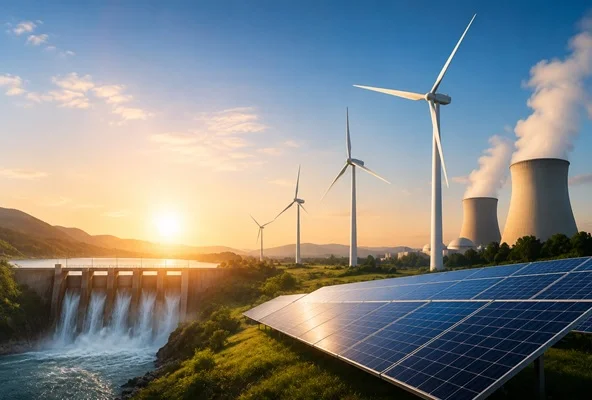
Key Facts at a Glance
| Indicator |
Key Fact |
| Non-fossil capacity |
300.50 GW |
| Date of milestone data |
31 July 2026 |
| Total installed power capacity |
Around 552 GW |
| Non-fossil share |
Over 54% |
| Largest non-fossil source |
Solar Power |
| Solar power |
164.59 GW |
| Wind capacity |
58.14 GW |
| Hydropower |
57.24 GW |
| Bio-power |
11.75 GW |
| Nuclear power |
8.78 GW |
| 2030 non-fossil capacity target |
500 GW |
| Target already achieved |
Over 60% |
|
Remaining to 500 GW
|
About 199.5 GW |
|
Updated NDC
|
About 50% cumulative installed electric-power capacity from non-fossil sources by 2030 |
|
Net Zero target
|
2070 |
|
Nodal ministry for renewable energy
|
Ministry of New and Renewable Energy (MNRE) |
|
Major international framework
|
Paris Agreement
|
|
Panchamrit announced at
|
COP26, Glasgow (2021)
|
What Does 'Non-Fossil Fuel Power' Mean?
- It refers to energy obtained from sources other than fossil fuels such as coal, petroleum and natural gas.
- India's non-fossil electricity capacity primarily includes:
Solar + Wind + Hydropower + Bio-power + Nuclear Power
Composition of India's 300.50 GW Non-Fossil Capacity
- Solar Power-164.59 GW: Solar energy is the largest contributor to India's non-fossil fuel power capacity. India's solar capacity has increased dramatically from around 2.8 GW in 2014 to around 165 GW in 2026. Major government initiatives supporting solar expansion include:
National Solar Mission
- PM Surya Ghar: Muft Bijli Yojana
- PM-KUSUM
- Solar Parks Scheme
- Production Linked Incentive (PLI) Scheme for High-Efficiency Solar PV Modules
- Rooftop solar programmes
Green Energy Corridors
- Wind Power-58.14 GW: India's installed wind-power capacity reached 58.14 GW by 31 July 2026. It has increased from around 21 GW in 2014, highlighting the expansion of India's wind-energy ecosystem. Wind-rich states include Gujarat, Tamil Nadu, Karnataka, Maharashtra, Rajasthan and Andhra Pradesh. India is also increasingly exploring offshore wind energy, particularly along the Gujarat and Tamil Nadu coasts.
- Hydropower-57.24 GW: Large and small hydropower together contribute 57.24 GW to India's non-fossil electricity capacity. Hydropower has additional importance because it can complement variable renewable sources such as solar and wind. Pumped Storage Projects (PSPs) are particularly important for storing energy and balancing the electricity grid.
- Bio-Power-11.75 GW: India's bio-power capacity stands at 11.75 GW. Bio-power can utilise agricultural residues, Bagasse, biomass, organic waste and other biodegradable materials. It can simultaneously contribute to waste management, rural income generation and energy security.
- Nuclear Power-8.78 GW: India's nuclear-power capacity stands at 8.78 GW. Unlike solar and wind, nuclear power can provide relatively continuous electricity generation.
India's Journey towards Clean Energy
- Solar power has emerged as the principal driver. MNRE states that installed solar capacity increased from around 2.8 GW in 2014 to about 165 GW in 2026, while wind capacity increased from around 21 GW to more than 58 GW.
- During 2025-26 alone, India installed a record 55.29 GW of non-fossil fuel-based electricity capacity, including Solar – 44.6 GW and Wind – 6 GW.
Link with India's Updated NDCs
India submitted its updated Nationally Determined Contribution (NDC) under the Paris Agreement in 2022. One of its major commitments is to achieve about 50% cumulative electric-power installed capacity from non-fossil fuel-based energy resources by 2030. India has now crossed 54%, meaning that, on the installed-capacity metric, it has moved beyond this 2030 NDC threshold ahead of schedule.
India's Panchamrit Commitments
- At COP26 in Glasgow in 2021, India announced the 'Panchamrit' climate commitments. They included:
- Reaching 500 GW non-fossil energy capacity by 2030.
- Meeting 50% of energy requirements from renewable energy by 2030.
- Reducing projected carbon emissions by 1 billion tonnes by 2030.
- Reducing the carbon intensity of the economy by 45% by 2030 compared with 2005.
- Achieving Net Zero by 2070.
Major Government Initiatives Supporting the Transition
- National Solar Mission: Promotes large-scale development of solar power and supports India's transition towards a solar-based energy economy.
- PM Surya Ghar-Muft Bijli Yojana: Promotes rooftop solar installations among residential households.
- PM-KUSUM: Encourages solarisation of agriculture through solar pumps and decentralised renewable-power plants.
- Green Energy Corridor: Strengthens transmission infrastructure to facilitate the evacuation and integration of renewable electricity into the national grid.
- PLI Scheme for Solar PV Modules: Aims to strengthen India's domestic manufacturing ecosystem for high-efficiency solar photovoltaic modules.
- National Green Hydrogen Mission: Aims to develop India as a major producer, user and exporter of green hydrogen and its derivatives, while supporting decarbonisation of hard-to-abate sectors.
- Renewable Purchase Obligations: Require designated electricity consumers/entities to procure a prescribed share of electricity from renewable sources.
- Green Energy Open Access: Facilitates greater access to renewable electricity for commercial and industrial consumers.
Why is the 300 GW Milestone Significant?
- Progress towards Climate Commitments: Crossing 300 GW demonstrates substantial progress towards India's climate and clean-energy goals.
- Energy Security: India imports significant quantities of fossil fuels. Expanding domestic renewable energy can reduce exposure to volatile international fuel markets.
- Reduction in Carbon Emissions: Replacing fossil-fuel-based electricity with low-carbon sources can support the decarbonisation of India's economy.
- Economic and Industrial Competitiveness: Access to clean electricity is increasingly important for industries facing global carbon-related standards and supply-chain requirements.
- Green Employment: Expansion of solar, wind, battery storage, green hydrogen and associated manufacturing can generate employment across construction, manufacturing, operations and maintenance.
- Rural Development: Decentralised solar, biomass and agricultural solarisation can provide new income opportunities and improve electricity access in rural areas.
- Strategic Autonomy: Domestic renewable energy reduces dependence on imported fossil fuels and strengthens India's long-term energy sovereignty.
Installed Capacity vs Actual Electricity Generation
- Installed Capacity: It represents the maximum rated capacity of installed power plants.
- Electricity Generation: It represents the actual electricity produced over a given period.
- Solar and wind are intermittent because their generation depends on sunlight and wind availability. Coal and nuclear plants can generally operate for longer periods and therefore may have higher capacity factors.
Major Challenges
- Intermittency: Solar electricity is unavailable at night, while wind generation fluctuates according to weather conditions.
- Energy Storage: Large-scale battery storage and pumped-storage capacity need to expand alongside renewable power.
- Transmission Infrastructure: Many renewable-energy projects are located far from major consumption centres, requiring extensive transmission infrastructure.
- Renewable Energy Curtailment: Insufficient transmission capacity can force producers to reduce generation even when renewable resources are available. This has emerged as a significant issue in renewable-rich states.
- Land Acquisition: Large solar and wind projects require substantial land and may generate conflicts involving agriculture, biodiversity and local communities.
- Import Dependence: India continues to depend on global supply chains for some critical renewable-energy components and minerals.
- DISCOM Financial Stress: Weak finances of electricity distribution companies can affect payment security and investment in clean energy.
- Grid Stability: Increasing penetration of variable renewable energy requires advanced forecasting, storage, flexible generation and smarter grids.
- Environmental Concerns: Renewable projects themselves can create ecological challenges, including impacts of hydropower projects, large solar parks and wind installations on local ecosystems.
Prelims MCQ
Q. With reference to India's non-fossil fuel-based electricity capacity, consider the following statements:
- India's installed non-fossil fuel power capacity crossed 300 GW in 2026.
- Solar power constitutes the largest component of India's installed non-fossil capacity.
- Nuclear power is included within non-fossil fuel electricity capacity.
Which of the statements given above are correct?
A. 1 and 2 only
B. 2 and 3 only
C. 1 and 3 only
D. 1, 2 and 3
Mains Practice Questions
Q. Examine the significance of renewable energy in strengthening India's energy security and achieving its climate commitments.
|
FAQs
How much non-fossil fuel power capacity does India have?
India had 300.50 GW of installed non-fossil electricity capacity as of 31 July 2026.
What percentage of India's installed capacity is non-fossil?
Non-fossil sources account for over 54% of India's total installed electricity capacity.
Which is India's largest source of non-fossil power capacity?
Solar power, with 164.59 GW installed capacity.
What is India's non-fossil capacity target for 2030?
India aims to achieve 500 GW of non-fossil fuel-based electricity capacity by 2030.
What is India's Net Zero target?
India has announced a target to achieve Net Zero emissions by 2070
|






 Contact Us
  New Batch : 9555124124/ 7428085757
  Tech Support : 9555124124/ 7428085757