Prelims: Science and Technology, Defence Technology, Missile Systems, Scramjet Engines, DRDO
Mains: GS Paper III – Science and Technology, Indigenisation of Technology, Defence Manufacturing and National Security
Keywords: Scramjet Engine, Hypersonic Missile, DRDO, HSTDV, Air-Breathing Propulsion, Supersonic Combustion, Atmanirbhar Bharat |
Why in News?
India's Ministry of Defence has floated a tender for 500 scramjet propulsion systems to support the country's hypersonic missile development programme.
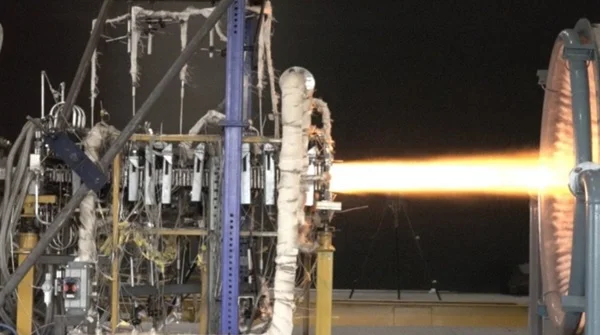
What is a Scramjet Engine?
- A Scramjet (Supersonic Combustion Ramjet) is an advanced air-breathing jet engine designed to operate at hypersonic speeds.
- Unlike conventional jet engines, a scramjet does not use rotating compressors or turbines. Instead, it uses the vehicle's high forward speed to compress incoming atmospheric air.
- Its distinguishing feature is that air continues to flow at supersonic speed through the combustion chamber.
How Does a Scramjet Engine Work?
- Air Intake: Atmospheric air enters the engine at high speed.
- Air Compression: The engine's inlet geometry compresses the incoming air without a mechanical compressor.
- Fuel Injection: Fuel is injected into the high-speed airflow.
- Supersonic Combustion: Fuel burns while the airflow remains supersonic.
- Thrust Generation: High-energy exhaust gases exit through the nozzle, producing thrust.
Difference Between Turbojet, Ramjet and Scramjet Engines
|
Feature
|
Turbojet
|
Ramjet
|
Scramjet
|
|
Air compression
|
Mechanical compressor
|
Forward speed
|
Very high forward speed
|
|
Compressor and turbine
|
Present
|
Absent
|
Absent
|
|
Airflow during combustion
|
Subsonic
|
Subsonic
|
Supersonic
|
|
Thrust at standstill
|
Yes
|
No
|
No
|
|
Main application
|
Jet aircraft
|
Supersonic missiles
|
Hypersonic vehicles and missiles
|
What is Hypersonic Missile Technology?
Hypersonic missiles are designed to travel at speeds of Mach 5 or higher, meaning at least five times the local speed of sound.
Major Types of Hypersonic Weapons
1. Hypersonic Glide Vehicles (HGVs)
- Initially accelerated by a rocket.
- Separate from the booster and glide towards their targets.
- Can manoeuvre during atmospheric flight.
- Do not necessarily require scramjet propulsion.
2. Hypersonic Cruise Missiles (HCMs)
- Generally use advanced air-breathing propulsion, such as scramjet engines.
- Can sustain powered flight at hypersonic speeds.
- Operate within the atmosphere.
- Require an initial acceleration system.
India's Major Scramjet Technology Programmes
1. Hypersonic Technology Demonstrator Vehicle (HSTDV)
- Developed by the Defence Research and Development Organisation (DRDO).
- Designed to demonstrate indigenous scramjet propulsion technology.
- Successfully flight-tested on September 7, 2020.
- Demonstrated approximately Mach 6 flight for over 20 seconds.
2. Hypersonic Cruise Missile Development Programme
- Focuses on developing sustained hypersonic propulsion.
- Involves advanced scramjet combustor technology.
- DRDO's Defence Research and Development Laboratory (DRDL) has undertaken long-duration ground testing of scramjet combustors.
- Supports the development of future indigenous hypersonic cruise missile systems.
3. BrahMos-II
- Proposed India–Russia hypersonic missile development programme.
- Envisages advanced air-breathing propulsion technology.
- Intended to achieve hypersonic flight capabilities.
- Remains a development initiative rather than an operationally inducted missile system.
Significance for India
- Strengthening National Security: Hypersonic propulsion technology could improve India's future long-range precision-strike capabilities and strengthen its strategic deterrence.
- Indigenous Defence Manufacturing: Domestic production of advanced propulsion systems could reduce dependence on foreign suppliers and support the Atmanirbhar Bharat initiative.
- Technological Advancement: Scramjet development promotes research in high-temperature materials, computational fluid dynamics, combustion science and advanced aerospace engineering.
- Strategic Competitiveness: Hypersonic technology is an important area of military research for major powers, including the United States, China and Russia. Indigenous capabilities could strengthen India's technological and strategic position.
Major Challenges
- Thermal Management: Extremely high temperatures during hypersonic flight require advanced cooling systems and heat-resistant materials.
- Combustion Stability: Maintaining efficient combustion in supersonic airflow is technically challenging.
- Initial Acceleration: Scramjet engines require high-speed initial acceleration before they can operate effectively.
- Testing Infrastructure: Hypersonic propulsion development requires specialised ground-testing facilities and flight trials.
- Manufacturing Complexity: Producing reliable propulsion systems at scale requires precision engineering, specialised materials and strict quality control.
Way Forward
- India should strengthen collaboration between DRDO, academic institutions and domestic defence industries to accelerate indigenous hypersonic propulsion research.
- Investment in advanced materials, high-temperature testing facilities, computational modelling and precision manufacturing will be essential.
- A phased approach involving technology demonstration, extensive testing, production qualification and operational evaluation can help translate research achievements into reliable defence capabilities.
Conclusion
- India's reported tender for 500 scramjet propulsion systems highlights its efforts to advance indigenous hypersonic missile technology and strengthen domestic defence manufacturing.
- However, procurement proposals must be distinguished from demonstrated technological capabilities and operational deployment. Continued research, successful testing and manufacturing readiness will determine the programme's long-term contribution to India's national security.
UPSC Prelims Practice Question
Q. With reference to Scramjet Engines, consider the following statements:
- Scramjet engines use atmospheric oxygen for combustion.
- Airflow remains supersonic during combustion inside a scramjet engine.
- Scramjet engines can generate sufficient thrust to launch a missile directly from a stationary position.
Which of the statements given above are correct?
(a) 1 and 2 only
(b) 2 and 3 only
(c) 1 and 3 only
(d) 1, 2 and 3
UPSC Mains Practice Question
Discuss the strategic significance of indigenous scramjet propulsion technology for India's hypersonic missile programme. Examine the major technological challenges associated with its development.
|
FAQs
1. What is the full form of Scramjet?
Scramjet stands for Supersonic Combustion Ramjet. It is an air-breathing jet engine in which combustion occurs while the airflow remains supersonic.
2. What is the difference between Ramjet and Scramjet engines?
In a ramjet, airflow is slowed to subsonic speed before combustion. In a scramjet, combustion takes place in supersonic airflow.
3. Can a scramjet engine operate without a rocket booster?
A scramjet requires initial acceleration to a sufficiently high speed. A rocket booster is a common method, although other acceleration systems may also be used.
4. Which DRDO programme demonstrated scramjet technology?
DRDO's Hypersonic Technology Demonstrator Vehicle (HSTDV) demonstrated indigenous scramjet-powered hypersonic flight during its September 7, 2020 test.
5. Are all hypersonic missiles powered by scramjet engines?
No. Hypersonic cruise missiles may use scramjet propulsion, while hypersonic glide vehicles and ballistic missiles can achieve hypersonic speeds without scramjet engines.
|






 Contact Us
 New Batch : 9555124124/ 7428085757
 Tech Support : 9555124124/ 7428085757
