Prelims: (Environment & Ecology + CA)
Mains: (GS 3 – Environment, Climate Change, Urbanisation; GS 2 – Governance, Local Bodies) |
Why in News ?
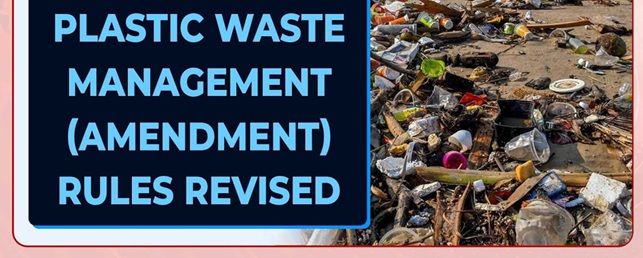
The Union government has notified the Solid Waste Management (SWM) Rules, 2026, making source-level processing of waste mandatory for bulk waste generators and local bodies across India. The rules mark a major shift in India’s urban environmental governance by strengthening accountability, reducing landfill dependence, and operationalising the circular economy framework.
Significance of the Issue
- Urban Environmental Sustainability: India’s cities are struggling with mounting waste volumes, environmental degradation, and public health risks. The new framework seeks to reverse landfill-centric practices.
- Governance and Accountability: The rules transfer greater responsibility to waste generators, improving compliance and reducing the fiscal and operational burden on urban local bodies (ULBs).
- Climate and Resource Efficiency: By prioritising waste reduction, recycling, and recovery, the framework aligns with India’s climate commitments and resource efficiency goals.
- Public Health and Urban Liveability: Improved segregation and processing reduce groundwater contamination, air pollution, and disease risks linked to unmanaged waste.
Key Components and Takeaways
1. Solid Waste Management in India: Status and Challenges
- Rising Waste Generation: India generates approximately 1.85 lakh tonnes of solid waste daily, driven by rapid urbanisation, population growth, and changing consumption patterns.
- Disproportionate Contribution by Bulk Generators: Nearly 30–40% of waste originates from bulk generators such as residential societies, commercial complexes, institutions, and government buildings.
- Lagging Processing Capacity: Despite improvements in door-to-door collection and segregation under initiatives like Swachh Bharat Mission (Urban), waste processing has not kept pace with generation.
- Landfill Dependence and Environmental Risks: A large share of collected waste continues to be dumped in landfills, leading to land degradation, groundwater contamination, air pollution, and health hazards.
- Poor Segregation at Source: Inadequate segregation remains the most persistent bottleneck, increasing downstream costs and reducing recycling efficiency.
2. Regulatory Framework for Solid Waste Management
Legal Basis: India’s waste governance is guided by rules framed under the Environment (Protection) Act, 1986.
SWM Rules, 2016 – A Paradigm Shift: The 2016 rules marked a move from landfill-centric disposal to scientific waste management, emphasising:
- Mandatory segregation at source
- Responsibilities of ULBs for collection and processing
- Inclusion of bulk waste generators
- Promotion of composting, biomethanation, and recycling
Implementation Gaps: Weak enforcement, limited institutional capacity of ULBs, and unclear accountability mechanisms diluted the impact of these provisions.
Need for Reform: These regulatory shortcomings prompted the formulation of the SWM Rules, 2026, replacing the decade-old framework.
3. News Summary: Solid Waste Management Rules, 2026
Stricter Compliance Regime: Notified by the Ministry of Environment, Forest and Climate Change, the rules come into effect from April 1, introducing a more enforceable and generator-focused framework.
Mandatory Source-Level Processing: The most significant reform is compulsory waste processing at source by bulk waste generators, who account for nearly one-third of urban solid waste.
4. Core Principles of the New SWM Framework
Waste Hierarchy as the Guiding Principle: The framework prioritises:
- Waste prevention and reduction
- Reuse
- Recycling
- Recovery of energy
- Disposal as a last resort
Restricting Landfill Use: Landfills are to be used only for non-recyclable, non-recoverable, and inert waste, reinforcing the transition towards a circular economy.
Economic Disincentives for Dumping: Higher landfill fees for unsegregated waste aim to discourage dumping and incentivise source-level processing.
5. Expanded Scope of Bulk Waste Generators
Entities classified as bulk waste generators include:
- Buildings with a floor area of 20,000 sq. m. or more
- Facilities consuming 40,000 litres of water per day or more
- Entities generating 100 kg or more of waste per day
This covers:
- Residential societies
- Universities and hostels
- Commercial establishments
- Central and State government institutions
This expansion significantly broadens regulatory coverage.
6. Mandatory Segregation Norms
The rules prescribe four mandatory waste streams:
- Wet waste
- Dry waste
- Sanitary waste
- Special care waste (e.g., batteries, tube lights, e-waste)
This detailed categorisation aims to:
- Improve recycling efficiency
- Reduce contamination
- Enable safer handling of hazardous components
7. Extended Bulk Waste Generator Responsibility (EBWGR)
Bulk waste generators must:
- Process wet waste on-site wherever feasible
- Obtain an EBWGR certificate if on-site processing is not possible
- Ensure environmentally sound collection, transport, and processing of all waste streams
Digital Monitoring: A centralised online portal will enable real-time tracking, compliance monitoring, and enforcement.
8. New Powers for Local Bodies
Tourist Waste Management: Local authorities in hilly and island regions are empowered to:
- Levy user fees on tourists for waste management
- Regulate visitor numbers based on local waste-handling capacity
This recognises ecological fragility and promotes sustainable tourism.
9. Significance of the New Rules
- Shifting Responsibility to Generators: The 2026 Rules shift the primary burden of waste management from ULBs to waste generators, enhancing accountability.
- Reducing Municipal Fiscal Stress: By mandating source-level processing, the framework lowers the financial and operational load on municipalities.
- Boosting Processing Rates: Targeting bulk generators directly is expected to significantly improve waste processing outcomes and reduce landfill dependence.
- Advancing Circular Economy Goals: The framework integrates environmental protection, resource efficiency, and climate action into urban governance.
Challenges and Way Forward
- Institutional Capacity Building: ULBs and regulators must be strengthened with technical expertise, infrastructure, and enforcement tools.
- Behavioural Change and Compliance: Public awareness campaigns and stakeholder engagement are needed to ensure effective segregation and on-site processing.
- Monitoring and Enforcement: The digital portal must be robust, transparent, and interoperable with State and municipal systems.
- Support for Smaller Generators: Technical and financial support mechanisms are needed for smaller bulk generators to comply with processing norms.
- Integrating Informal Sector: Waste pickers and informal recyclers should be integrated into formal systems to enhance livelihoods and recycling efficiency.
FAQs
1. What is the most significant change introduced by the SWM Rules, 2026 ?
Mandatory processing of waste at source by bulk waste generators, shifting responsibility away from urban local bodies.
2. Who qualifies as a bulk waste generator under the new rules ?
Entities generating 100 kg or more waste daily, buildings over 20,000 sq. m., or facilities consuming over 40,000 litres of water per day.
3. What waste streams must be segregated under the new framework ?
Wet waste, dry waste, sanitary waste, and special care waste (such as batteries and e-waste).
4. How do the new rules promote a circular economy ?
By prioritising waste reduction, reuse, recycling, and recovery, and restricting landfill use to residual, inert waste.
5. What special powers are given to local bodies in hilly and island regions ?
They can levy tourist waste management fees and regulate visitor numbers based on local waste-handling capacity.
|






 Contact Us
  New Batch : 9555124124/ 7428085757
  Tech Support : 9555124124/ 7428085757