Why in news?
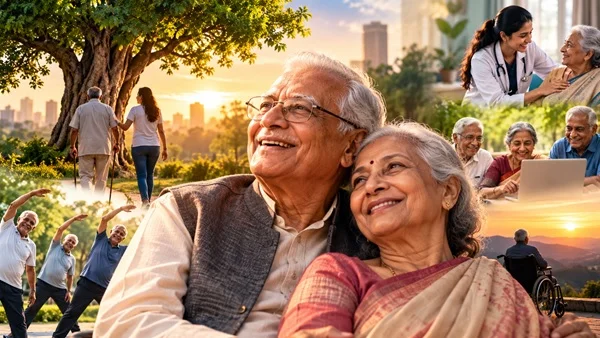
The International Day of Older Persons is observed every year on 1 October to raise awareness about the opportunities and challenges associated with population ageing.
Key Facts
|
Particular
|
Details
|
|
Observed on
|
1 October
|
|
Established by
|
United Nations General Assembly
|
|
Established in
|
1990
|
|
UN Resolution
|
45/106
|
|
First Observed
|
1 October 1991
|
|
2026 Theme
|
The Age of Longevity: Rethinking Systems for Longer Lives
|
|
Major focus
|
Rights, dignity, health and well-being of older persons
|
|
Important global framework
|
Madrid International Plan of Action on Ageing
|
|
Related initiative
|
UN Decade of Healthy Ageing (2021–2030)
|
Background of the day
1982 (Vienna International Plan of Action on Ageing)
- The First World Assembly on Ageing adopted the Vienna International Plan of Action on Ageing in 1982.
- It was one of the first major international frameworks focusing specifically on the challenges associated with ageing.
1990 (International Day Established)
- On 14 December 1990, the UN General Assembly adopted Resolution 45/106, designating 1 October as the International Day of Older Persons.
1991 (UN Principles for Older Persons)
- The UN General Assembly adopted the United Nations Principles for Older Persons through Resolution 46/91.
- These principles focus on five broad areas Independence, Participation, Care, Self-fulfilment and Dignity.
2002 (Madrid International Plan of Action on Ageing)
- The Second World Assembly on Ageing adopted the Madrid International Plan of Action on Ageing (MIPAA) in 2002.
- It identified three major priority directions: Older persons and development, Advancing health and well-being into old age and Ensuring enabling and supportive environments.
Global Ageing Facts
- The number of people aged 60 years and above has increased from around 541 million in 1995 to 1.2 billion in 2025. This population is projected to reach approximately 2.1 billion by 2050.
- By 2080, people aged 65 years and above are projected to outnumber children below 18 years globally. Global life expectancy reached around 73.5 years in 2025.
- These trends mean that population ageing will increasingly affect healthcare systems, labour markets, pensions, housing, family structures and social protection systems.
Ageing Population in India
- India's population aged 60 years and above is projected to rise from around 10 crore in 2011 to 23 crore by 2036.
- Their share in India's total population is projected to increase from 8.4% in 2011 to 14.9% in 2036.
- At the same time, the share of children below 15 years is projected to decline from 30.9% to 20.1% during the same period.
Major Challenges Faced by Older Persons
- Healthcare Needs: Ageing can increase the prevalence of chronic diseases, disabilities and the need for long-term healthcare.
- Financial Insecurity: Older persons without adequate pensions or savings may become financially dependent on their families or social assistance.
- Ageism: Older persons may experience stereotypes, exclusion or discrimination based solely on age.
- Digital Divide: Increasing digitisation of banking, healthcare and government services can create accessibility problems for older persons with limited digital literacy.
- Social Isolation: Migration, urbanisation and changing family structures can increase loneliness and social isolation among senior citizens.
Major Initiatives in India
- Atal Vayo Abhyudaya Yojana (AVYAY): An umbrella scheme by the Ministry of Social Justice and Empowerment for the welfare of senior citizens to promote healthy, dignified and active ageing. Major initiatives under the framework include senior citizen care facilities, assistive devices and support services.
- Integrated Programme for Senior Citizens: Under IPSrC, financial support is provided to eligible organisations for services such as Senior Citizen Homes, Continuous Care Homes, Mobile Medicare Units and Physiotherapy Clinics.
- Rashtriya Vayoshri Yojana: Provides assisted-living devices to eligible senior citizens suffering from age-related disabilities or infirmities. These include mobility and other assistive devices designed to improve independent living. As of July 2026, the government reported that more than 49.81 lakh assistive devices had been distributed among over 9.23 lakh senior citizens under the scheme.
- Indira Gandhi National Old Age Pension Scheme: Operates under the National Social Assistance Programme (NSAP). It provides central financial assistance to eligible elderly persons from economically vulnerable households.
- National Programme for Health Care of the Elderly: Focuses on healthcare needs associated with ageing and strengthening geriatric healthcare services.
UN Decade of Healthy Ageing
- The United Nations Decade of Healthy Ageing (2021–2030) is a global initiative aimed at improving the lives of Older people, their families and communities.
- It brings together governments, civil society, international organisations, professionals, academia and the private sector.
- The broader idea is that living longer should also mean living healthier and more independent lives.
Significance of International Day of Older Persons
- Promotes Dignity: The day reinforces the idea that older persons are rights-holders and active participants in society, rather than merely beneficiaries of welfare.
- Encourages Healthy Ageing: Longer life expectancy needs to be accompanied by improved health, mobility and independence.
- Strengthens Social Protection: Population ageing increases the importance of pensions, healthcare coverage and long-term care systems.
- Promotes Intergenerational Solidarity: Older and younger generations should not be viewed as competing groups. Policies can strengthen cooperation and knowledge-sharing between generations.
Challenges for India
- Growing elderly population: Increasing demand for care and social protection.
- Healthcare burden: Greater need for geriatric and long-term healthcare.
- Pension coverage: Many informal workers lack adequate retirement security.
- Care infrastructure: Demand for trained caregivers and assisted living is rising.
Prelims MCQ
Q. International Day of Older Persons is observed on:
(a) 15 June
(b) 1 October
(c) 10 October
(d) 14 December
Mains Practice Question
Q. What challenges does population ageing pose for India? Discuss.
|
FAQs
When is International Day of Older Persons observed?
1 October.
What is the theme of International Day of Older Persons 2026?
The Age of Longevity: Rethinking Systems for Longer Lives
Who started International Day of Older Persons?
The UN General Assembly established it in 1990.
What is AVYAY?
It is an umbrella welfare scheme for senior citizens in India.
What is India's senior citizen helpline number?
The Elderline helpline number is 14567.
|







 Contact Us
  New Batch : 9555124124/ 7428085757
  Tech Support : 9555124124/ 7428085757