Prelims: Space Technology, ISRO, JAXA, Moon Missions, International Space Cooperation
Mains: GS Paper III – Science & Technology, Space Technology, International Cooperation in Space, Innovation & Research
Keywords: Chandrayaan-5, LUPEX, ISRO, JAXA, Lunar Polar Exploration Mission, H3 Rocket, Moon Mission 2028, Lunar South Pole, NASA, ESA, Water Ice on Moon |
Why in News?
The Indian Space Research Organisation (ISRO) and the Japan Aerospace Exploration Agency (JAXA) held a high-level technical review meeting at the UR Rao Satellite Centre, Bengaluru, to assess the progress of Chandrayaan-5, also known as the Lunar Polar Exploration Mission (LUPEX).
Important Points
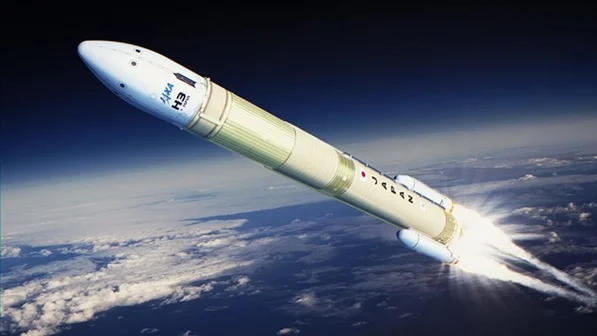
- Chandrayaan-5 will be India's first joint lunar rover mission with Japan, where ISRO will develop the lander, JAXA will build the rover, and the mission will be launched aboard Japan's H3 rocket.
- The mission aims to explore water and water-ice on and beneath the Moon's South Polar Region. NASA and the European Space Agency (ESA) will also contribute scientific payloads, making it a major international lunar mission.
- The Government also informed Parliament that Gaganyaan-1 is progressing steadily, with the Crew Module and Service Module nearing completion, while ISRO is yet to announce the revised launch schedule for the uncrewed human spaceflight mission.
What is Chandrayaan-5 (LUPEX)?
- Chandrayaan-5 or LUPEX (Lunar Polar Exploration Mission) is a joint Moon exploration mission being developed by India (ISRO) and Japan (JAXA).
- It will become the first India-Japan rover mission to the Moon and one of the most advanced international lunar exploration missions.
- Its primary objective is to investigate the presence, distribution, quantity and quality of water ice in the Moon's permanently shadowed regions near the South Pole.
Why is the Lunar South Pole Important?
The lunar South Pole has emerged as one of the most scientifically important regions of the Moon because:
1. Presence of Water Ice
Scientists believe permanently shadowed craters contain frozen water accumulated over billions of years.
2. Future Human Missions
Water can be converted into:
- Drinking water
- Oxygen for astronauts
- Hydrogen fuel for rockets
3. Understanding Lunar Evolution
Studying ice deposits helps scientists understand:
- Solar System evolution
- Comet impacts
- Lunar geology
- Climate history of the Moon
Mission Architecture
|
Component
|
Responsibility
|
|
Lander
|
ISRO
|
|
Rover
|
JAXA
|
|
Launch Vehicle
|
Japan's H3 Rocket
|
|
Mission Duration
|
Around 100 Earth days
|
|
Landing Site
|
Lunar South Pole Region
|
|
Launch Target
|
2028
|
Role of ISRO
ISRO will develop:
- Lunar Lander: ISRO will develop the lander to achieve a safe and precise landing on the Moon's South Pole.
- Mission Integration: ISRO will integrate all spacecraft systems and scientific payloads for seamless mission operations.
- Landing Technologies: ISRO will provide advanced autonomous landing technologies for soft landing in challenging terrain.
- Navigation Support: ISRO will ensure accurate guidance, navigation, and control throughout the mission.
- Communication Systems: ISRO will develop communication systems for reliable data exchange between the lander, rover, and Earth.
The lander will safely deploy the rover onto the Moon's surface after touchdown.
Role of JAXA
JAXA is responsible for:
- Designing the Lunar Rover: JAXA is developing a robust rover capable of operating in the Moon's harsh polar environment.
- Surface Mobility: The rover will travel across the lunar surface to explore different terrains near the South Pole.
- Scientific Exploration: It will conduct scientific experiments to study the Moon's geology and environment.
- Soil Sampling: The rover will collect and analyse lunar soil to search for water ice and other minerals.
- Rover Navigation: JAXA will equip the rover with advanced navigation systems for autonomous movement on the Moon.
The rover will travel across the lunar surface to study subsurface ice and geological formations.
International Participation
The mission also includes contributions from leading global space agencies.
|
NASA (USA)
NASA will provide:
Purpose:
- Detect hydrogen-rich regions
- Identify underground water ice
|
European Space Agency (ESA)
ESA will contribute:
Purpose:
- Analyse lunar gases
- Study volatile substances
- Investigate the lunar exosphere
|
This makes Chandrayaan-5 a major multinational lunar exploration mission.
Scientific Objectives
|
Water Ice Exploration
- Detect water ice deposits
- Measure quantity of ice
- Study distribution beneath the surface
|
Lunar Geology
- Examine soil composition
- Analyse minerals
- Understand lunar evolution
|
Surface Environment
- Study lunar temperature
- Examine radiation conditions
- Understand the lunar environment for future astronauts
|
Technical Review Meeting
During the Bengaluru meeting, scientists discussed:
- Inter-spacecraft communication
- Payload integration
- Mission coordination
- Launch window
- Scientific instrument readiness
- Rover-lander interface
The review is part of regular mission preparedness before the 2028 launch.
Payload Operations Simulation
Recently, JAXA successfully conducted the second Payload Operations Simulation at the Tsukuba Space Center.
The exercise tested:
- Spacecraft operations
- Payload functioning
- Mission command systems
- Parallel scientific operations
This marks another important milestone towards mission readiness.
Scientific Payloads
The mission is expected to carry seven scientific instruments.
These instruments will study:
- Water molecules
- Hydrogen abundance
- Lunar soil
- Mineral composition
- Surface gases
- Thermal properties
- Polar environment
Why is Chandrayaan-5 Important for India?
- Strengthens India's Space Leadership
- Following the success of Chandrayaan-3, India aims to become a leader in lunar exploration.
- Boosts India–Japan Strategic Partnership: The mission reflects deep cooperation in advanced technologies and space science.
- Supports Future Human Missions: Understanding lunar water resources is essential for establishing long-term lunar bases.
- Enhances Scientific Research: Data collected will improve knowledge of the Moon's geology and origin.
Chandrayaan Missions Timeline
|
Mission
|
Year
|
Achievement
|
|
Chandrayaan-1
|
2008
|
Discovery of water molecules on the Moon
|
|
Chandrayaan-2
|
2019
|
Orbiter successful; lander hard landing
|
|
Chandrayaan-3
|
2023
|
First successful landing near Lunar South Pole
|
|
Chandrayaan-4
|
Upcoming
|
Planned lunar sample return mission
|
|
Chandrayaan-5 (LUPEX)
|
2028 (Planned)
|
India-Japan Lunar Polar Exploration Mission
|
UPSC Prelims Facts (Chandrayaan 5)
- LUPEX stands for Lunar Polar Exploration Mission.
- Chandrayaan-5 is a joint mission of ISRO and JAXA.
- Launch vehicle: Japan's H3 Rocket.
- ISRO develops the lander.
- JAXA develops the rover.
- NASA contributes a Neutron Spectrometer.
- ESA contributes a Mass Spectrometer.
- Mission duration: 100 Earth days.
- Objective: Study water and water-ice on and beneath the lunar surface.
- Planned launch year: 2028.
Way Forward
- Strengthen international collaboration in deep-space exploration.
- Accelerate indigenous development of advanced lunar technologies.
- Expand research on space resource utilisation.
- Integrate lunar exploration with India's long-term human spaceflight programme.
Prelims MCQ
With reference to the Chandrayaan-5 (LUPEX) mission, consider the following statements:
- Chandrayaan-5 is a joint mission of ISRO and JAXA.
- The mission will be launched aboard Japan's H3 rocket.
- ISRO is developing the lunar rover while JAXA is building the lander.
- The mission aims to study water and water-ice in the Moon's South Polar Region.
Which of the statements given above are correct?
A. 1, 2 and 4 only
B. 1 and 3 only
C. 2 and 3 only
D. 1, 2, 3 and 4
Mains Practice Question
"Chandrayaan-5 (LUPEX) represents a new phase in international cooperation for lunar exploration. Discuss its scientific significance and strategic importance for India."
|
FAQs
Q1. What is Chandrayaan-5 (LUPEX)?
It is a joint lunar exploration mission by ISRO and JAXA to study water and water-ice near the Moon's South Pole.
Q2. Which country will launch Chandrayaan-5?
The mission will be launched by Japan using the H3 rocket.
Q3. What is the main objective of Chandrayaan-5?
To explore and analyse water and water-ice deposits on and beneath the Moon's south polar surface.
Q4. What are NASA and ESA contributing to the mission?
NASA will provide a neutron spectrometer, while ESA will contribute a mass spectrometer.
|






 Contact Us
  New Batch : 9555124124/ 7428085757
  Tech Support : 9555124124/ 7428085757