Prelims: UNICORN, Unified Complex Radio Antenna, India–Japan defence cooperation, FOIP, Quad, Malabar Exercise, Veer Guardian, naval modernisation, unmanned systems.
Mains: GS Paper II – India–Japan strategic partnership and Indo-Pacific; GS Paper III – defence technology, naval modernisation, AI and unmanned warfare.
Keywords: UNICORN, Unified Complex Radio Antenna, Technology Transfer, India–Japan Defence Cooperation, FOIP, Quad, Malabar, Naval Modernisation, Counter-Drone Systems. |
Why in News?
- Japan has urged India to fast-track its internal official processing of the agreement concerning the UNICORN (Unified Complex Radio Antenna) naval radar/antenna system.
- The technology-transfer agreement was signed during Japanese Prime Minister Sanae Takaichi’s visit to India in July 2026.
- A senior Japanese Ministry of Defence official highlighted the need for closer India–Japan military cooperation amid changing security conditions in the Indo-Pacific and the growing use of drones, unmanned systems and Artificial Intelligence in warfare.
- Japan also stated that the next Quad naval exercise, Malabar, is expected to be held before the end of 2026.
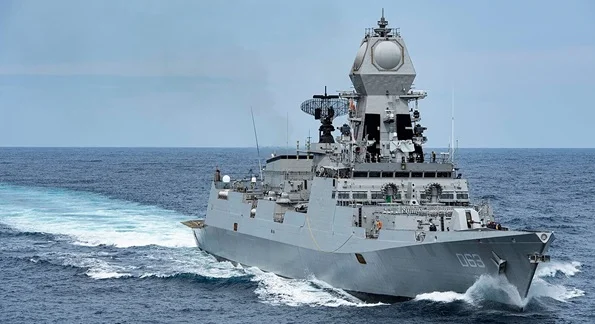
India–Japan Defence Partnership
- India and Japan have progressively expanded their defence partnership through bilateral military exercises, maritime cooperation, defence technology and strategic coordination.
- The partnership is also linked with the broader concept of a Free and Open Indo-Pacific (FOIP), which emphasises a free, open and rules-based regional order.
What is UNICORN?
- UNICORN stands for Unified Complex Radio Antenna. It is a naval antenna system designed to consolidate multiple antenna functions into an integrated structure.
- The India–Japan agreement focuses on technology transfer, making it relevant to India's efforts towards naval modernisation, advanced defence technologies and greater domestic capability in defence production.
Key Points
1. India–Japan UNICORN Technology Transfer
- The two countries have reached a basic agreement concerning the transfer of UNICORN technology. Japan has now called for faster completion of India's internal official processing.
- Policy significance: Timely processing can help translate bilateral defence agreements into actual technology cooperation and strengthen India–Japan defence-industrial ties.
- However, the Japanese official's remarks indicate that the agreement is still undergoing internal processing in India; therefore, the technology transfer should not be treated as fully operationalised.
2. Importance for Naval Modernisation
- Modern naval warfare increasingly depends on integrated sensors, communications, electronic systems and situational awareness.
- Technology cooperation involving advanced naval antenna systems can support India's efforts to improve the technological capabilities of its naval platforms.
- Policy significance: Such cooperation can complement India's broader objectives of defence indigenisation and technological self-reliance, provided effective technology absorption and domestic manufacturing capabilities are developed.
3. Growing Importance of Unmanned Warfare
- Japan has highlighted the changing character of warfare due to the increasing use of drones, unmanned platforms and Artificial Intelligence.
- The Japanese Defence Ministry is focusing on developing uninterrupted countermeasures against unmanned systems while also considering the deployment of large numbers of diverse unmanned assets integrated with conventional platforms.
- Policy significance: The experience of recent conflicts demonstrates the need for affordable, scalable and technologically adaptive counter-drone capabilities rather than relying exclusively on expensive missile-based responses.
4. Quad and Malabar Exercise
- India, Japan, the United States and Australia constitute the Quad.
- The four countries conduct the Malabar naval exercise, which provides a platform for maritime operational cooperation and interoperability.
- The Japanese official stated that the next Quad naval exercise would be held before the end of 2026.
- Significance: Regular maritime exercises enhance coordination, communication and operational familiarity among participating navies in the Indo-Pacific.
5. Japan's Changing Defence Policy
- Japan formulated three major policy documents in 2022 concerning national security, national defence and defence build-up.
- These documents were originally scheduled for revision in 2027. However, Japan is now reviewing them ahead of schedule in response to developments in West Asia and Ukraine and changes in the regional security environment.
6. Regional Security Concerns
- Japan has expressed concerns about military activities involving China, Russia and North Korea.
- According to the Japanese official, Tokyo is particularly monitoring China's military activities around Japan and China–Russia military cooperation.
- Japan has also raised concerns regarding China's reported July 6, 2026 test-firing of a submarine-launched ballistic missile (SLBM) in the South China Sea.
- China, meanwhile, has criticised Japan's evolving defence policies and raised concerns regarding Japan's wartime history and its approach towards its pacifist constitutional framework.
Significance
- Defence technology cooperation: UNICORN provides another avenue for India–Japan cooperation in advanced defence technology.
- Naval capability: Integrated antenna and sensor technologies can contribute to modernising naval platforms.
- Indo-Pacific security: Greater India–Japan defence cooperation supports maritime coordination in the Indo-Pacific.
- Defence industrial cooperation: Technology transfer can create opportunities for domestic manufacturing and technological absorption.
- Counter-drone preparedness: Increasing use of unmanned systems makes affordable and scalable countermeasures increasingly important.
- Strategic convergence: Cooperation reflects the broader India–Japan convergence around a Free and Open Indo-Pacific.
Relevance for India
Maritime Security
India occupies a strategically important position in the Indian Ocean Region, making maritime surveillance, communication and naval preparedness important components of national security. Advanced naval technologies can enhance India's ability to monitor and respond to emerging maritime challenges.
Defence Indigenisation
Technology-transfer agreements can contribute to India's defence-industrial ecosystem when accompanied by domestic manufacturing, research and development and technology absorption. The key challenge is to ensure that technology cooperation develops sustainable indigenous capabilities rather than creating long-term dependence.
Indo-Pacific Cooperation
India's cooperation with Japan complements its engagement with other like-minded partners through mechanisms such as the Quad and exercises such as Malabar. Such cooperation can contribute to greater interoperability and maritime coordination without being limited to traditional military alliances.
Challenges
- Internal processing delays: Delays in institutional procedures can slow down implementation of defence agreements.
- Technology absorption: Technology transfer is meaningful only when domestic institutions and industries can effectively absorb and further develop the technology.
- High cost of modern warfare: Expensive conventional systems may not be sustainable against large-scale deployment of relatively inexpensive drones.
- Rapid technological change: Defence technologies involving AI, autonomous systems and electronic warfare are evolving rapidly.
- Regional strategic competition: Increasing military activities and strategic competition in the Indo-Pacific complicate the regional security environment.
- Interoperability: Integrating imported technologies with existing Indian naval platforms requires technical compatibility and specialised expertise.
Way Forward
- Fast-track institutional processing: Ensure time-bound examination and approval of defence technology agreements while maintaining necessary safeguards.
- Strengthen technology absorption: Link technology-transfer agreements with domestic R&D, manufacturing and skill development.
- Develop counter-drone capabilities: Invest in cost-effective systems capable of addressing large numbers of unmanned platforms.
- Promote AI and autonomous systems: Expand indigenous research in AI-enabled surveillance, decision support and unmanned maritime systems.
- Enhance India–Japan cooperation: Increase collaboration in maritime surveillance, electronic warfare, unmanned systems and defence manufacturing.
- Strengthen interoperability: Conduct regular exercises and develop compatible communication and operational procedures among partner navies.
Conclusion
- The UNICORN agreement represents an important dimension of the expanding India–Japan defence partnership. Its significance extends beyond a single naval technology to wider questions of defence modernisation, technology transfer and Indo-Pacific maritime security.
- The long-term value of the cooperation will depend on timely implementation, effective technology absorption, indigenous manufacturing and adaptation to the rapidly changing nature of warfare.
Prelims MCQ
Q. With reference to the India–Japan UNICORN agreement, consider the following statements:
- UNICORN stands for Unified Complex Radio Antenna.
- The agreement involves technology transfer between India and Japan.
- Malabar is a bilateral naval exercise between India and Japan.
Which of the statements given above is/are correct?
A. 1 and 2 only
B. 2 and 3 only
C. 1 and 3 only
D. 1, 2 and 3
Mains Practice Question
“Defence technology cooperation is emerging as an important pillar of the India–Japan strategic partnership.” Discuss with reference to the UNICORN agreement and the changing nature of maritime security in the Indo-Pacific.
|
FAQs
1. What is UNICORN?
UNICORN stands for Unified Complex Radio Antenna, a naval antenna system involving integrated antenna functions.
2. What is the India–Japan UNICORN agreement about?
It concerns the transfer of technology related to the UNICORN system from Japan to India.
3. When was the agreement signed?
The agreement was signed during Japanese Prime Minister Sanae Takaichi’s visit to India in July 2026.
4. What is FOIP?
FOIP stands for Free and Open Indo-Pacific, a framework emphasising a free, open and rules-based Indo-Pacific region.
5. What is Malabar?
Malabar is a multilateral naval exercise involving India, Japan, the United States and Australia.
|







 Contact Us
  New Batch : 9555124124/ 7428085757
  Tech Support : 9555124124/ 7428085757