Prelims: (Geography + Current Affairs)
Mains: (GS 1 – Indian Heritage & Culture; GS 3 – Environment, Conservation) |
Why in News ?
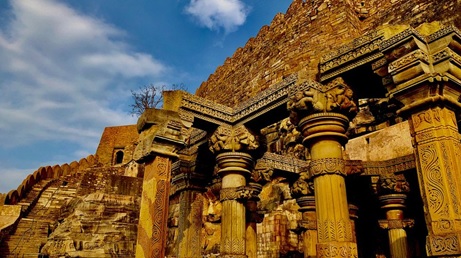
The hill region surrounding Kalinjar Fort has been officially declared a National Geo-Heritage Site by the Geological Survey of India, recognising its geological and historical significance.
Background and Context
India possesses a rich combination of geological diversity and cultural heritage, where many historical sites are closely linked with unique landforms.
Geo-heritage sites are designated to preserve significant geological features, promote scientific research, and encourage sustainable tourism.
The Vindhyan region, where Kalinjar is located, is known for its ancient rock formations, dating back hundreds of millions of years, making it important for understanding Earth's geological evolution.
The declaration of Kalinjar region as a geo-heritage site reflects a growing emphasis on integrated conservation of natural and cultural heritage.
About Kalinjar Fort
- Located in Banda district, Uttar Pradesh
- Situated on an isolated hill in the Vindhya Range, near the Ken River
- Considered one of the oldest and most formidable forts in India
- Known for its:
- Strategic military location
- Architectural grandeur
- Religious significance
Key Features
- Natural hill fort with strong defensive advantages
- Houses:
- Temples
- Mosques
- Palaces
- Stepwells (baolis)
- Major attraction:
- Neelkanth Temple
- Built by Chandela ruler Paramaditya Dev
- Features a blue-stone Shiva Lingam and a massive multi-armed sculpture
Historical Evolution of Kalinjar Fort
1. Gupta Period Foundation (4th–6th Century CE)
- Early fortifications established
- Emerged as a strategic military site
2. Chandela Dynasty Rule (9th–13th Century)
- Became a major capital of the Chandelas
- Developed into:
- A strong military fort
- A prominent religious centre
3. Medieval Conflicts and Resistance
- Attacked by rulers such as:
- Mahmud of Ghazni
- Qutb-ud-din Aibak
- Humayun
- Despite repeated attempts, the fort remained unconquered for long periods
4. Mughal Conquest (1569 CE)
- Captured by Akbar
- Later granted to Birbal
5. Bundela and Later Rule
- Came under Maharaja Chhatrasal
- Subsequently controlled by rulers of Panna
6. British Occupation (1812)
- Annexed by the British
- Lost its strategic military importance
Geo-Heritage Significance of the Region
Geological Importance
- Part of ancient Vindhyan rock system
- Contains:
- Sedimentary rock formations
- Evidence of early Earth processes
Geo-Heritage Tag Implications
- Recognition of scientific and educational value
- Protection from unregulated development
- Promotion of geo-tourism
Significance of the Declaration
1. Conservation of Geological Heritage
- Protects unique rock formations and landscapes
- Ensures long-term preservation of natural history
2. Integration of Culture and Geology
- Combines historical monument conservation with geological protection
- Promotes holistic heritage management
3. Boost to Tourism and Local Economy
- Encourages eco-tourism and heritage tourism
- Generates livelihood opportunities for local communities
4. Academic and Research Value
- Provides a natural laboratory for:
- Geologists
- Archaeologists
- Historians
5. Environmental Awareness
- Raises awareness about conservation of non-living natural heritage
- Supports sustainable development practices
Way Forward
- Develop Kalinjar as a model geo-heritage tourism site
- Strengthen coordination between archaeological and geological agencies
- Promote community participation in conservation efforts
- Introduce educational programs and guided tours
- Ensure sustainable infrastructure development without ecological damage
FAQs
1. What is Kalinjar Fort known for ?
It is known for its strategic location, historical importance, and religious significance.
2. Why was the Kalinjar region declared a Geo-Heritage Site ?
Due to its unique geological formations and scientific importance.
3. Which dynasty significantly developed the fort ?
The Chandela dynasty played a major role in its development.
4. What is the significance of the Neelkanth Temple ?
It is a प्रमुख religious site dedicated to Lord Shiva with unique architectural features.
5. What is the role of the Geological Survey of India (GSI) ?
It identifies and preserves geological heritage sites and promotes geoscientific research in IndSia.
|







 Contact Us
  New Batch : 9555124124/ 7428085757
  Tech Support : 9555124124/ 7428085757