Prelims: Biofortification, Kufri Jamunia, ICAR-CPRI, Anthocyanins, Micronutrients, Hidden Hunger, Late Blight Disease.
Mains: General Studies Paper II (Health, Nutrition and Government Interventions); General Studies Paper III (Agriculture, Science and Technology, Food Security).
Keywords: Kufri Jamunia, Purple Potato, Biofortified Crops, Hidden Hunger in India, Nutritional Security, Vitamin C, Iron, Zinc, Sustainable Agriculture, ICAR. |
Why in News?
- On October 18, 2026, the Press Information Bureau highlighted the nutritional and agricultural benefits of Kufri Jamunia.
- The variety contains higher levels of vitamin C, iron and zinc than the conventional potato used for comparison.
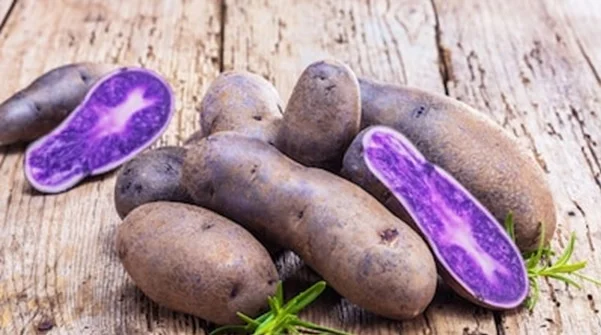
- Its purple skin and flesh contain anthocyanins, natural plant compounds known for their antioxidant properties.
What is Hidden Hunger?
Hidden hunger is a form of malnutrition in which a person consumes sufficient calories but does not receive adequate essential vitamins and minerals.
- It is mainly associated with deficiencies of micronutrients such as iron, zinc, iodine, vitamin A and vitamin B12.
- It can affect immunity, physical growth, cognitive development and overall health.
- Children, pregnant women and other nutritionally vulnerable groups may face greater health risks.
- Improving dietary diversity, access to nutritious foods, supplementation and food fortification are important measures to address this problem.
What is Kufri Jamunia?
Kufri Jamunia is a biofortified potato variety developed by ICAR-CPRI, Shimla, to improve the nutritional quality of potatoes through conventional plant breeding.
|
Feature
|
Details
|
|
Variety
|
Kufri Jamunia
|
|
Scientific name of potato
|
Solanum tuberosum
|
|
Developing institute
|
ICAR–Central Potato Research Institute, Shimla
|
|
Breeding code
|
MSP/16-307
|
|
Year of release
|
2024
|
|
Skin and flesh colour
|
Dark purple
|
|
Maturity
|
Approximately 90–100 days
|
|
Tubers per plant
|
Around 10–12
|
|
Recommended yield
|
32–35 tonnes per hectare
|
|
Major nutrients
|
Vitamin C, iron, zinc, anthocyanins and carotenoids
|
|
Primary use
|
Table consumption and food preparations
|
How Was Kufri Jamunia Developed?
- Scientists at ICAR-CPRI crossed two potato breeding lines, MS/8-1148 and CP4242, in 2015.
- MS/8-1148 was selected for its higher vitamin C content, while CP4242 contributed purple skin and flesh.
- The resulting breeding line, MSP/16-307, was evaluated for nutritional quality, productivity and other agricultural characteristics.
- Multi-location trials were conducted during 2021–2023, and the variety was approved and notified in 2024.
This variety was developed through conventional cross-breeding, not genetic engineering.
What is Biofortification?
- Biofortification is the process of improving the nutritional content of food crops during their growth through plant breeding or other agricultural techniques.
- Its main objective is to increase the availability of essential nutrients, especially vitamins and minerals, in commonly consumed foods.
Difference between Biofortification and Food Fortification
|
Basis
|
Biofortification
|
Food Fortification
|
|
Process
|
Nutritional improvement of crops
|
Addition of nutrients to food
|
|
Stage
|
During crop development and growth
|
During or after food processing
|
|
Methods
|
Plant breeding and other crop improvement techniques
|
Addition of vitamins and minerals
|
|
Examples
|
Kufri Jamunia, iron-rich pearl millet
|
Iodised salt, fortified rice
|
|
Objective
|
Improve nutrient content in harvested crops
|
Improve nutrient content in consumed foods
|
Nutritional Composition of Kufri Jamunia
According to the Press Information Bureau, Kufri Jamunia contains higher concentrations of several nutrients compared with conventional yellow-skinned potatoes.
|
Nutrient (per 100 g)
|
Kufri Jamunia
|
Conventional Potato
|
|
Vitamin C
|
42.75 mg
|
23.15 mg
|
|
Iron
|
3.22 mg
|
0.57 mg
|
|
Zinc
|
2.28 mg
|
0.28 mg
|
|
Anthocyanins (flesh)
|
42.05 mg
|
Not specified
|
|
Carotenoids (flesh)
|
161 µg
|
Not specified
|
Source: PIB, October 18, 2026. Figures represent reported nutrient concentrations, not the amount absorbed by the human body.
Why Is Kufri Jamunia Purple?
- The purple colour of Kufri Jamunia comes from anthocyanins, naturally occurring plant pigments belonging to the flavonoid group.
- Anthocyanins are also found in jamun, blueberries, black grapes and several other colourful fruits and vegetables.
- These compounds have antioxidant properties and can help protect biological molecules from oxidative damage in experimental settings.
- However, the specific health benefits of consuming Kufri Jamunia require further human studies.
Agricultural Performance and Cultivation of Kufri Jamunia
Kufri Jamunia has been evaluated under different agro-climatic conditions to assess its productivity, adaptability and suitability for cultivation.
- The variety produces medium to large, oblong tubers with shallow eyes and good storage characteristics.
- Under recommended cultivation practices, its yield potential is approximately 32–35 tonnes per hectare.
- It has been recommended for cultivation in several states, including Punjab, Haryana, Uttar Pradesh, Madhya Pradesh, Bihar, Gujarat, Odisha and West Bengal.
- However, actual production varies according to location, soil conditions, disease pressure and crop management.
Regional Yield Performance
|
Region
|
Average Yield (tonnes/hectare)
|
|
Northern Plains
|
36.77
|
|
Central Plains
|
33.79
|
|
Eastern Plains
|
25.91
|
|
Overall Average
|
31.96
|
Comparison with Other Biofortified Potato Varieties
ICAR-CPRI has developed several coloured potato varieties to improve nutritional quality and promote crop diversification.
|
Feature
|
Kufri Jamunia
|
Kufri Manik
|
Kufri Neelkanth
|
|
Year of release
|
2024
|
2021
|
2018
|
|
Appearance
|
Purple skin and flesh
|
Red skin, yellow flesh
|
Purple skin
|
|
Key feature
|
High vitamin C and anthocyanins
|
Nutrient-rich coloured potato
|
High antioxidant content
|
|
Average total yield
|
31.96 t/ha
|
31.52 t/ha
|
36.61 t/ha
|
|
Marketable yield
|
29.19 t/ha
|
28.91 t/ha
|
33.48 t/ha
|
Yield figures are averages from the reported multi-location trials, not guaranteed farm-level yields.
Significance of Kufri Jamunia for India
- Improving Nutritional Security: Kufri Jamunia offers an additional food-based source of iron, zinc and vitamin C. Its development supports efforts to improve the nutritional quality of commonly consumed agricultural products.
- Addressing Micronutrient Deficiencies: Iron and zinc deficiencies are important public health concerns. Wider consumption of nutrient-rich crops could complement existing nutritional interventions, although actual health benefits must be established through further studies.
- Promoting Agricultural Innovation: The variety demonstrates how conventional plant breeding can combine desirable traits such as nutritional value, appearance, yield and storage quality in a single crop.
- Encouraging Crop Diversification: Introducing specialised potato varieties can expand farmers' crop choices and create opportunities for differentiated agricultural products.
- Supporting Food Processing Industries: Kufri Jamunia can be used to prepare traditional dishes, bakery products, soups and dehydrated potato flour. Its distinctive colour may create opportunities in value-added food processing.
Challenges Associated with Kufri Jamunia
Despite its nutritional potential, several scientific, agricultural and economic challenges could limit its contribution to combating hidden hunger.
- Uncertainty Regarding Nutrient Absorption: The amount of iron or zinc present in a crop does not necessarily represent the quantity absorbed by the human body. Further bioavailability studies are required to establish its nutritional effectiveness.
- Nutrient Loss During Cooking: Boiling, frying and other cooking methods can affect the concentration of certain nutrients. More variety-specific research is needed to determine how Indian cooking practices influence nutrient retention.
- Risk of Late Blight Disease: Research has examined Kufri Jamunia's response to this disease, but the variety cannot be considered immune. Appropriate crop management and disease protection remain necessary.
- Market Acceptance: Its unusual purple appearance may attract some consumers while discouraging others accustomed to conventional potatoes. Consumer awareness, taste preferences and local food habits will influence adoption.
Government Initiatives to Address Hidden Hunger in India
|
Initiative
|
Objective
|
|
POSHAN Abhiyaan
|
Improve nutritional outcomes for children, pregnant women and lactating mothers
|
|
Saksham Anganwadi and POSHAN 2.0
|
Strengthen nutritional services and Anganwadi infrastructure
|
|
Anaemia Mukt Bharat
|
Reduce anaemia through prevention, testing and treatment
|
|
PM POSHAN
|
Improve schoolchildren's nutrition through meals
|
|
Food Fortification Initiatives
|
Improve the micronutrient content of selected food products
|
|
ICAR Biofortified Crop Development
|
Develop crop varieties with improved nutritional characteristics
|
These initiatives focus on improving access to essential nutrients, dietary quality and nutritional outcomes among vulnerable populations.
Way Forward
- Scientific Validation: Conduct large-scale nutritional studies to assess iron and zinc bioavailability, nutrient retention during cooking and measurable health outcomes.
- Affordable Seed Availability: Develop reliable seed multiplication and distribution systems to make the variety accessible to farmers.
- Improved Disease Management: Strengthen research on resistance to late blight and provide farmers with appropriate crop protection guidance.
- Consumer Awareness: Promote accurate information regarding the nutritional characteristics, taste and culinary applications of purple potatoes.
- Market Development: Encourage food processing, value addition and effective marketing to improve the economic viability of cultivation.
Conclusion
- Kufri Jamunia represents an important advancement in India's agricultural research and efforts to improve nutritional security. Developed by ICAR-CPRI, this biofortified purple potato contains higher concentrations of several important nutrients than conventional potatoes.
- However, higher nutrient content alone does not establish its effectiveness against hidden hunger. Its actual contribution will depend on affordability, farmer adoption, consumer acceptance, cooking practices and the absorption of nutrients by the human body.
Prelims Practice Question
Q. With reference to Kufri Jamunia, consider the following statements:
- It is a biofortified potato variety developed by the ICAR-Central Potato Research Institute.
- Its purple colour is primarily due to anthocyanin pigments.
- It was developed exclusively through genetic engineering techniques.
Which of the statements given above are correct?
(a) 1 and 2 only
(b) 2 and 3 only
(c) 1 and 3 only
(d) 1, 2 and 3
Mains Practice Question
Q. Biofortified crops can play an important role in addressing micronutrient deficiencies in India. Discuss the potential and limitations of biofortification with special reference to the Kufri Jamunia potato variety.
|
FAQs
Which institution developed Kufri Jamunia?
It was developed by the ICAR-Central Potato Research Institute (CPRI), headquartered in Shimla, Himachal Pradesh.
Why is Kufri Jamunia purple?
Its purple colour comes from anthocyanins, natural plant pigments with antioxidant properties.
What is hidden hunger?
Hidden hunger is a condition in which people receive sufficient calories but lack essential vitamins and minerals required for healthy growth and development.
Is Kufri Jamunia a genetically modified potato?
No. Kufri Jamunia was developed through conventional cross-breeding of selected potato lines.
When was Kufri Jamunia released?
Kufri Jamunia was officially released in 2024.
|