
- UPSC Exam
- State PCS
- One Day Exam
- Current Affairs
- PT Quiz
- Downlaods
- About Coaching
- Blog
- Videos

| Prelims: (Science & Technology + Health + CA) Mains: (GS 2 – Public Health, Disease Control; GS 3 – Environment, Biodiversity & Zoonotic Diseases) |
A 29-year-old man in Karnataka recently lost his life after contracting Kyasanur Forest Disease (KFD), commonly known as monkey fever. The incident has brought renewed attention to a disease that often remains underreported until outbreaks turn fatal.
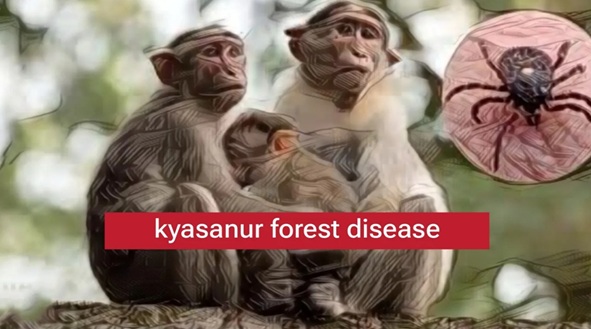
Kyasanur Forest Disease is a zoonotic viral illness that primarily affects forest-dwelling populations in southern India. First identified in 1957 in the Kyasanur Forest region of Karnataka, the disease has since remained endemic in parts of Karnataka and has gradually spread to neighbouring States.
The disease highlights the growing interface between human activity, wildlife habitats, and vector-borne infections, making it a key concern in the context of emerging infectious diseases and environmental change.
Kyasanur Forest Disease is a tick-borne viral haemorrhagic fever caused by the KFD virus, which belongs to:
It is also referred to as:
KFD is primarily reported from southern India, especially forested and semi-forested regions.
Originally confined to Karnataka, KFD has now been reported in:
Populations at higher risk include:
Seasonal patterns are observed, with most cases occurring during dry months, when human exposure to ticks increases.
KFD is transmitted through hard ticks, particularly Hemaphysalis spinigera.
Key modes of transmission include:
Importantly:
KFD typically presents with a sudden onset of symptoms, including:
In some cases, patients may develop:
The disease may follow a biphasic course, where initial recovery is followed by a second phase with neurological symptoms.
Early diagnosis and prompt supportive care significantly improve survival outcomes.
A vaccine against KFD is available in India and is recommended in endemic areas.
Key preventive measures include:
KFD represents a broader challenge of emerging zoonotic diseases linked to environmental change, deforestation, and human-wildlife interactions.
Going forward, priorities should include:
FAQsWhat causes Kyasanur Forest Disease ? KFD is caused by the Kyasanur Forest Disease virus, a member of the Flavivirus genus in the Flaviviridae family. How is KFD transmitted to humans ? Through bites from infected hard ticks or contact with infected animals, especially sick or dead monkeys. Can KFD spread from person to person ? No, KFD does not spread through human-to-human transmission. Is there a cure for KFD ? There is no specific cure; treatment is supportive and focused on managing symptoms and complications. How can KFD be prevented ? Through vaccination in endemic areas, tick control measures, protective clothing, avoiding forest exposure during outbreaks, and community awareness. |



Our support team will be happy to assist you!

 Contact Us
  New Batch : 9555124124/ 7428085757
  Tech Support : 9555124124/ 7428085757