Why is it in the news?
Elections were recently held for 28 seats in the Legislative Councils of Uttar Pradesh, Bihar, Maharashtra, and Karnataka.
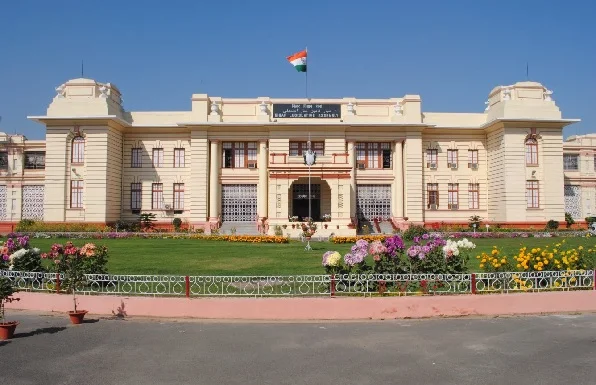
History and Status in Indian States
- Legislative Councils do not exist in all Indian states; currently, this system is in place in only six states: Uttar Pradesh, Bihar, Maharashtra, Karnataka, Telangana, and Andhra Pradesh.
- The history of the Legislative Council is linked to the Montagu-Chelmsford Reforms of the British colonial era, under which a 'Council of State' was established at the central level in 1919.
- Subsequently, the Government of India Act, 1935, provided for the creation of a bicameral legislature in the provinces of India.
- The first Legislative Council in India officially began its operations in Bengal in 1937.
Constituent Assembly Debates and Perspectives on the Legislative Council
- During the drafting of the Constitution, there were significant differences of opinion among the members of the Constituent Assembly regarding the necessity and utility of a Legislative Council.
- Congress leader Brajeshwar Prasad believed that vesting all powers solely in the lower house (Legislative Assembly) at the inception of the new Constitution could be risky.
- He argued that the power of governance should rest in the hands of educated, sensible, and fair-minded individuals capable of making decisions that transcend narrow-mindedness and superstition.
- Conversely, other members of the Constituent Assembly questioned the limited powers of the Legislative Council, viewing it as an unnecessary financial burden on the public exchequer.
Why do not all Indian states have a Legislative Council?
- The primary reason why not all Indian states have a Legislative Council is that Article 169 of the Indian Constitution grants states the choice of whether or not to adopt a bicameral system.
- It is not mandatory for states; rather, it is entirely optional.
Economic and Administrative Burden
- Maintaining a Legislative Council requires substantial financial resources.
- The state government must bear the costs of salaries, allowances, and pensions for its members (MLCs), as well as the expenses for running a separate secretariat.
- Smaller states or those with limited financial resources often choose not to establish a Legislative Council to avoid these additional expenditures.
Limited Powers and Perceived Redundancy
- Legislative Councils possess very limited powers.
- They cannot reject a 'Money Bill,' nor can they delay one for more than 14 days.
- Even in the case of ordinary bills, the final authority rests with the Legislative Assembly.
- Consequently, many states view it as an unnecessary chamber that merely delays the enactment of laws (by up to a maximum of four months).
Use for Political Interests
- It is frequently alleged that political parties use the Legislative Council to provide a 'backdoor entry' (a 'parking slot') for leaders or party workers who have lost direct elections (to the Legislative Assembly).
- This perception of it serving narrow political interests makes many states reluctant to adopt such a chamber.
Complex Process for Creation and Abolition
- Under Article 169 of the Constitution, if a state wishes to create or abolish a Legislative Council, its Legislative Assembly must first pass a resolution by a special majority.
- Subsequently, the national Parliament must enact legislation to this effect.
- As it cannot be created or abolished without the approval of Parliament, the process becomes contingent upon political will. (For instance, proposals from Assam, Rajasthan, and Odisha have remained pending in Parliament for years.)
Constitutional Provisions
- Article 169 of the Indian Constitution empowers Parliament to enact laws for the creation or abolition of a Legislative Council in any state.
- For the creation or abolition of a Legislative Council in a state, the Legislative Assembly of that state must pass a resolution by a majority of its total membership, as well as by a majority of at least two-thirds of the members present and voting.
- Subsequently, the Parliament can create or abolish the Legislative Council by passing the resolution with a simple majority.
- According to Article 171 of the Indian Constitution, the total number of members in a Legislative Council cannot exceed one-third of the total number of members in the state's Legislative Assembly, and in no case should this number be less than 40.
Membership of the Legislative Council
Qualifications -
- Must be a citizen of India.
- Must be at least 30 years of age (the minimum age for the Legislative Assembly is 25 years).
- Must not be an insolvent or of unsound mind.
Tenure -
- The Legislative Council is a permanent house; it is never dissolved.
- Each member has a tenure of 6 years.
- Every 2 years, one-third (1/3) of its members retire, and new members are elected to replace them.
Process of Member Selection
- Members of the Legislative Council are elected indirectly through a system of proportional representation by means of a single transferable vote.
- One-third of the total members of the Legislative Council are elected by the elected representatives of municipalities, district boards, and other local bodies.
- One-third of the total members are elected by the state's Legislative Assembly members (MLAs).
- One-twelfth (1/12) of the total members are elected by graduates who have completed their degree at least three years prior.
- One-twelfth (1/12) of the total members are elected by teachers who have been teaching for at least three years in educational institutions within the state, at or above the secondary school level.
- The remaining members are nominated by the Governor of the state from among prominent individuals who possess special knowledge or practical experience in fields such as literature, art, science, the cooperative movement, and social service.
- Elections to the Legislative Council are not officially contested on party symbols; however, candidates often receive direct or indirect support from various political parties.
- Political parties view Legislative Council elections as a political barometer to gauge their level of support among educated sections and professionals.
Key Functions and Powers of the Legislative Council
- Ordinary bills can be introduced in either house of the state legislature (the Legislative Assembly or the Legislative Council), similar to the process in Parliament.
- The Legislative Council cannot outright reject an ordinary bill.
- It can delay a bill for a maximum of 3 months on the first instance and for another 1 month on the second instance (a total maximum delay of 4 months). Thereafter, the bill is deemed to have been passed by both houses.
- Money bills can only be introduced in the Legislative Assembly, not in the Legislative Council.
- Once passed by the Legislative Assembly, a money bill is sent to the Legislative Council.
- The Council can retain such a bill for a maximum of 14 days.
- If the Council offers any suggestions, it is entirely at the discretion of the Legislative Assembly whether or not to accept them.
- Members of the Legislative Council may ask questions-including supplementary questions-to ministers and engage in discussions regarding government policies.
- The Council of Ministers is collectively responsible only to the Legislative Assembly.
- Consequently, the Legislative Council cannot remove the government by passing a no-confidence motion.
- The Chief Minister or other ministers may also be members of the Legislative Council.
- In the case of certain types of constitutional amendments that require the consent of the states, the Legislative Council plays a significant role.
Significance of the Legislative Council (Why is it necessary?)
The Legislative Council (the Upper House) plays a vital role within the state legislatures of India.
Checking Hasty Legislation
- When a political party holds an overwhelming majority in the Legislative Assembly, bills are sometimes passed without comprehensive discussion.
- The Legislative Council acts as a 'revising chamber,' providing an opportunity to rectify policy flaws, unintended consequences, and drafting errors in bills.
- It serves as a check on arbitrary decisions by the Legislative Assembly and its tendency to enact laws in haste.
Involvement of Experts and Talented Individuals
- Intellectual and talented individuals-who may prefer not to engage in the rigors of direct elections (the politics of popularity) or are unable to win them-can contribute to policymaking through this body.
- The Governor nominates experts from fields such as art, science, literature, the cooperative movement, and social service.
- Additionally, the intellectual class gains representation through constituencies comprising teachers and graduates.
Political Stability and Continuity
- Unlike the Legislative Assembly, the Legislative Council is never fully dissolved; one-third of its members retire every two years.
- Even when the Legislative Assembly is dissolved (for instance, during election periods), the Legislative Council remains as a permanent body, ensuring the continuity and stability of the state legislature.
Reducing the Workload of the Legislative Assembly
- The existence of two houses allows for the distribution of legislative tasks and debates between them.
- Non-financial bills can be discussed in detail within the Council, thereby saving the time of the Legislative Assembly.
Preliminary Examination Question
Question: According to Article 171 of the Indian Constitution, what is the maximum number of members a Legislative Council can have, relative to the total number of members in the State Legislative Assembly?
(a) One-fourth
(b) One-third
(c) Half
(d) Two-thirds
Main Examination Question
Question: Evaluate the role of the Legislative Council as the upper house of a state legislature. Does it strengthen the federal system and democratic representation?
|
FAQ
Question: Which article of the Indian Constitution provides for the creation or abolition of a Legislative Council in a state?
Answer: Article 169; under this, Parliament can enact a law to create or abolish a Legislative Council in a state.
Question: What majority is required in the State Legislative Assembly to pass a resolution for the creation or abolition of a Legislative Council?
Answer: The resolution must be passed by a majority of the total membership of the Legislative Assembly and by a majority of at least two-thirds of the members present and voting.
Question: By what majority does Parliament pass a resolution regarding the creation or abolition of a Legislative Council?
Answer: Parliament can pass it by a simple majority.
Question: What is the maximum number of members a Legislative Council can have?
Answer: According to Article 171, the total number of members in a Legislative Council cannot exceed one-third of the total number of members in the State Legislative Assembly. However, a Legislative Council must generally have a minimum of 40 members.
Question: Why is the Legislative Council called a permanent house?
Answer: Because the Legislative Council is never dissolved. Each member has a tenure of six years, and approximately one-third of its members retire every two years.
|





 Contact Us
 New Batch : 9555124124/ 7428085757
 Tech Support : 9555124124/ 7428085757
