In the recently presented Union Budget 2026–27, the Finance Minister announced the launch of the Mahatma Gandhi Gram Swaraj Initiative (MGGSI), which aims to strengthen traditional sectors such as khadi, handloom, and handicrafts.
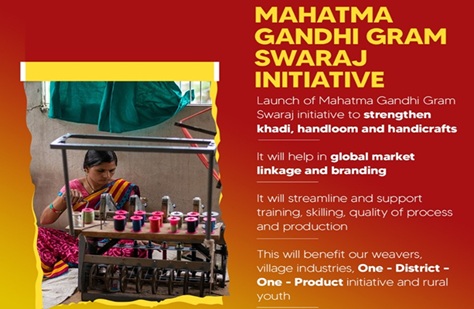
Mahatma Gandhi Gram Swaraj Initiative: Key Features
- This initiative was announced in the Union Budget 2026–27 to strengthen India's traditional crafts and village-based industries.
- Its primary objective is to connect the khadi, handloom, and handicraft sectors with global markets, strengthen their brand identity, and expand marketing networks.
- This program will enhance the competitiveness of traditional rural industries and ensure sustainable and secure livelihoods for artisans and weavers.
Target Groups and Key Challenges
- The Mahatma Gandhi Gram Swaraj Initiative primarily focuses on weavers, village industries, beneficiaries of the One District One Product (ODOP) scheme, and rural youth.
- It aims to address structural problems that have long plagued these sectors, such as fragmented supply chains, inconsistency in quality standards, and limited market access.
Strategy and Methodology
- This initiative will encourage artisans to adopt modern and efficient production technologies, while preserving traditional craftsmanship and cultural heritage.
- Market access will also be facilitated through improved branding, packaging, and marketing, enabling artisans to connect with organized retail, export markets, and digital/online platforms.
Alignment with Broader Policy Approach
- The Mahatma Gandhi Gram Swaraj initiative is aligned with the idea of "Vocal for Local" and the government's efforts to empower micro, small, and medium enterprises (MSMEs).
- By strengthening traditional industries, the scheme will create employment opportunities, alleviate rural distress, and promote locally manufactured products.
- Thus, this initiative is clearly linked with the broader vision of Atmanirbhar Bharat.





 Contact Us
  New Batch : 9555124124/ 7428085757
  Tech Support : 9555124124/ 7428085757