Prelims: Mines and Minerals (Development and Regulation) Act, 1957 | Major Minerals | Minor Minerals | Mineral Rights | State Taxation Powers | Supreme Court Judgment, 2024 | Mineral Revenue | Royalties and Levies
Mains: GS Paper II – Federalism & Centre-State Relations | GS Paper III – Mineral Resources | Mining Sector | Infrastructure Costs | Inflation | Fiscal Federalism
Keywords: MMDR Amendment Bill 2026, Mines and Minerals Amendment Bill, Mineral Rights Tax, Mineral-Bearing Land, Major Minerals, Minor Minerals, State Revenue, Mining Levies, Supreme Court Mineral Tax Judgment, Mineral Pricing, Fiscal Federalism |
Why in News?
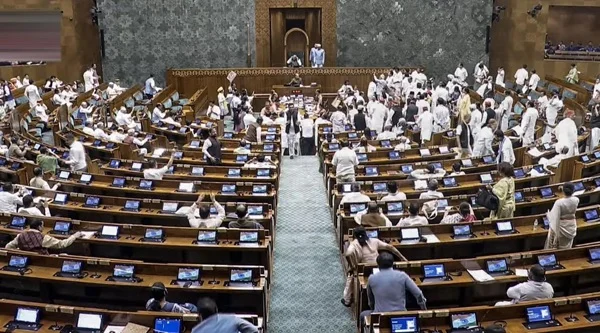
Parliament has passed the Mines and Minerals (Development and Regulation) Amendment Bill, 2026, amid concerns that restrictions on state-level levies on mineral rights and mineral-bearing land could affect the revenues of mineral-producing states.
Important Point
- Union Mines Minister G Kishan Reddy has clarified that the amendment will not result in a loss of mineral revenue for states.
- The government argues that the legislation is aimed at creating greater uniformity in the prices of major minerals and preventing sharp differences in mineral costs from increasing infrastructure and consumer prices.
- The development is significant because it comes after the Supreme Court's 2024 judgment, which upheld the power of states to impose taxes on mineral rights and mineral-bearing lands.
What is the Mines and Minerals Amendment Bill, 2026?
The Bill seeks to amend the existing Mines and Minerals (Development and Regulation) Act, 1957 (MMDR Act).
Its key objective is to regulate the manner in which states can impose specified levies on:
- Mineral rights
- Mineral-bearing lands
- Major minerals
- The proposed framework seeks to ensure that such levies remain within conditions or restrictions prescribed by the Central Government.
- According to the government, the measure is intended to prevent excessive variation in mineral-related levies across states and promote greater equilibrium in mineral prices.
Supreme Court Judgment of 2024: Why is it Important?
- The amendment assumes significance in the context of the Supreme Court's 2024 ruling on mineral taxation.
- The Court held that states have the constitutional power to levy taxes on mineral rights and mineral-bearing lands.
- The judgment also permitted states to recover tax arrears dating back to April 1, 2005, although the recovery was not to carry interest or penalty.
- The 2026 amendment seeks to alter the legal framework governing such levies going forward.
What happens to earlier dues?
Under the proposed legislation:
- Unpaid or unrecovered dues arising from specified levies imposed before the commencement of the amendment would be extinguished.
- Levies that have already been paid or recovered would not be refunded.
- The move is significant because estimates have placed the potential outstanding dues across the mining sector at around ₹2 lakh crore.
Major Mineral’s vs. Minor Mineral’s
A key concept for understanding the amendment is the distinction between major and minor minerals.
|
Major Minerals
|
Minor Minerals
|
|
Coal
|
Sand
|
|
Iron ore
|
Gravel
|
|
Bauxite
|
Ordinary clay
|
|
Manganese
|
Building stone
|
|
Copper
|
Other minerals largely regulated by states
|
Major minerals are regulated primarily by the Union Government under the MMDR framework, while the regulatory powers over minor minerals are largely entrusted to state governments. According to the government, the proposed amendment is focused on major minerals.
Why Does the Government Want Greater Uniformity in Mineral Prices?
The government argues that large variations in mineral-related levies between states can have wider economic consequences.
For example: Higher iron ore cost → Higher steel prices → Higher infrastructure costs
Similarly: Higher limestone cost → Higher cement prices → Higher construction costs
Since steel and cement are essential inputs for roads, railways, housing and other infrastructure, the government believes that excessive mineral-price variation could eventually affect consumers.
Impact on industrial location
- Differences in mineral prices can also influence where industries establish or shift their operations.
- If a mineral is significantly cheaper in one state than another, industries may have an incentive to move production towards the lower-cost location.
- The government therefore wants to establish a more predictable and balanced mineral-pricing environment.
Will States Lose Mineral Revenue?
This has been one of the biggest concerns surrounding the Bill. Union Mines Minister G Kishan Reddy has said that the amendment will not result in a loss of mineral revenue for states.
According to the government:
- States collected around ₹13,258 crore from the mineral sector in 2014–15.
- This increased to around ₹71,035 crore in 2024–25.
- States' share of mineral revenue increased from around 65% to 88% during this period.
- The Centre's share declined from around 35% to 12%.
The government has also stated that the Centre does not directly receive mineral revenue, apart from applicable GST.
What About Environmental and Other Cesses?
The Ministry of Mines has indicated that several existing levies in the mineral sector will continue.
These may include:
- Environmental cess
- Pollution cess
- Other specified mineral-related levies
- However, the government proposes that the combined burden of such levies should remain within a prescribed limit.
- The exact percentage is expected to be determined after consultation with the states.
- This makes Centre-State consultation an important aspect of the implementation of the amendment.
Key Provisions at a Glance
- Regulation of specified state levies: States would not be able to impose specified levies on mineral rights and mineral-bearing lands except within conditions or restrictions prescribed by the Centre.
- Focus on major minerals: The proposed framework primarily concerns major minerals such as coal, iron ore, bauxite, manganese and copper.
- Minor minerals excluded: Minerals such as sand, gravel, ordinary clay and building stone remain outside the scope of the proposed amendment.
- Earlier unrecovered dues: Certain unpaid or unrecovered dues relating to specified levies imposed before the amendment would be extinguished.
- No refund of recovered amounts: Amounts already paid or recovered would not be refunded.
- Greater price uniformity: The government seeks to reduce excessive interstate variation in mineral-related costs.
- Consultation with states: The overall ceiling or conditions for the combined levies are expected to be determined after consultation with state governments.
Significance of the Amendment
1. Fiscal Federalism
The amendment raises an important question regarding the distribution of taxation powers between the Union and the states. The 2024 Supreme Court judgment had strengthened the states' ability to tax mineral rights. The new legislation seeks to introduce restrictions on the exercise of this power.
2. Infrastructure Costs
Minerals such as iron ore, coal and limestone are crucial inputs for infrastructure and manufacturing.
Greater stability in mineral prices could help control input costs for:
- Steel
- Cement
- Power
- Roads
- Railways
- Construction
3. Industrial Competitiveness
A more uniform mineral-cost structure could reduce location-based distortions and improve predictability for mineral-dependent industries.
4. Mining Sector Investment
Predictable taxation and regulatory conditions can potentially improve the investment environment in the mining sector.
5. Centre-State Relations
Since mining is a major source of revenue for several mineral-rich states, implementation of the amendment could require substantial coordination between the Centre and states.
Concerns and Challenges
Despite the government's justification, several concerns remain.
- Revenue autonomy of states: Mineral-producing states may argue that restricting their ability to impose levies could reduce their fiscal autonomy.
- Constitutional questions: The amendment's interaction with the constitutional distribution of taxation powers and the Supreme Court's 2024 judgment could become an important area of legal and constitutional debate.
- Impact on mineral-rich states: States that depend heavily on mining revenues could be affected differently from states with relatively limited mineral resources.
- Federal consultation: The success of the framework will depend significantly on how the Centre determines the permissible limits and how effectively states are consulted.
Revenue vs affordability
The central policy challenge is to balance: State revenue requirements + mining sector viability + affordable mineral prices + infrastructure costs
Conclusion
- The Mines and Minerals (Development and Regulation) Amendment Bill, 2026 represents an attempt to balance two competing objectives: protecting state revenues from mineral resources and preventing excessive variation in mineral-related levies and prices.
- While the government presents the amendment as a measure for price stability, industrial competitiveness and lower infrastructure costs, its implications for state fiscal autonomy and cooperative federalism will remain central to the debate.
- For UPSC aspirants, the Bill should therefore be studied not merely as a mining-sector reform but as an important contemporary example of the interaction between economic policy, natural-resource governance, federalism and constitutional powers.
UPSC Prelims Facts
- MMDR Act: Mines and Minerals (Development and Regulation) Act, 1957.
- Major minerals: Include coal, iron ore, bauxite, manganese and copper.
- Minor minerals: Include sand, gravel, ordinary clay and building stone.
- The 2024 Supreme Court judgment upheld states' power to tax mineral rights and mineral-bearing lands.
- The 2026 amendment seeks to regulate specified state levies on mineral rights and mineral-bearing lands.
- The proposed amendment primarily concerns major minerals, not minor minerals.
- Certain unpaid or unrecovered pre-amendment dues would be extinguished under the proposed framework.
Prelims MCQ
Q. With reference to the Mines and Minerals (Development and Regulation) Amendment Bill, 2026, consider the following statements:
- The proposed amendment seeks to regulate specified levies imposed by states on mineral rights and mineral-bearing lands.
- Minor minerals such as sand and ordinary clay are the primary focus of the amendment.
- The amendment comes in the context of the Supreme Court's 2024 judgment on states' power to tax mineral rights.
Which of the statements given above is/are correct?
A. 1 and 2 only
B. 1 and 3 only
C. 2 and 3 only
D. 1, 2 and 3
Mains Practice Question
Q. The Mines and Minerals (Development and Regulation) Amendment Bill, 2026 raises important questions regarding fiscal federalism and the balance between state revenue autonomy and national economic interests. Discuss.
|
FAQs
1. What is the Mines and Minerals Amendment Bill, 2026?
It seeks to regulate specified state levies on mineral rights and mineral-bearing lands and establish conditions or restrictions prescribed by the Centre.
2. Will states lose all mineral revenue?
No. The government has stated that states will continue to receive mineral-sector revenue and that the amendment is not intended to take mineral revenue away from states.
3. Which minerals are mainly covered?
The government has identified major minerals including coal, iron ore, bauxite, manganese and copper.
4. Are minor minerals covered?
No. Minor minerals such as sand, gravel, ordinary clay and building stone are outside the scope of the proposed amendment.
5. Why is the Bill important for UPSC?
The issue connects fiscal federalism, Centre-State relations, constitutional taxation powers, mineral resource governance, infrastructure costs, inflation and the Supreme Court's 2024 judgment.
|






 Contact Us
  New Batch : 9555124124/ 7428085757
  Tech Support : 9555124124/ 7428085757