
- UPSC Exam
- State PCS
- One Day Exam
- Current Affairs
- PT Quiz
- Downlaods
- About Coaching
- Blog
- Videos

| Prelims: WorldSkills Competition, WorldSkills Shanghai 2026, India’s 10th rank, Skill India, vocational education, technical skills, Industry 4.0 and demographic dividend. Mains: Skill Development, Vocational Education, Human Resource Development, Employment, Industry 4.0, Demographic Dividend, Industry Skill Linkages and Future Skills. Keywords: WorldSkills Shanghai 2026, India WorldSkills ranking, WorldSkills Competition, Skill India, vocational education in India, skill development, WorldSkills India. |
India’s performance has shown a gradual improvement over the past 15 years.
|
Year |
Host City |
India’s Position |
|---|---|---|
|
2011 |
London |
39th |
|
2013 |
Leipzig |
33rd |
|
2015 |
São Paulo |
29th |
|
2017 |
Abu Dhabi |
19th |
|
2019 |
Kazan |
13th |
|
2022 |
Special Edition |
11th |
|
2024 |
Lyon |
13th |
|
2026 |
Shanghai |
10th |
This progression reflects the increasing emphasis on vocational education, industry-oriented training and international skill standards in India.
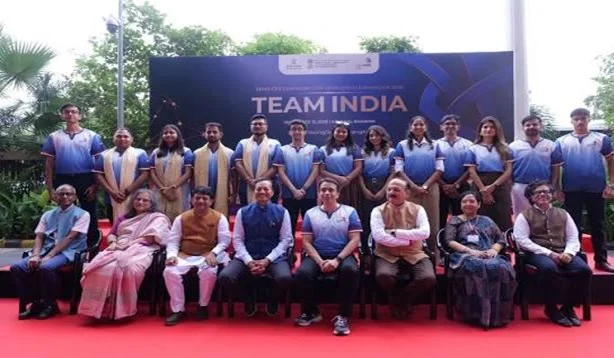
India participated in 63 skill categories with a contingent of 70 competitors.
India secured:
The Indian contingent also participated in newer areas such as Digital Interactive Media Design, Software Testing, Unmanned Aerial Systems, Aircraft Maintenance, Intelligent Security Technology and Optoelectronic Technology. This indicates a shift from conventional vocational skills towards technology-intensive and future-oriented skills.
India has one of the world's largest young populations. Converting this demographic advantage into economic growth requires not only education but also employable and industry-relevant skills.
Automation, artificial intelligence, robotics and advanced manufacturing are changing the nature of employment.
India needs workers capable of operating and developing these technologies. Competitions such as WorldSkills expose young professionals to global standards in these emerging sectors.
Vocational education has traditionally received less social recognition than conventional academic education in India.
International achievements can contribute to greater visibility and recognition of technical and vocational careers.
International skill competitions provide a benchmark against which the capabilities of Indian workers can be compared with global occupational standards.
This can support India's ambitions in manufacturing, services and global workforce mobility.
Women also formed part of India's Shanghai contingent, participating in areas including logistics, hospitality, bakery, beauty and visual merchandising. Greater participation of women in technical and vocational skills can contribute to a more inclusive workforce.
One of the important aspects of India's WorldSkills journey is the changing nature of the skills in which Indian participants compete.
Earlier participation was more closely associated with conventional vocational trades. Increasingly, India is entering areas linked with:
This transition is important because the future labour market will increasingly demand a combination of technical expertise, digital literacy and problem-solving capabilities.
Despite the improvement in international competitions, several structural challenges remain.
MCQWith reference to WorldSkills Shanghai 2026, consider the following statements:
Which of the statements given above are correct? A. 1 and 2 only Mains Question“India’s progress from 39th position in 2011 to the Top 10 in WorldSkills reflects the changing nature of India’s skill development ecosystem.” Discuss the significance of vocational education and the major challenges in aligning skills with the requirements of Industry 4.0. |
1. What is the WorldSkills Competition?It is an international competition that evaluates young professionals in technical and vocational skills according to global occupational standards. 2. What position did India secure at WorldSkills Shanghai 2026?India secured the 10th position. 3. What was India’s position in WorldSkills 2011?India stood 39th at WorldSkills London 2011. 4. How many Silver Medals did India win at Shanghai 2026?India won six Silver Medals. 5. Why is WorldSkills important for India?It provides an international benchmark for technical and vocational skills and highlights the importance of industry-relevant workforce development. |



Our support team will be happy to assist you!

 Contact Us
  New Batch : 9555124124/ 7428085757
  Tech Support : 9555124124/ 7428085757