Prelims : Infrastructure + Science & Technology + CA
Mains : GS Paper 3 – Infrastructure, Economy, Technology |
Why in News ?
India is moving towards large-scale implementation of the Multi-Lane Free Flow (MLFF) Tolling System, with pilot projects already operational and plans to expand the system across multiple national highways in the coming years.
This initiative reflects a broader push by the government to modernise highway infrastructure, eliminate congestion at toll plazas, and improve efficiency in logistics and transport systems.
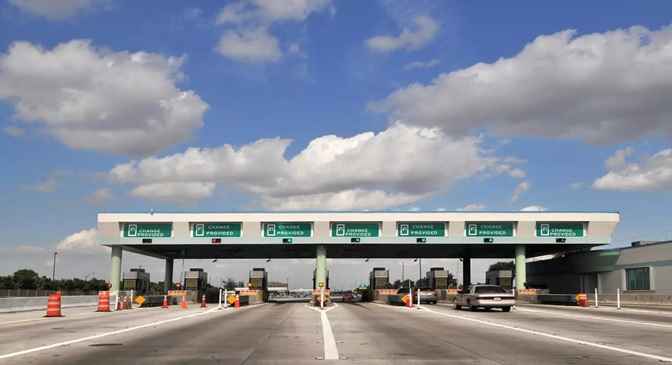
What is MLFF Tolling System?
The Multi-Lane Free Flow (MLFF) Tolling System is a barrier-less, stop-free toll collection system that allows vehicles to pass through toll points at normal highway speeds without stopping or even slowing down.
- It replaces traditional toll booths with overhead gantries equipped with cameras and sensors.
- The system automatically identifies vehicles and deducts toll digitally through FASTag or vehicle registration details.
- It represents a shift from manual and semi-automatic tolling to a fully automated, technology-driven system.
How Does MLFF Work ?
The functioning of the MLFF system involves a combination of advanced technologies working seamlessly together:
- Vehicle Detection and Identification
- As vehicles pass under overhead structures, high-performance sensors and cameras detect their presence.
- The system reads FASTag using RFID technology and captures vehicle number plates through Automatic Number Plate Recognition (ANPR).
- Data Processing and Classification
- The system identifies the category of the vehicle (car, truck, bus, etc.), which determines the toll amount.
- AI-based systems process this data in real time to ensure accuracy.
- Automatic Toll Deduction
- Toll charges are deducted automatically from the FASTag-linked account or recorded against the vehicle number.
- In case of insufficient balance or violations, penalties can be imposed digitally.
- Centralised Monitoring System
- All transactions are recorded and monitored through a central database, improving transparency and efficiency.
Key Features of MLFF Tolling System
1. Barrier-Free and Stop-Free Movement
- The most defining feature of MLFF is that it eliminates physical toll booths and barriers entirely, allowing vehicles to pass without stopping.
- This ensures uninterrupted traffic flow and removes long queues that are common at traditional toll plazas.
2. High-Speed Travel Through Toll Points
- Vehicles can travel at normal highway speeds (up to 80 km/h or more) while crossing toll points.
- This significantly reduces travel time and enhances overall commuter convenience.
3. Integration of Advanced Technologies
- MLFF uses a combination of cutting-edge technologies such as :
- RFID-based FASTag system
- Automatic Number Plate Recognition (ANPR)
- Artificial Intelligence and data analytics
- Satellite tracking and sensor-based systems
- This integration ensures high accuracy in toll collection and vehicle tracking.
4. Elimination of Human Intervention
- The system is fully automated, minimising the need for manual toll collection and reducing operational inefficiencies.
- This also helps in reducing corruption and revenue leakage.
5. Real-Time Data Collection and Monitoring
- MLFF generates real-time data on vehicle movement, traffic density, and toll collection.
- This data can be used for :
- Traffic management
- Infrastructure planning
- Incident detection and response
6. Zero Waiting Time at Toll Plazas
- The system aims to achieve zero waiting time, eliminating delays that previously ranged from several minutes at busy toll plazas.
- This is a major improvement in terms of commuter experience and logistics efficiency.
Significance of MLFF Tolling System
1. Reduction in Traffic Congestion
- Traditional toll plazas are major bottlenecks on highways.
- MLFF eliminates stoppages, thereby :
- Reducing congestion
- Improving traffic flow
- Enhancing overall road efficiency
2. Fuel Savings and Environmental Benefits
- Continuous vehicle movement reduces idling time, which leads to :
- Lower fuel consumption
- Reduced vehicular emissions
- This contributes to environmental sustainability and aligns with climate goals.
3. Improved Logistics and Economic Efficiency
- Faster movement of goods and vehicles improves logistics efficiency, which is crucial for economic growth.
- Reduced travel time leads to :
- Lower transportation costs
- Increased productivity
- Better supply chain performance
4. Enhanced Transparency and Revenue Collection
- Automated toll collection reduces leakages and improves accountability.
- Centralised systems ensure accurate tracking of transactions, increasing government revenue efficiency.
5. Step Towards Smart Infrastructure
- MLFF is a key component of intelligent transport systems (ITS) and reflects India’s transition towards smart infrastructure.
- It supports the development of AI-driven highway management systems.
Comparison: MLFF vs FASTag System
- While FASTag improved tolling efficiency, it still requires vehicles to slow down at toll plazas.
- MLFF goes a step further by :
- Eliminating the need to slow down
- Removing physical infrastructure like toll booths
- Providing a completely seamless travel experience
Thus, MLFF represents the next generation of electronic toll collection systems.
Challenges in Implementation
1. High Initial Infrastructure Cost
- Installation of gantries, sensors, cameras, and backend systems requires significant investment.
2. Enforcement and Compliance Issues
- Ensuring that all vehicles have valid FASTag or are traceable through number plates is a challenge.
- Mechanisms for penalising non-payment need to be robust.
3. Data Privacy and Security Concerns
- Continuous monitoring of vehicles raises concerns regarding data protection and privacy.
4. Technological Reliability
- System accuracy in reading number plates and FASTags must be high to avoid errors in toll collection.
5. Transition Challenges
- Shifting from existing toll plaza systems to MLFF requires :
- Policy adjustments
- Public awareness
- Institutional coordination
Way Forward
1. Phased Implementation
- Gradual rollout across selected highways to test and refine the system before nationwide expansion.
2. Strengthening Enforcement Mechanisms
- Introduce strict penalties and tracking systems to ensure compliance.
3. Enhancing Technological Capacity
- Invest in high-quality sensors, AI systems, and data infrastructure for accurate operations.
4. Public Awareness and Acceptance
- Educate users about the system and ensure ease of use to encourage adoption.
5. Integration with Broader Transport Policy
- Align MLFF with national logistics and infrastructure strategies for maximum impact.
Practice Questions
Prelims
Q. The MLFF tolling system is based on which of the following technologies ?
- RFID
- Automatic Number Plate Recognition
- Artificial Intelligence
(a) 1 only
(b) 1 and 2 only
(c) 2 and 3 only
(d) 1, 2 and 3
Mains
“Adoption of MLFF tolling system reflects India’s transition towards smart and efficient infrastructure.” Discuss.
FAQs
Q1. What does MLFF stand for ?
Multi-Lane Free Flow.
Q2. What is its main feature ?
Barrier-less, stop-free toll collection.
Q3. How is toll collected ?
Through FASTag and number plate recognition.
Q4. What is its biggest advantage ?
Zero waiting time at toll plazas.
Q5. When will it be fully implemented ?
Targeted nationwide rollout in the coming years.
|






 Contact Us
  New Batch : 9555124124/ 7428085757
  Tech Support : 9555124124/ 7428085757