Prelims: UDAN Scheme | Regional Connectivity Scheme | Civil Aviation | Airport Infrastructure
Mains: GS-II – Government Policies & Schemes | GS-III – Infrastructure & Economic Development
Keywords: UDAN Scheme, Regional Connectivity Scheme, Modified UDAN, Civil Aviation, Regional Airports, Hub-and-Spoke Model, Tier-2 & Tier-3 Cities, Aviation Infrastructure, Regional Development, Connectivity |
Why in News?
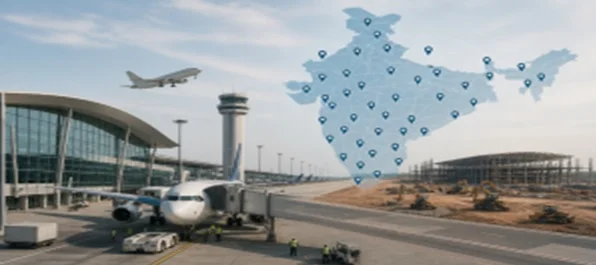
India plans to develop 100 new airports over the next 10 years under the Modified UDAN (Ude Desh ka Aam Nagrik) Scheme, strengthening air connectivity across smaller cities, remote regions and islands.
Important point
- The government plans an investment of around ₹30,000 crore for airport development and regional connectivity.
- The Modified UDAN Scheme will operate for 10 years from FY 2026-27 to FY 2035-36.
- The scheme has a total approved outlay of ₹28,840 crore with budgetary support from the Central Government.
- Civil Aviation Minister Ram Mohan Naidu highlighted the expansion while inaugurating hub-and-spoke operations at Ahmedabad Airport.
What is the UDAN Scheme?
- UDAN – Ude Desh ka Aam Nagrik is the Government of India’s flagship Regional Connectivity Scheme (RCS) aimed at making air travel accessible and affordable while improving connectivity to underserved and unserved regions.
- The scheme seeks to connect smaller cities with the national aviation network and encourage airlines to operate on routes that may otherwise be commercially less attractive.
- UDAN has played an important role in expanding air connectivity beyond major metropolitan centres and bringing Tier-2 and Tier-3 cities into India’s aviation network.
Modified UDAN Scheme
The Union Cabinet approved the Modified UDAN Scheme for a period of 10 years, covering FY 2026-27 to FY 2035-36.
Key Features
- 100 new airports are planned over the next decade.
- Around ₹30,000 crore is expected to be spent.
- The approved scheme outlay is ₹28,840 crore.
- Greater emphasis will be placed on regional and remote connectivity.
- Tier-2 and Tier-3 cities will receive increased aviation access.
- Himalayan, island and other difficult-to-reach regions are expected to benefit.
- The scheme seeks to expand both airport infrastructure and actual flight connectivity.
India’s Rapidly Expanding Airport Network
India has witnessed a major expansion of its aviation infrastructure.
According to the Civil Aviation Minister:
- India had 74 airports in 2014.
- The country's aviation map now has 166 airports.
- This represents an increase of more than 120% over the period.
- Over the last 12 years, work on a new airport or new terminal was completed roughly every 40 days.
The proposed addition of another 100 airports could significantly deepen India's regional aviation network.
What is the Hub-and-Spoke Model?
The government is also focusing on the hub-and-spoke model to ensure that expanding airport infrastructure translates into effective connectivity.
In this system: Smaller Airport → Regional Hub → Major Airport → International Destination
A major airport functions as a hub, while smaller regional airports act as spokes feeding passengers into it.
Why is the Hub-and-Spoke Model Important?
The challenge before India is not simply constructing airports but ensuring that they have adequate passenger traffic and flight connections.
The model can:
- Connect smaller cities with major aviation hubs.
- Improve domestic-to-international flight transfers.
- Increase utilisation of regional airports.
- Allow airlines to consolidate passengers.
- Improve commercial viability of certain routes.
- Provide passengers with access to a larger number of destinations.
The model was initially introduced at Varanasi and Amritsar, and Ahmedabad has now been added to this connectivity framework.
Why Ahmedabad?
- Ahmedabad has been selected for large-scale hub-and-spoke operations because Gujarat has a significant population with strong overseas connections.
- A large Non-Resident Indian (NRI) community originating from Gujarat creates considerable demand for international travel.
- By bringing passengers from smaller regional airports to Ahmedabad, airlines can potentially provide more efficient onward international connectivity.
Major Challenges
Despite rapid airport expansion, developing infrastructure alone will not guarantee successful regional aviation.
- Commercial Viability: Some regional routes may not generate enough passenger traffic for airlines to operate profitably without initial support.
- Airport Utilisation: New airports must attract sufficient flights and passengers. Otherwise, infrastructure can remain underutilised.
- Airline Capacity: Expansion requires adequate aircraft, trained pilots, engineers, cabin crew and ground personnel.
- Land Acquisition: Acquiring land for airports can involve high costs, displacement concerns and lengthy administrative processes.
- Environmental Concerns: Airport construction can affect ecosystems, particularly in environmentally sensitive Himalayan and island regions.
- Last-Mile Connectivity: An airport is most effective when supported by good roads, public transport and other connectivity to nearby cities and towns.
Way Forward
- India's next phase of aviation expansion should focus on connectivity rather than airport numbers alone.
- The government should ensure that new airports are developed on the basis of realistic passenger demand and regional economic potential.
- The hub-and-spoke model can be expanded to integrate smaller airports with major domestic and international aviation hubs.
- Airport development should also be coordinated with railways, highways, urban transport, tourism and logistics infrastructure.
At the same time, environmental sustainability, commercially viable routes, skilled manpower and passenger convenience should remain central to aviation policy.
Prelims MCQ
Q. With reference to the UDAN Scheme, consider the following statements:
- It is associated with regional air connectivity in India.
- It seeks to improve aviation access to underserved and unserved regions.
- The Modified UDAN Scheme has been approved for the period FY 2026-27 to FY 2035-36.
Which of the statements given above are correct?
(a) 1 and 2 only
(b) 2 and 3 only
(c) 1 and 3 only
(d) 1, 2 and 3
Mains Question
“Expansion of regional aviation infrastructure can act as a catalyst for balanced regional development in India.” Examine the significance of the Modified UDAN Scheme in this context.
|
FAQs
What is the full form of UDAN?
UDAN stands for Ude Desh ka Aam Nagrik. It is India's Regional Connectivity Scheme aimed at improving affordable air connectivity.
How many new airports are planned under Modified UDAN?
The government plans to develop 100 new airports over the next 10 years.
What is the outlay for Modified UDAN?
The Modified UDAN Scheme has an approved outlay of ₹28,840 crore, while the broader airport expansion investment has been described as approximately ₹30,000 crore.
What is the duration of Modified UDAN?
The scheme will operate from FY 2026-27 to FY 2035-36.
What is the hub-and-spoke model in aviation?
It is a connectivity system where passengers from smaller regional airports are routed through major hub airports for onward domestic or international travel.
|







 Contact Us
  New Batch : 9555124124/ 7428085757
  Tech Support : 9555124124/ 7428085757