
- UPSC Exam
- State PCS
- One Day Exam
- Current Affairs
- PT Quiz
- Downlaods
- About Coaching
- Blog
- Videos

| Prelims: (Polity & Governance + CA) Mains: (GS 2 – Parliament & Accountability; GS 3 – Human Resources, Employment, Skill Development) |
The Public Accounts Committee (PAC) has criticised the government for the slow and poorly planned implementation of the SANKALP scheme, based on findings of a report by the Comptroller and Auditor General of India (CAG).
The PAC flagged underutilisation of funds, weak monitoring, and lack of preparedness in executing the scheme.
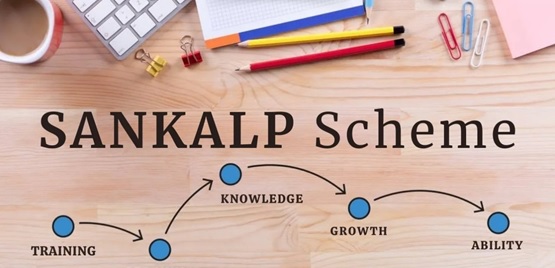
India’s demographic profile—with one of the world’s largest youth populations—makes skill development central to employment generation and economic growth. Recognising this, the government launched the Skill Acquisition and Knowledge Awareness for Livelihood Promotion (SANKALP) scheme to strengthen institutional frameworks and improve quality of short-term skill training.
However, persistent challenges such as fragmented implementation, weak industry alignment, and limited monitoring have affected outcomes in India’s skilling ecosystem.
The recent audit review highlights systemic issues in the design and execution of externally aided flagship programmes.
SANKALP (Skill Acquisition and Knowledge Awareness for Livelihood Promotion) is a flagship programme of the Ministry of Skill Development and Entrepreneurship.
Objectives
The scheme sought to improve employability outcomes and create a sustainable skilling ecosystem.
The financial structure combined domestic and external funding:
The scheme incorporated performance-based financing and incentives to promote accountability at national and State levels.
The CAG report, examined by the PAC, revealed significant gaps:
Key Audit Observations
The CAG attributed delays largely to administrative non-preparedness.
The PAC described implementation as “lackadaisical” and raised the following concerns:
Skill development requires coordination among the Centre, States, and private stakeholders. The PAC questioned the absence of a strong centralised monitoring system to track progress across States.
The Committee highlighted insufficient assessment of institutional readiness before scheme rollout, indicating gaps in planning and administrative capacity.
Members noted the absence of a clear roadmap to integrate vocational education into school curricula from primary to higher secondary levels.
This is significant in light of the National Education Policy 2020 (NEP 2020), which emphasises vocational exposure at early stages to improve long-term employability.
India’s demographic dividend presents both opportunity and risk:
Other initiatives like the Pradhan Mantri Kaushal Vikas Yojana (PMKVY) aim to enhance training quality and coverage, yet systemic challenges persist:
The SANKALP case illustrates the need for institutional preparedness, inter-ministerial coordination, and data-driven evaluation in large-scale social sector schemes.
Parliamentary Oversight
The PAC’s intervention reinforces Parliament’s role in financial accountability and oversight of public expenditure.
Fiscal Prudence
Underutilisation of externally aided loans increases fiscal inefficiency and opportunity costs.
Employment and Growth
Effective skill development is essential for:
Weak implementation undermines long-term economic competitiveness.
FAQs1. What is the SANKALP scheme? It is a flagship skill development programme aimed at strengthening institutional frameworks and improving employability through demand-driven skilling. 2. Why did the PAC criticise the scheme? Due to underutilisation of funds, weak monitoring, administrative delays, and lack of preparedness. 3. What role did the CAG play? The CAG audited the scheme’s financial and implementation performance and identified major shortfalls. 4. How is the scheme funded? Through a mix of World Bank loans, State contributions, and industry participation. 5. Why is skill development important for India? It is essential to harness India’s demographic dividend, improve employability, and sustain long-term economic growth. |



Our support team will be happy to assist you!

 Contact Us
  New Batch : 9555124124/ 7428085757
  Tech Support : 9555124124/ 7428085757