New
Hindi Medium: (Delhi) - GS Foundation (P+M) : 10th Aug 2026, 3:00 PM Hindi Medium: (Prayagraj) - GS Foundation (P+M) : 18th Aug 2026, 8:00 AM English Medium: (Delhi) - GS Foundation (P+M) : 6th Aug 2026 English Medium: (Prayagraj) - GS Foundation (P+M) : 15th July 2026, 8:00 AM Hindi Medium: (Delhi) - GS Foundation (P+M) : 10th Aug 2026, 3:00 PM Hindi Medium: (Prayagraj) - GS Foundation (P+M) : 18th Aug 2026, 8:00 AM English Medium: (Delhi) - GS Foundation (P+M) : 6th Aug 2026 English Medium: (Prayagraj) - GS Foundation (P+M) : 15th July 2026, 8:00 AM

Pithora Painting Receives Geographical Indication (GI) Tag (2026)

Why in News?

  • The Pithora Painting, a centuries-old ritual wall painting tradition of Gujarat's tribal communities, particularly the Rathwa tribe, has been awarded the Geographical Indication (GI) Tag in 2026
  • The recognition is expected to strengthen the preservation of India's tribal cultural heritage while improving the livelihood opportunities of traditional artisans.

What is Pithora Painting?

  • Pithora Painting is a traditional tribal ritual wall art that originated in the tribal regions of Gujarat, especially in Chhota Udaipur and Panchmahal districts. 
  • It is primarily practiced by the Rathwa tribe and is also associated with the Bhil, Bhilala, and Nayaka communities. 
  • The art form is not merely decorative but is deeply connected with tribal faith, rituals, and cultural identity.
  • The tradition dates back to approximately the 13th century and is named after Pithora De, the tribal deity believed to bless the community with prosperity, marriage, fertility, good health, and overall well-being.

Cultural and Religious Significance

Pithora Painting is created as a sacred ritual rather than for decoration. Traditionally, the paintings are commissioned after the fulfillment of a vow or during important occasions such as:

  • Weddings ,Birth of a child ,Festivals ,Recovery from illness ,Seeking prosperity and protection from deities 

The painting is considered an offering to the gods and forms an essential part of the spiritual life of the tribal communities.

Artists and Ritual Process

  • The paintings are traditionally executed by specialist ritual painters known as Lakharas under the supervision and guidance of a tribal priest called the Badwa.
  • The entire process is treated as a sacred ceremony, beginning with rituals and prayers before the painting is started.

Surface Preparation

Traditionally, the paintings are created on the interior walls of houses, especially the main wall.

The wall is prepared by applying a mixture of:

  • Cow dung 
  • Clay 
  • Lime or white mud (in some regions) 

This creates a smooth white surface suitable for painting.

Colours and Painting Technique

Pithora paintings are made using natural pigments obtained from:

  • Leaves ,Flowers ,Minerals ,Tree bark ,Mahua ,Other organic materials .

Common colours include:

  • Red ,Yellow ,Green ,Blue ,White ,Black 

Traditional tools include:

  • Bamboo sticks ,Cotton swabs ,Wooden stencils ,Handmade brushes 

The paintings are known for their vibrant colours and free-flowing compositions.

Themes Depicted

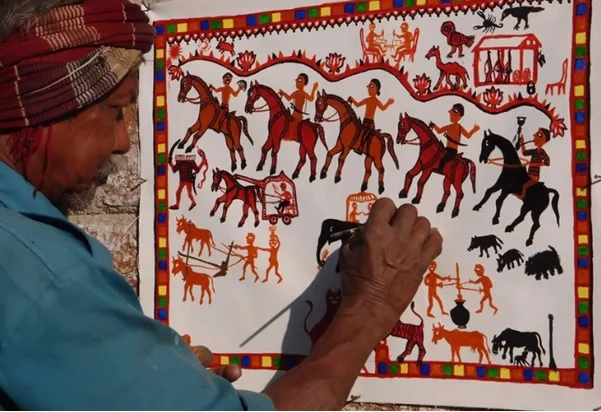
Pithora paintings portray a rich combination of mythology, religion, nature, and everyday tribal life.

Common motifs include:

  • Pithora De and other tribal deities 
  • Hindu gods and goddesses 
  • Horses (the most prominent symbol) 
  • Elephants 
  • Birds 
  • Wild animals 
  • Trees and forests 
  • Rivers and mountains 
  • Farming activities 
  • Hunting scenes 
  • Music and dance 
  • Festivals and community life 

The horse is regarded as the most important symbol, representing divine power, prosperity, and blessings.

Role in Tribal Society

Pithora Painting serves multiple social and cultural functions:

  • Preserves tribal mythology and oral traditions. 
  • Reflects the close relationship between humans and nature. 
  • Strengthens community identity. 
  • Transfers indigenous knowledge to younger generations. 
  • Acts as an important expression of tribal spirituality. 

Contemporary Developments

While traditionally painted only on house walls, modern Pithora artists now create artworks on:

  • Canvas 
  • Handmade paper 
  • Cloth 
  • Wooden panels 

These artworks are sold commercially, providing an important source of income for tribal artisans while helping the art gain national and international recognition.

Artists such as Paresh Rathwa and Kaushik Rathwa have emphasized that Pithora Painting remains an integral part of the identity of the Rathwa, Bhil, Bhilala, and Nayaka communities, keeping their traditions alive through artistic expression.

Geographical Indication (GI) Tag (2026)

In 2026, Pithora Painting was awarded the Geographical Indication (GI) Tag, officially recognizing its unique cultural and geographical origin.

Importance of the GI Tag

The GI tag:

  • Protects the authenticity of traditional Pithora Painting. 
  • Prevents imitation and misuse of the art form. 
  • Safeguards indigenous knowledge and traditional craftsmanship. 
  • Enhances the national and global identity of the art. 
  • Improves market access for tribal artisans. 
  • Promotes rural employment and sustainable livelihoods. 
  • Encourages younger generations to continue the tradition. 
  • Boosts Gujarat's handicrafts and cultural tourism sector. 

According to officials, the GI recognition is expected to significantly improve the economic prospects of tribal artists while preserving one of India's most valuable indigenous art traditions.

Pithora Painting –FAQs

Q1. What is Pithora Painting?

Answer: Pithora Painting is a traditional ritualistic tribal wall painting of Gujarat, mainly practiced by the Rathwa tribe and other tribal communities such as the Bhil, Bhilala, and Nayaka. It is created to seek blessings, prosperity, and protection from tribal deities.

Q2. Which state is Pithora Painting associated with?

Answer: Gujarat, particularly the districts of Chhota Udaipur and Panchmahal.

Q3. Which tribal communities practice Pithora Painting?

Answer: It is primarily practiced by the Rathwa tribe and also by the Bhil, Bhilala, and Nayaka communities.

Q4. Who is Pithora De?

Answer: Pithora De is the tribal deity after whom the painting is named. He is believed to bless devotees with prosperity, marriage, fertility, and well-being.

Q5. Who traditionally paints Pithora Paintings?

Answer: The paintings are traditionally created by specialist ritual painters known as Lakharas, under the guidance of a tribal priest called the Badwa.

Have any Query?

Our support team will be happy to assist you!

OR