Prelims: Periodic Labour Force Survey (PLFS), NSO, MoSPI, Gig and Platform Workers, LFPR, WPR, Unemployment Rate.
Mains: GS Paper II Gender Equality and Social Security; GS Paper III—Employment, Inclusive Growth and the Indian Economy.
Keywords: PLFS Revamp 2027, Digital Platform Workers, Unpaid Care Work, Gig Economy, Labour Statistics, Women’s Workforce Participation. |
Why in News?
- The National Statistics Office (NSO), under the Ministry of Statistics and Programme Implementation (MoSPI), has proposed changes to the Periodic Labour Force Survey (PLFS) from January 2027.
- Announced on 23 October 2026, the proposals aim to improve coverage of digital platform workers and measure unpaid activities more comprehensively. Public comments have been invited within 15 days of the announcement.
What Is the PLFS?
- The PLFS is a household survey conducted by the NSO since 2017 to assess employment and unemployment in India.
- Its sampling design was revised in January 2025 to support monthly, quarterly and annual estimates. Experimental collection of information on digital platform workers began in January 2026.
Key Labour-Market Indicators
|
Indicator
|
Meaning
|
|
Labour Force Participation Rate (LFPR)
|
Percentage of the population working, seeking work or available for work.
|
|
Worker Population Ratio (WPR)
|
Percentage of the population that is employed.
|
|
Unemployment Rate (UR)
|
Percentage of unemployed persons within the labour force.
|
These indicators must be interpreted with reference to the specified age group and measurement approach. Under Current Weekly Status (CWS), activity is assessed over the preceding seven days.
Key Points of the Proposed PLFS Revamp
1. Separate Sampling Category for Platform Workers
The existing experimental approach did not capture an adequate number of digital platform workers. The proposal therefore introduces a separate Second Stage Stratum (SSS)—a household sampling category—to improve their representation. The revised design envisages:
- Four household strata in rural areas.
- Five household strata in urban areas.
- Fourteen households surveyed in each selected First Stage Unit
An additional screening question will identify households with members who engaged in digital platform work during the specified reference period.
2. Broader Measurement of Unpaid Activities
New questions will cover:
- Production of goods for a household’s own use.
- Unpaid domestic and caregiving activities.
- Volunteer work.
- Unpaid trainee work.
These questions will apply to persons aged 15 years and above, in both rural and urban areas, during the first survey visit, enabling annual reporting.
3. Updated Sampling Frame
Fresh samples for the 2027–2028 survey cycle will use an updated sampling frame. The revision seeks to reflect changes in urbanisation, new settlements and administrative boundaries, improving the survey’s representation of the population.
4. Transition Arrangements
During January–March 2027, monthly estimates will pool samples from the existing and updated frames. Relative Standard Error estimates will not be published for these three months.
Understanding Gig Work and Platform Work
- Gig work broadly involves task-based or short-term earning arrangements.
- Platform work is a subset organised through digital platforms.
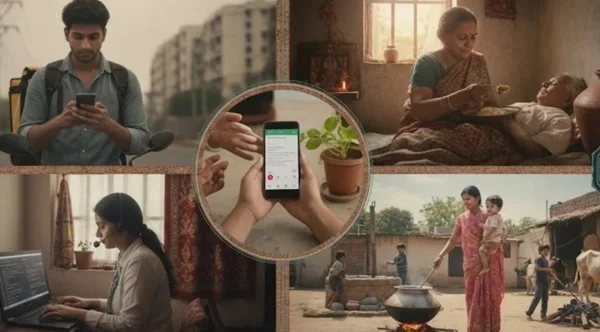
- App-based transport, delivery and household services illustrate platform-mediated work. However, gig workers who obtain assignments through offline networks may not be captured by a platform-specific identification question.
Why Does Unpaid Work Matter?
- Cooking, cleaning, childcare and caring for elderly or sick family members sustain households and enable others to undertake paid employment.
- However, these activities can place substantial demands on women’s time. This creates time poverty—limited time for paid work, education, skill development, rest or personal needs.
- India’s Time Use Survey already captures unpaid activities, but it is not conducted annually. The proposed PLFS questions could provide more regular information on participation in such work.
Significance of the Revamp
The proposed changes could strengthen policymaking in several ways:
- Greater visibility: Improve recognition of workers and activities inadequately represented in conventional labour statistics.
- Gender-sensitive analysis: Help explain how domestic responsibilities affect women’s employment opportunities.
- Better welfare planning: Provide evidence for designing social protection for platform workers.
- Improved population representation: Reflect changing settlement patterns and administrative boundaries.
- Broader understanding of work: Recognise contributions to household and community well-being beyond paid employment.
Relevance for India
The reform has practical implications for India’s employment and development policies.
- First, employment policy needs to reflect changing work arrangements. People may combine platform assignments, self-employment and other jobs. Better identification can help policymakers understand this diversity.
- Second, women’s employment requires attention to care responsibilities. Unpaid-work data can inform decisions on childcare centres, eldercare services and accessible public infrastructure.
- Third, statistical recognition should support practical action. Identifying vulnerable workers is useful only when the findings guide suitable services, protection and employment opportunities.
These are potential policy applications of improved data, rather than benefits guaranteed by the survey redesign.
Challenges
- Identifying Irregular and Multiple Jobs: Respondents may perform platform work occasionally or alongside another occupation, making accurate reporting difficult.
- Underreporting Domestic Responsibilities: Household members may treat unpaid care as a routine duty and overlook it when answering questions about work.
- Maintaining Comparability: Changes in sampling and questionnaires require clear explanations so users can distinguish actual labour-market changes from methodological effects.
- Covering Non-Platform Gig Workers: A platform-focused category may leave gaps in understanding workers who obtain short-term assignments offline.
- Managing Survey Complexity: Additional questions require trained investigators and clear definitions to avoid respondent fatigue and inconsistent classification.
Way Forward
- Train investigators to distinguish platform work, other employment and different unpaid activities.
- Use clear questions that help respondents recognise occasional work and caregiving responsibilities.
- Publish methodological guidance explaining changes and their implications for comparisons over time.
- Use PLFS and Time Use Survey findings together to assess employment participation and time constraints.
- Translate findings into policy, particularly childcare provision, skills access and appropriate social protection.
- Protect respondent confidentiality while enabling research through anonymised data.
Conclusion
The proposed PLFS revamp from January 2027 could provide a more complete picture of India’s changing world of work. Its value will depend on accurate implementation and the use of findings to improve employment opportunities, recognise care responsibilities and strengthen worker protection.
Prelims MCQ
With reference to the proposed PLFS changes from January 2027, consider the following statements:
- A separate sampling stratum is proposed to improve coverage of digital platform workers.
- Questions on unpaid activities will cover persons aged 15 years and above in both rural and urban areas.
- Recording unpaid household activities will automatically include their monetary value in GDP.
Which of the statements given above are correct?
(a) 1 and 2 only
(b) 2 and 3 only
(c) 1 and 3 only
(d) 1, 2 and 3
Mains Question
“Reliable labour statistics must capture both emerging employment arrangements and unpaid contributions to household well-being.” Discuss the significance and implementation challenges of the proposed PLFS revamp.
|
FAQs
1. What is the PLFS?
The Periodic Labour Force Survey is conducted by the NSO to measure employment, unemployment and labour-force participation in India.
2. When are the proposed PLFS changes expected?
The changes are proposed from January 2027, following the October 2026 announcement and consultation process.
3. Why is a separate category proposed for platform workers?
The experimental approach used in 2026 did not capture enough platform workers. A dedicated sampling category aims to improve their representation.
4. Which unpaid activities will the revised survey measure?
It will cover own-use production of goods, unpaid household and caregiving activities, volunteering and unpaid trainee work.
5. Will unpaid household work automatically count as employment?
No. Measuring an activity and classifying it as employment are separate statistical decisions. The proposal does not automatically turn all unpaid domestic work into employment.
|





 Contact Us
 New Batch : 9555124124/ 7428085757
 Tech Support : 9555124124/ 7428085757
