
- UPSC Exam
- State PCS
- One Day Exam
- Current Affairs
- PT Quiz
- Downlaods
- About Coaching
- Blog
- Videos

| Prelims: (Science & Technology + CA) Mains: (GS 3 – Defence Technology, Security, Strategic Capabilities) |
Swedish aerospace and defence company Saab has showcased the capabilities of its RBS-15 missile, demonstrating how it can destroy key components of the Russian S-400 air defence system, highlighting its precision strike and survivability features.
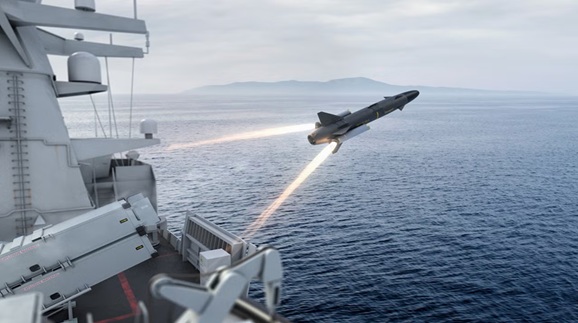
Modern warfare increasingly relies on long-range, precision-guided munitions capable of penetrating advanced air defence systems and striking high-value targets.
As adversaries deploy sophisticated surface-to-air missile systems such as the S-400, missile developers are focusing on survivability, electronic warfare resistance, and multi-domain strike capabilities.
The RBS-15 represents this new generation of anti-ship and land-attack missiles, combining stealth, guidance precision, and flexibility across platforms.
The RBS-15 enhances strike capabilities against both naval and land-based targets, making it a versatile asset in modern maritime and joint warfare.
Its ability to challenge advanced air defence systems like the S-400 underscores the growing emphasis on:
Such capabilities are particularly relevant in contested maritime zones and high-threat environments, shaping future naval and aerial combat doctrines.
FAQs1. What type of missile is the RBS-15 ? It is a fire-and-forget anti-ship missile with land-attack capability. 2. Who developed the RBS-15 missile ? The missile was developed by Saab Bofors Dynamics of Sweden. 3. What is the maximum range of the RBS-15 ? The missile can strike targets up to 200 km away. 4. How does the RBS-15 avoid enemy air defences ? Through low sea-skimming flight, stealth features, evasive manoeuvres, and resistance to electronic countermeasures. 5. Why is the RBS-15 strategically important ? It enhances precision strike capabilities and can challenge advanced air defence systems, strengthening modern naval and air warfare effectiveness. |



Our support team will be happy to assist you!

 Contact Us
  New Batch : 9555124124/ 7428085757
  Tech Support : 9555124124/ 7428085757