New
Hindi Medium: (Delhi) - GS Foundation (P+M) : 14th Oct. 2026, 06:00 PM Hindi Medium: (Prayagraj) - GS Foundation (P+M) : 23rd Oct. 2026, 11:00 AM English Medium: (Delhi) - GS Foundation (P+M) : 07th Dec. 2026, 5:30PM English Medium: (Prayagraj) - GS Foundation (P+M) : 03rd Oct. 2026, 11:00 AM Hindi Medium: (Delhi) - GS Foundation (P+M) : 14th Oct. 2026, 06:00 PM Hindi Medium: (Prayagraj) - GS Foundation (P+M) : 23rd Oct. 2026, 11:00 AM English Medium: (Delhi) - GS Foundation (P+M) : 07th Dec. 2026, 5:30PM English Medium: (Prayagraj) - GS Foundation (P+M) : 03rd Oct. 2026, 11:00 AM

Shamonda Virus: France Reports the First Known Human Infection

Prelims: Orthobunyavirus, vector-borne diseases, zoonoses, One Health
Mains: GS Paper II – Health; GS Paper III – Science and Technology, Biosecurity, Disaster Management
Keywords: Shamonda virus, Orthobunyavirus, Culicoides midges, One Health, zoonotic disease, vector surveillance

Why in News?

  • French health authorities reported on 22 October 2026 that Shamonda virus had been detected in a human for the first time. 
  • The patient was severely immunocompromised, was being treated for another serious illness in Lyon, and died in early October. 
  • Authorities have said that the virus’s role in the death has not been established and that, based on current information, no risk to the general population has been identified. 

What Is Shamonda Virus?

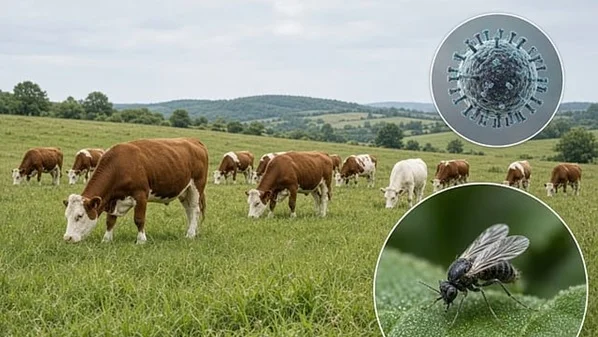
  • Shamonda virus is an Orthobunyavirus in the Simbu serogroup. It has primarily been associated with livestock, especially cattle. It was first identified in Nigeria in the mid-1960s and has also been reported in parts of Africa and Asia. In 2026, Shamonda-type viruses were detected in European livestock. 
  • Orthobunyaviruses have a genome made up of three segments—S, M and L. Some viruses in this broader group affect animals, while others can infect humans. The fact that a related virus can infect people does not, by itself, show that Shamonda virus spreads between humans. 

What Is Known About the French Case?

  • The case is significant because it is the first known detection of Shamonda virus in a human. The patient had severe immune suppression and was already receiving treatment for a serious illness.
  • The patient’s death occurred after the infection was identified, but this sequence alone does not prove that the virus caused or contributed to the death. Investigations are continuing. 
  • French authorities believe the patient may have been infected by the bite of a Culicoides biting midge in eastern France, where the virus had been detected in animals. This is the suspected route; the exact circumstances remain under investigation.

How Does the Virus Spread?

  • In animals, Shamonda virus is associated with biting midges. These small insects can carry viruses between susceptible animals. 
  • The suspected midge bite in the French human case has led authorities to examine whether a rare infection can occur under particular circumstances, including in a person with severe immune suppression.
  • The French case does not establish that the virus commonly infects humans, spreads directly from livestock to people, or passes from person to person. These are separate questions that require evidence from further investigation.

Effects on Livestock

  • The virus has been associated with illness in cattle, including diarrhoea, weakness, reduced appetite and, less commonly, fever.
  • INRAE reports that some infected animals may experience reduced milk production; infection during pregnancy could also have reproductive consequences, though researchers continue to investigate the disease’s effects.
  • A study of nine French dairy farms reported a fall in milk production of up to 75% in affected herds. 
  • This animal-health impact matters even while the human-health risk appears low. Livestock disease can affect farmers’ incomes, veterinary services and agricultural production.

Significance for Public Health

  • The case is a reminder that detecting a pathogen in an unexpected host can raise important scientific questions. Researchers will need to establish how the infection occurred, whether it was linked to immune suppression, and whether any further human cases exist.
  • For health authorities, the appropriate response is proportionate monitoring: investigate the case, monitor animal and vector activity, and communicate clearly about what is known and what remains uncertain. The current assessment is that no general public-health risk has been identified. 

Relevance for India

  • The French report does not establish that Shamonda virus is circulating in India or that it presents an immediate threat to the country. Its wider relevance is the need for One Health surveillance: public-health agencies, veterinary services, laboratories and vector-control teams can share information to detect unusual infections early.
  • India’s preparedness for vector-borne and emerging infections can benefit from timely testing of unexplained animal illness, monitoring of relevant insect vectors, and coordination between human and animal health systems. Such measures support early detection without assuming that a single reported case signals an outbreak.

Challenges

  • Limited evidence: A single known human case cannot establish how often infection occurs or how severe it may be in different populations.
  • Uncertain transmission details: The midge bite is a suspected route; the exact route has not been confirmed.
  • Separating association from causation: The patient’s death followed the detection of the virus, but the virus’s contribution has not been established.
  • Animal-health impacts: Illness among cattle can affect milk production and create costs for farmers and veterinary systems.
  • Clear risk communication: Describing the case as a first human detection should not be presented as proof of sustained human transmission or a public-health emergency.

Way Forward

  • Authorities and researchers should continue investigating the case and share relevant findings through international public-health and animal-health networks. Surveillance should track unusual infections in people and livestock, while veterinary laboratories should maintain diagnostic capacity for emerging pathogens.
  • Communication should remain evidence-based: clearly distinguish confirmed findings from suspected transmission routes, explain the limits of available evidence, and update risk assessments when new data emerge. This approach supports preparedness without unnecessary alarm.

Conclusion

  • France’s report of the first known human Shamonda virus infection is an important finding for disease surveillance, but it does not currently indicate widespread human transmission. 
  • The patient was severely immunocompromised, and the virus’s role in the death remains unestablished. Continued investigation, animal and vector monitoring, and coordinated One Health surveillance will help clarify the risks and guide a proportionate response.

Prelims MCQ

Consider the following statements about Shamonda virus:

  1. It belongs to the Orthobunyavirus group. 
  2. Biting midges are associated with its transmission among animals. 
  3. The French case established human-to-human transmission.

Which of the statements given above are correct?

A. 1 and 2 only
B. 2 and 3 only
C. 1 and 3 only
D. 1, 2 and 3

Mains Question

Discuss how the One Health approach can help countries detect and respond to emerging infections at the human–animal–environment interface.

FAQs

1. What is Shamonda virus?

It is an Orthobunyavirus primarily associated with livestock, particularly cattle.

2. Why is the French case significant?

It is the first known detection of Shamonda virus in a human.

3. Did Shamonda virus cause the patient’s death?

That has not been established. The patient died after the infection was detected, but the virus’s role remains under investigation.

4. How is Shamonda virus believed to spread?

Biting midges are associated with transmission among animals. A midge bite is suspected in the French case, but the route has not been confirmed.

5. Is there a confirmed risk to the general public?

French authorities have said that no risk to the general population has been identified based on current knowledge. There is no reported evidence of human-to-human transmission. 

Have any Query?

Our support team will be happy to assist you!

OR