|
Prelims: Siang River; Siang Upper Multipurpose Project; Arunachal Pradesh; Hydropower; Water Storage; NHPC; Brahmaputra River System
Mains: GS Paper I – Geography; GS Paper II – International Relations; GS Paper III – Infrastructure, Disaster Management and Energy Security; Transboundary Rivers
Focus Area: Siang Upper Multipurpose Project, Water Security, Flood Management, China’s Medog Project, Arunachal Pradesh, and Brahmaputra Basin
|
Why in News?
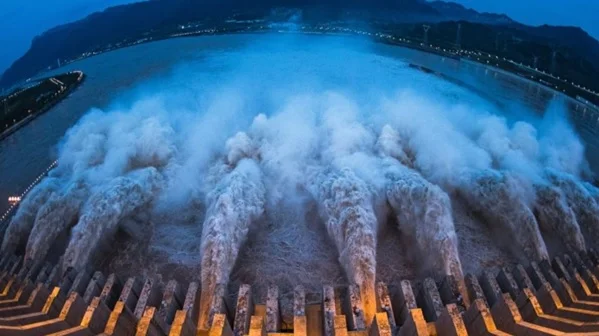
- Arunachal Pradesh Deputy Chief Minister Chowna Mein has stated that the proposed 11,200 MW Siang Upper Multipurpose Project (SUMP) is intended not merely for power generation but primarily for water storage, regulation and management in the Siang basin.
- The project is proposed to have around 9.2 billion cubic metres (BCM) of live storage, which could help regulate downstream flows during sudden releases or extreme upstream flows.
What is the Siang Upper Multipurpose Project?
- The Siang Upper Multipurpose Project (SUMP) is a proposed large-scale multipurpose water and hydropower project on the Siang River in Arunachal Pradesh.
- The project is planned with an installed capacity of approximately 11,200 MW, a proposed dam height of around 280–300 metres, and about 9.2 BCM of live storage.
- According to the state government, its purpose extends beyond electricity generation to include water storage, downstream flow regulation and flood-risk reduction.
- The project is associated with the National Hydroelectric Power Corporation (NHPC) and is currently at the preliminary assessment and survey stage.
Geographical Significance of the Siang River
- The Siang is one of the major rivers of Arunachal Pradesh and forms an important part of the Brahmaputra river system.
- In Tibet, the river is known as the Yarlung Tsangpo. It enters India through Arunachal Pradesh and subsequently contributes to the Brahmaputra system in Assam.
- Therefore, developments on the Siang have implications not only for hydropower but also for water security, flood management, agriculture, ecology and regional strategic interests.
SUMP: More Than a Hydropower Project
- The proposed capacity of 11,200 MW often attracts attention because of its enormous power-generation potential.
- However, according to Deputy Chief Minister Chowna Mein, the project should not be assessed only through its installed power capacity.
- Its proposed 9.2 BCM live storage could enable the regulated storage and release of water.
- In the event of sudden upstream releases or extreme flows, such storage could potentially help moderate downstream discharge and reduce flood risks in parts of Arunachal Pradesh and Assam.
China’s Medog Project and India’s Concerns
- The upper reaches of the Brahmaputra are located in Tibet, where the river is known as the Yarlung Tsangpo.
- China has proposed a massive hydropower project in the Medog region of Tibet, leading to concerns in India regarding the possible impact of upstream infrastructure on downstream water flows.
- The reported capacity of the Chinese project is around 60,000 MW, significantly higher than the proposed capacity of SUMP.
However, Chowna Mein has argued that the two projects should not be compared only on the basis of installed capacity because their proposed functions and storage characteristics are different.
Indicative Comparison
|
Parameter
|
SUMP – India
|
Medog Project – China
|
|
Location
|
Arunachal Pradesh
|
Tibet
|
|
Reported/Proposed Capacity
|
~11,200 MW
|
~60,000 MW
|
|
Major Focus
|
Water storage, regulation and power
|
Hydropower generation
|
|
Reported/Proposed Storage
|
~9.2 BCM live storage
|
~5.5 BCM reported
|
|
River System
|
Siang–Brahmaputra
|
Yarlung Tsangpo
|
Role in Flood Management
- Flooding remains a major challenge across parts of the Brahmaputra basin, particularly in Arunachal Pradesh and Assam.
- A large reservoir can potentially store water during periods of exceptionally high inflow and release it in a regulated manner.
- Therefore, SUMP has been presented as a potential instrument for flood moderation and downstream flow management.
- However, the actual effectiveness of the project in reducing flood risks will depend on detailed hydrological studies, reservoir operation, downstream geography and environmental assessments.
Importance for India’s Water Security
- The Siang is part of an international river system whose upper reaches lie outside India.
- This makes transboundary water management an important strategic concern.
- China’s upstream infrastructure development has increased the importance of India developing adequate capabilities for water storage, hydrological monitoring, flood forecasting and disaster preparedness.
- In this context, SUMP can potentially contribute to India's ability to manage downstream water flows while also strengthening domestic energy infrastructure.
Strategic Significance for India
- The project has significance beyond electricity generation.
- Water Security: Large storage capacity could strengthen India's ability to manage seasonal and extreme water flows.
- Flood Management: Regulated releases may help moderate downstream discharge during extreme flow events.
- Energy Security: An installed capacity of approximately 11,200 MW could significantly contribute to India's hydropower generation.
- Northeastern Development: The project could create employment, infrastructure and economic opportunities in Arunachal Pradesh.
- Strategic Infrastructure: Large-scale infrastructure in a strategically sensitive border state can contribute to India's broader national security preparedness.
- Transboundary River Management: It highlights the importance of India's preparedness regarding rivers originating outside its territory.
Major Challenges
- Environmental Concerns: A large dam can significantly alter river ecology, sediment transport and downstream ecosystems.
- Seismic Risks: Arunachal Pradesh lies in a highly seismic region, making detailed geological and seismic assessment essential.
- Community Concerns: Local participation, consent, rehabilitation and livelihood protection are critical for the project's social acceptability.
- Transboundary Water Issues: India must continue to monitor developments in the upper Brahmaputra basin and strengthen hydrological cooperation and data-sharing mechanisms.
- Economic and Technical Viability: The project's enormous scale requires detailed assessment of construction costs, geological conditions, environmental impacts and long-term benefits.
Way Forward
- The government should adopt a science-based, transparent and participatory approach before taking a final decision on the project.
- Detailed hydrological, geological, seismic and environmental studies should be completed before construction.
- Local communities should be meaningfully involved through consultations, while a comprehensive rehabilitation and livelihood protection framework should be established wherever required.
- At the regional level, India should strengthen flood forecasting, hydrological monitoring, early-warning systems and transboundary river diplomacy.
- The objective should be to balance national water security, energy requirements, environmental sustainability and the rights of local communities.
Prelims Practice Question
Q. With reference to the Siang Upper Multipurpose Project (SUMP), consider the following statements:
- It is proposed on the Siang River in Arunachal Pradesh.
- It is proposed to have a large water-storage component.
- Its objective is limited only to hydropower generation.
Which of the statements given above is/are correct?
A. 1 and 2 only
B. 2 and 3 only
C. 1 and 3 only
D. 1, 2 and 3
Mains Practice Question
“The Siang Upper Multipurpose Project has implications beyond hydropower generation and is closely linked with India’s water security and strategic interests.” Discuss.
|
FAQs
Q1. What is the Siang Upper Multipurpose Project?
SUMP is a proposed large-scale multipurpose water and hydropower project on the Siang River in Arunachal Pradesh.
Q2. What is the proposed capacity of SUMP?
The proposed installed capacity is approximately 11,200 MW.
Q3. How much live storage is proposed under SUMP?
The project is proposed to have approximately 9.2 BCM of live storage.
Q4. Why is the Siang River strategically important?
The Siang forms part of the Brahmaputra river system and is connected to the Yarlung Tsangpo in Tibet, making it important for India's water security and transboundary river management.
Q5. Has the SUMP received final construction approval?
No. The project is still undergoing preliminary assessment, including the Pre-Feasibility Report (PFR) and survey-related activities. Final construction would require further studies and statutory clearances.
|






 Contact Us
  New Batch : 9555124124/ 7428085757
  Tech Support : 9555124124/ 7428085757