Prelims: GS Paper I – Science & Technology, Biology, Health & Current Affairs.
Mains: GS Paper II – Health & Public Health | GS Paper III – Science & Technology India-specific disease severity assessment, population-based medical research, precision medicine.
Keywords: Sickle Cell Anaemia, CSIR-CCMB, India-specific Severity Score, ISS1, ISS2, Paediatric Severity Score, Beta-globin gene, Hydroxyurea, Vaso-occlusive crisis, Genetic disorder, Public Health, Tribal Health, Precision Medicine. |
Why in News?
- Scientists at CSIR-Centre for Cellular and Molecular Biology (CSIR-CCMB) have developed an India-specific tool to predict the severity of Sickle Cell Anaemia (SCA).
- The researchers developed the new scoring system using clinical data from 171 children with SCA receiving treatment at Government Medical College and Hospital, Nagpur.
What is Sickle Cell Anaemia?
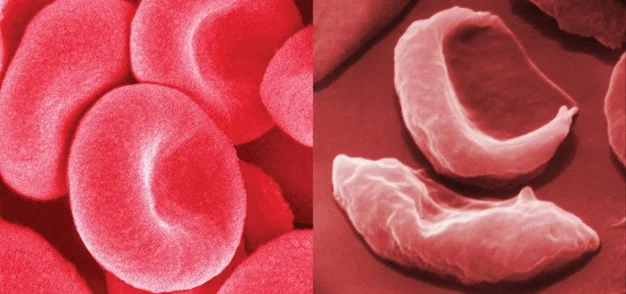
- Sickle Cell Anaemia is an inherited genetic blood disorder caused by a mutation in the beta-globin gene.
- This mutation results in the production of abnormal haemoglobin, commonly called HbS, which can cause red blood cells to become rigid and sickle-shaped.
- These abnormal cells can block small blood vessels, reducing oxygen supply to tissues and causing anaemia, severe pain episodes and organ damage.
- The severity of the disease varies significantly between individuals, making early identification of high-risk patients important for effective management.
Why Does Sickle Cell Anaemia Severity Vary?
Although Sickle Cell Anaemia is associated with a specific genetic mutation, its clinical expression can vary considerably among patients.
1. Foetal Haemoglobin
Higher levels of foetal haemoglobin (HbF) can reduce the tendency of red blood cells to sickle.
Indian patients may have relatively higher HbF levels compared with some other populations, which can influence disease severity.
2. Genetic Background
The genetic background of patients can influence how the disease manifests.
Therefore, a severity score developed primarily using populations from Africa or Western countries may not completely reflect the clinical characteristics of Indian patients.
3. Nutrition and Infections
Nutritional deficiencies and recurrent infections can worsen anaemia and contribute to complications.
This makes the Indian disease environment different from the settings in which several international scoring systems were developed.
4. Environmental and Healthcare Factors
Environmental stressors and differences in access to healthcare can also influence disease outcomes and hospitalisation patterns.
India-Specific Severity Score: ISS1 and ISS2
- Researchers analysed medical records of 171 children aged up to 18 years suffering from Sickle Cell Anaemia.
- Two experienced paediatricians independently classified patients into mild, moderate and severe categories based on their clinical condition.
- The researchers then compared these expert assessments with the existing Paediatric Severity Score (PSS) and developed modified India-specific models.
ISS1 - India-specific Severity Score
- The first modified model, ISS1, incorporated clinical features more frequently observed among Indian patients.
- It improved the concordance between the scoring system and expert clinical assessment from around 67% with PSS to nearly 83%.
ISS2 - Simplified India-specific Score
- The second model, ISS2, replaced laboratory measurements with more easily observable clinical indicators.
- It achieved an overall concordance of around 85% and correctly identified all patients classified as having mild disease in the study.
- This approach could potentially allow clinicians to assess disease severity without relying on a large number of laboratory investigations.
Key Clinical Features Identified
The study highlighted several important clinical characteristics among the children analysed.
- Painful vaso-occlusive crises were the most common complication.
- Frequent blood transfusions were associated with severe disease.
- Severe anaemia was an important reason for hospitalisation.
- Recurrent febrile illnesses were also associated with hospital admissions.
- The revised scoring systems attempted to incorporate these clinically relevant characteristics.
Why is an India-Specific Score Important?
Better Clinical Assessment
A population-specific scoring system can potentially provide a more appropriate assessment of disease severity when existing international models do not adequately correspond with local patient profiles.
Early Identification of High-Risk Patients
Identifying patients likely to develop severe complications at an early stage can help doctors plan closer monitoring and appropriate treatment.
Treatment Decisions
The researchers suggested that such scoring systems could support decisions regarding the use and dosage of hydroxyurea, an important medicine used in the management of Sickle Cell Anaemia.
Reduced Dependence on Extensive Testing
The ISS2 model uses easily observable clinical indicators, potentially making severity assessment more practical in healthcare settings where extensive laboratory facilities may not always be available.
Significance for India
- India carries a substantial burden of Sickle Cell Anaemia, particularly among several tribal and historically vulnerable communities.
- The development of an India-specific clinical tool reflects the importance of Indian population-based medical research rather than depending entirely on models developed using foreign datasets.
- It can also contribute to the broader objective of improving early diagnosis, risk stratification, treatment planning and long-term disease management.
- However, the scoring system would require further validation using larger and more diverse patient populations before widespread adoption.
Link with Precision Medicine
- The study is also relevant to the broader concept of precision medicine.
- Precision medicine aims to tailor prevention, diagnosis and treatment according to the characteristics of individual patients or specific populations.
- In the case of Sickle Cell Anaemia, differences in genetic background, HbF levels, nutrition, infections and healthcare conditions can influence disease expression.
- Therefore, India-specific clinical datasets can help develop more appropriate tools for Indian patients.
Challenges
- Limited Study Population: The scoring system was developed using data from 171 children, which is relatively limited for establishing a tool for nationwide application.
- Need for Wider Validation: The tool needs to be tested across different regions and patient populations before it can be considered broadly applicable.
- Genetic Diversity: India has considerable genetic and population diversity. A score developed from one patient group may not perform identically across all Indian populations.
- Healthcare Variation: Differences in healthcare access, diagnosis, treatment availability and follow-up can affect clinical outcomes.
- Long-Term Evidence: Further studies are required to determine how effectively the scoring system predicts long-term complications and treatment outcomes.
Way Forward
- Conduct large-scale multi-centre studies across different regions of India.
- Validate ISS1 and ISS2 among diverse age groups and genetic backgrounds.
- Integrate clinical scoring with genetic and laboratory information where appropriate.
- Strengthen screening and early diagnosis programmes for Sickle Cell Anaemia.
- Improve access to medicines such as hydroxyurea and comprehensive disease management.
- Develop simple clinical tools suitable for resource-constrained healthcare settings.
- Explore whether the model can be adapted for other countries with similar disease and healthcare characteristics.
Conclusion
- The India-specific severity scoring system developed by CSIR-CCMB researchers represents an important example of how population-specific clinical data can improve disease assessment.
- The reported improvement from around 67% concordance with the existing PSS to nearly 83% with ISS1 and 85% with ISS2 indicates the potential usefulness of the revised approach.
- However, these findings are based on a limited study population and require larger-scale validation before the scores can be adopted widely. The study nevertheless highlights the importance of developing healthcare tools that reflect India's own genetic, clinical and healthcare context.
Prelims MCQ
Q. With reference to Sickle Cell Anaemia, consider the following statements:
- It is an inherited genetic disorder associated with a mutation in the beta-globin gene.
- Higher levels of foetal haemoglobin can reduce the severity of sickling.
- Hydroxyurea is used in the management of Sickle Cell Anaemia.
- The India-specific severity score developed by CSIR-CCMB is based exclusively on genetic testing.
Which of the statements given above are correct?
A. 1 and 2 only
B. 1, 2 and 3 only
C. 2, 3 and 4 only
D. 1, 2, 3 and 4
Mains Practice Question
“Population-specific clinical research is essential for improving healthcare outcomes in genetically diverse countries such as India.” Discuss with reference to the India-specific severity score developed for Sickle Cell Anaemia.
Frequently Asked Questions (FAQs)
1. What is Sickle Cell Anaemia?
Sickle Cell Anaemia is an inherited blood disorder caused by a mutation in the beta-globin gene, resulting in abnormal haemoglobin and sickle-shaped red blood cells.
2. What has CSIR-CCMB developed?
CSIR-CCMB researchers have developed India-specific severity scoring systems, ISS1 and ISS2, to assess the severity of Sickle Cell Anaemia in Indian patients.
3. How accurate was the existing Paediatric Severity Score?
The study reported that the existing Paediatric Severity Score (PSS) matched expert clinical assessment in approximately 67% of cases.
4. What was the performance of ISS1 and ISS2?
The study reported nearly 83% concordance for ISS1 and approximately 85% for ISS2 with expert clinical assessment.
5. Why are India-specific disease severity tools important?
Disease manifestation can vary across populations because of differences in genetic background, foetal haemoglobin levels, nutrition, infections and healthcare conditions. India-specific tools can therefore provide a more locally relevant assessment.
|






 Contact Us
  New Batch : 9555124124/ 7428085757
  Tech Support : 9555124124/ 7428085757