Prelims : Polity + CA
Mains : GS Paper 2 – Fundamental Rights, Social Justice, Vulnerable Sections |
Why is the Transgender Persons (Amendment) Act 2026 in News ?
- A petition has been filed before the Supreme Court challenging the constitutional validity of the Transgender Persons (Amendment) Act, 2026, bringing the issue of transgender rights back into national focus.
- The petition argues that certain provisions introduced through the amendment may dilute the rights previously recognised by the judiciary, particularly those related to self-identification and personal autonomy.
- The matter is significant as it raises broader constitutional questions regarding the balance between State regulation and individual freedoms, especially for marginalized communities.
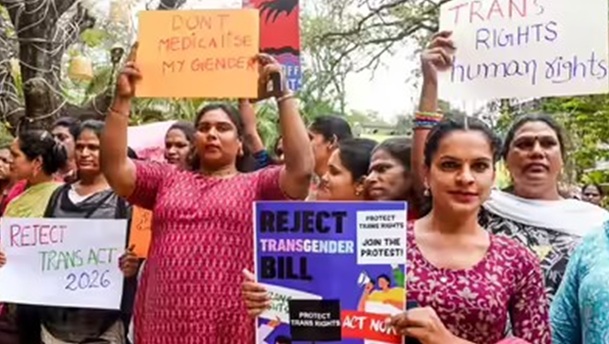
Background of Transgender Rights in India
- The legal recognition of transgender persons in India has evolved significantly over the past decade, with the landmark NALSA judgment (2014) marking a turning point in affirming their constitutional rights.
- In this judgment, the Supreme Court recognised transgender persons as a “third gender” and upheld their right to self-identify their gender identity without any external validation, grounding this right in dignity, privacy, and autonomy.
- Subsequently, the Transgender Persons (Protection of Rights) Act, 2019 was enacted to prohibit discrimination in areas such as education, employment, healthcare, and access to public services, while also mandating welfare measures for the community.
- However, concerns were raised even at the time of its enactment regarding procedural requirements for identity certification, which many activists argued were inconsistent with the spirit of the NALSA judgment.
Key Changes Introduced
- The 2026 amendment reportedly introduces additional regulatory mechanisms in the process of gender identity recognition, shifting away from a purely self-identification-based approach.
- It appears to provide for verification or certification procedures involving authorities or medical boards, thereby increasing institutional involvement in what was earlier considered a matter of personal choice.
- These changes have raised concerns that the amendment may reintroduce barriers and bureaucratic hurdles for transgender individuals seeking legal recognition of their identity.
Provisions Being Challenged in the Supreme Court
1. Does the Amendment Undermine the Principle of Self-Identification ?
- The petition contends that the amendment weakens the principle of self-identification of gender, which was explicitly recognised as a fundamental right in the NALSA judgment.
- By introducing verification requirements, the law may effectively transfer the power of identity recognition from the individual to the State, thereby infringing upon personal autonomy and dignity.
2. Does the Law Introduce Excessive Institutional Control ?
- The introduction of screening or certification mechanisms is seen as placing undue control in the hands of administrative or medical authorities, which could lead to arbitrary or inconsistent decisions.
- Such provisions may subject transgender individuals to invasive procedures or scrutiny, which can be both discriminatory and violative of privacy.
3. Are Fundamental Rights Being Violated ?
- The petition argues that the amendment may violate several constitutional guarantees, including :
- Article 14, by creating unreasonable classification and discrimination
- Article 19, by restricting expression of gender identity
- Article 21, by undermining dignity, privacy, and the right to live with self-determined identity
- It highlights that any law affecting such core aspects of identity must meet strict standards of constitutional validity, which the amendment may fail to satisfy.
Constitutional and Judicial Context
1. NALSA Judgment (2014)
- The Supreme Court, in this landmark case, established that gender identity is an integral part of personal autonomy and dignity, and that individuals must have the right to determine their own gender without external interference.
2. Expanding Scope of Article 21
- Over time, judicial interpretation has expanded Article 21 to include :
- Right to privacy
- Right to dignity
- Right to personal autonomy
- The present case tests whether the amendment aligns with these evolving constitutional principles.
Significance
1. Reaffirmation of Individual Autonomy
- The case has the potential to reaffirm that identity-related rights are intrinsic to individual autonomy, and cannot be subjected to excessive State control.
2. Impact on Social Justice Framework
- The outcome will significantly influence the implementation of welfare schemes and legal protections for transgender persons, shaping the broader discourse on inclusion and equality.
3. Defining Limits of State Intervention
- It raises a critical question regarding the extent to which the State can regulate identity without infringing constitutional freedoms, thereby contributing to the development of constitutional jurisprudence.
What are the Key Challenges in Ensuring Transgender Rights ?
1. Persistent Implementation Gaps
- Despite progressive legal frameworks, there remains a significant gap between law and practice, with many transgender individuals continuing to face barriers in accessing basic rights and services.
2. Deep-Rooted Social Stigma
- Societal attitudes and discrimination continue to limit the effectiveness of legal protections, indicating that legal reform alone is insufficient without social change.
3. Procedural and Administrative Ambiguities
- Lack of clarity in procedures for identity recognition can lead to arbitrary implementation, further complicating access to rights for transgender individuals.
Way Forward
- The legal framework must be aligned with the principles laid down in the NALSA judgment, particularly the centrality of self-identification.
- Any regulatory mechanism should be non-intrusive, transparent, and rights-based, ensuring that dignity and privacy are not compromised.
- There is a need to strengthen institutional support systems, including access to healthcare, education, and employment opportunities.
- Greater emphasis must be placed on awareness and sensitisation programs to address societal stigma and promote inclusivity.
Practice Questions
Prelims :
Q. The NALSA judgment (2014) is associated with :
(a) Environmental protection
(b) Electoral reforms
(c) Recognition of transgender persons
(d) Right to education
Mains :
“Critically examine the constitutional challenges associated with recent amendments to transgender rights laws in India in light of judicial precedents.”
FAQs
Q1. What is being challenged in the Supreme Court ?
The constitutional validity of the Transgender Persons (Amendment) Act, 2026.
Q2. What is the core issue ?
Whether the amendment undermines the right to self-identification of gender.
Q3. Which judgment is central to this issue ?
The NALSA judgment (2014).
Q4. Which constitutional rights are involved ?
Articles 14, 19, and 21.
Q5. Why is this case important ?
It will determine the balance between State regulation and individual rights in matters of gender identity.
|






 Contact Us
  New Batch : 9555124124/ 7428085757
  Tech Support : 9555124124/ 7428085757