New
GS Foundation (P+M) - Delhi : 19th Jan. 2026, 11:30 AM Republic Day offer UPTO 75% + 10% Off, Valid Till : 28th Jan., 2026 GS Foundation (P+M) - Prayagraj : 09th Jan. 2026, 11:00 AM Republic Day offer UPTO 75% + 10% Off, Valid Till : 28th Jan., 2026 GS Foundation (P+M) - Delhi : 19th Jan. 2026, 11:30 AM GS Foundation (P+M) - Prayagraj : 09th Jan. 2026, 11:00 AM

Union Budget 2026–27: Navigating Growth, Revenue, and Investment Headwinds

Prelims: (Economy + CA)
Mains: (GS 3 – Indian Economy, Growth, Fiscal Policy, Investment)

Why in News ?

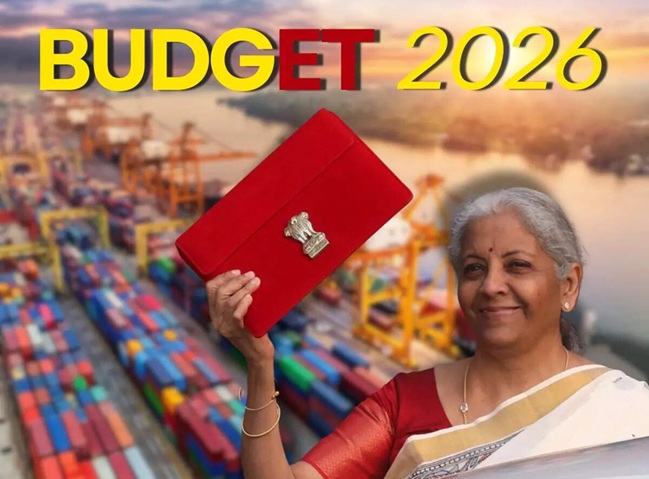
The Union Budget for 2026–27, to be presented by Finance Minister Nirmala Sitharaman, will outline:

  • The government’s growth expectations and spending priorities,
  • Projected revenues from tax and non-tax sources, and
  • The level of borrowing (fiscal deficit) required to bridge the gap between income and expenditure.

While the Budget marks the start of a new financial year, it is rarely a blank slate. Fiscal realities, committed expenditures, and policy continuity from previous years significantly limit room for radical change, making current-year economic conditions crucial in shaping Budget choices.
Background: Why a New Budget Has Limited Room for Change

A Union Budget operates within strong structural constraints:

  • Committed expenditures such as salaries, pensions, interest payments, and major subsidies cannot be easily altered.
  • Tax structures also change gradually due to political, economic, and administrative considerations.
  • The Finance Minister’s decisions are shaped heavily by the state of government finances in the ongoing year.

External shocks—such as export slowdowns triggered by global trade tensions or US tariffs—often spill over into the next fiscal year, forcing the Budget to respond to inherited stresses rather than introducing entirely new priorities.

Thus, a review of the year just ended provides critical insight into what the upcoming Budget can realistically achieve.

What Current-Year Data Signals: Three Key Macro Concerns

Recent economic data point to several issues, but three macroeconomic challenges stand out as particularly relevant for Budget 2026–27:

  1. Weak Nominal GDP Growth
  2. Low Tax Buoyancy
  3. Persistently Weak Private Corporate Investment

Together, these threaten fiscal stability, revenue mobilisation, and long-term growth prospects.

Weak Nominal GDP Growth: A Key Budget Worry

While real GDP growth often dominates headlines, it is nominal GDP growth—the value of output at current prices—that matters most for Budget arithmetic. It forms the base for:

  • Tax revenue projections,
  • Spending plans, and
  • Borrowing requirements.

The Budget Arithmetic Problem

If nominal GDP grows slower than expected:

  • Tax collections fall short, and the government must either:
    • Borrow more, potentially crowding out private investment and raising interest rates, or
    • Cut spending, limiting resources for infrastructure, R&D, and welfare.

A Sustained Slowdown

India’s nominal GDP growth has been decelerating for several years. For the current year, it is estimated at just 8%, far below:

  • The 10.1% growth assumed in last year’s Budget, and
  • The average growth rates seen over the past two decades.

This reflects a broader secular slowdown in the economy.

Implications for Budget 2026–27

With the First Advance Estimates pegging nominal growth at 8%, fiscal space has tightened considerably. The foremost challenge for the Finance Minister will be to craft a strategy that:

  • Raises nominal growth in the coming year, and
  • Stabilises revenues without forcing painful trade-offs between borrowing and spending.

Weak Tax Buoyancy: Revenues Falling Short of Expectations

Tax buoyancy measures how tax revenues respond to economic growth:

  • A buoyancy of 1 means tax revenues rise in proportion to GDP.
  • Budgets often assume buoyancy above 1 to fund expanding expenditure.

When nominal GDP growth is weak and buoyancy is low, revenue shortfalls multiply.

What’s Happening This Year ?

  • Actual tax collections are lagging behind Budget assumptions across major categories.
  • Year-to-date tax growth is below even the weak nominal GDP growth rate of around 8%.
  • While the Budget assumed a tax buoyancy of 1.1, actual buoyancy appears closer to 0.6.

In effect, tax revenues are growing at barely half the pace anticipated relative to GDP.

Implications for the Budget

Low tax buoyancy:

  • Further tightens fiscal space,
  • Forces difficult choices between higher borrowing and expenditure restraint, and
  • Complicates planning for social sector spending, capital expenditure, and fiscal consolidation targets.

Weak Private Corporate Investment: A Persistent Growth Challenge

A central objective of recent economic policy has been to expand the role of the private sector under the principle of “Minimum Government, Maximum Governance.”

Since 2019, this strategy has included:

  • Sharp corporate tax cuts,
  • Large increases in public capital expenditure, and
  • Targeted incentives such as the Production Linked Incentive (PLI) scheme to lower costs and crowd in private investment.

When investment did not respond as expected, the government shifted towards boosting demand, including:

  • Raising income tax exemptions, and
  • Cutting GST rates to improve sales prospects.

Investment Still Below Pre-Pandemic Levels

Despite these measures and strong headline GDP growth:

  • Private corporate investment remains below pre-pandemic (2019) levels.
  • Firms remain cautious, primarily due to weak sales growth and uncertain demand conditions, which do not justify large-scale capacity expansion.

Adding to the challenge:

  • Foreign investors have reduced exposure to India in recent periods.
  • This has exerted pressure on the rupee, creating both economic and political challenges for the Finance Minister.

The Budget Dilemma

The central policy question for Budget 2026–27 is:

  • How to revive private investment in an environment of weak demand, tight fiscal space, and global uncertainty.

This involves deciding:

  • What additional fiscal incentives, structural reforms, or regulatory changes are required,
  • How to restore investor confidence, and
  • How to balance short-term growth support with medium-term fiscal consolidation.

Way Forward: Recalibrating Growth, Revenue, and Investment Strategy

To address the three macro challenges, the Budget must pursue a multi-pronged approach:

  • Boost nominal GDP growth through targeted public investment, export promotion, and productivity-enhancing reforms.
  • Improve tax buoyancy by broadening the tax base, improving compliance, and rationalising exemptions without dampening growth.
  • Revive private investment by strengthening demand, reducing regulatory uncertainty, improving ease of doing business, and ensuring macroeconomic stability.
  • Maintain a credible fiscal consolidation path while protecting capital expenditure and priority social spending.
  • Enhance policy coordination between fiscal, monetary, and structural reforms to ensure a coherent growth strategy.

Only through such a calibrated approach can Budget 2026–27 navigate the tight fiscal environment while laying the foundation for durable, private investment–led growth.

FAQs

Why is nominal GDP growth more important for the Budget than real GDP growth ?

Because tax revenues, spending plans, and borrowing needs are calculated on nominal GDP, not real GDP.

What is tax buoyancy and why does it matter ?

Tax buoyancy measures how tax revenues respond to GDP growth. Low buoyancy means revenues rise more slowly than the economy, tightening fiscal space.

Why has private corporate investment remained weak despite policy incentives ?

Firms remain cautious due to weak demand, insufficient sales growth, and global economic uncertainty, which reduce incentives for capacity expansion.

How do weak revenues affect fiscal policy choices ?

They force the government to choose between higher borrowing, which can raise interest rates, or cutting expenditure, which may slow growth.

What is the key challenge for Budget 2026–27 ?

Balancing growth revival, fiscal sustainability, and private investment stimulation in a constrained macroeconomic environment.

Have any Query?

Our support team will be happy to assist you!

OR