Why in news?
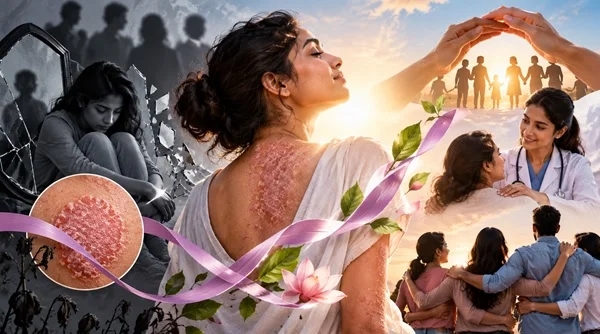
World Psoriasis Day is observed on 29 October every year to raise awareness about psoriasis and psoriatic arthritis.
Key Facts
|
Particular
|
Details
|
|
Observance
|
World Psoriasis Day
|
|
Date
|
29 October
|
|
First observed
|
2004
|
|
Organising body
|
International Federation of Psoriasis Associations (IFPA)
|
|
2026 theme
|
Look Beyond My Skin
|
|
Main objective
|
Awareness, inclusion and better access to care
|
|
Nature of disease
|
Chronic inflammatory, non-communicable disease
|
What is Psoriasis?
- Psoriasis is a chronic inflammatory disease that primarily affects the skin and may also affect the nails and joints.
- It commonly causes red or discoloured patches covered with thick, scaly skin.
- Symptoms may include itching, soreness, pain and skin cracking.
- The condition can occur at any age and may vary in severity from person to person.
- Psoriasis is not contagious and cannot spread through touching, sharing food or ordinary social contact.
Causes and Risk Factors
- Immune system: Inflammatory activity accelerates the production of skin cells.
- Genetics: Family history can increase susceptibility.
- Infections: Certain infections may trigger flare-ups in susceptible individuals.
- Stress: Emotional stress may worsen symptoms in some people.
- Skin injuries: Cuts, burns or other skin damage can trigger patches in some individuals.
- Certain medicines: Some medications may aggravate psoriasis; patients should consult their doctor rather than stopping prescribed treatment themselves.
Symptoms of Psoriasis
- Red, pink, brown or darker patches of skin, depending on skin tone.
- White or silvery scales on affected areas.
- Itching, burning, soreness or cracked skin.
- Changes in fingernails or toenails, including pitting or separation from the nail bed.
- Joint pain, swelling or stiffness in people who develop psoriatic arthritis.
Treatment and Management
- Topical treatments: Creams and ointments may help reduce inflammation and scaling.
- Phototherapy: Controlled exposure to specific types of ultraviolet light may be recommended for some patients.
- Oral or injectable medicines: Doctors may prescribe systemic treatments or biologic medicines for moderate to severe disease.
- Skin care: Moisturisers can help reduce dryness and cracking.
- Medical follow-up: Regular consultations help monitor symptoms, treatment response and possible joint involvement.
Significance of World Psoriasis Day
- Awareness: Improves public understanding of psoriasis and its symptoms.
- Stigma reduction: Challenges misconceptions that psoriasis is contagious or caused by poor hygiene.
- Mental well-being: Recognises the emotional and social difficulties that visible skin conditions can create.
- Early diagnosis: Encourages people with persistent symptoms to seek medical advice.
- Access to treatment: Highlights the need for affordable, appropriate and timely healthcare.
- Youth inclusion: Encourages young people living with psoriasis to share their experiences and seek support.
Challenges Faced by People Living with Psoriasis
- Social stigma: Misconceptions may lead to discrimination or social exclusion.
- Mental health: Visible symptoms may contribute to anxiety, low self-esteem or isolation.
- Delayed diagnosis: Symptoms may be mistaken for other skin conditions.
- Treatment access: Cost and availability can affect continuity of care.
- Chronic nature: Symptoms may improve and flare up again over time.
- Joint complications: Psoriatic arthritis may require early diagnosis and treatment.
Prelims MCQ
Q. Consider the following statements about psoriasis:
- It is a contagious skin disease.
- It may be associated with inflammatory joint disease.
- It can be managed with appropriate medical treatment.
Which of the following statements are correct?
(a) 1 only
(b) 2 and 3 only
(c) 1 and 3 only
(d) 1, 2 and 3
Mains Practice Question
Q. Discuss the health and social challenges associated with psoriasis.
|
FAQs
When is World Psoriasis Day observed?
29 October every year.
What is the 2026 theme?
Look Beyond My Skin
Is psoriasis contagious?
No. It cannot spread through ordinary physical contact.
Can psoriasis be cured permanently?
There is no permanent cure currently, but treatments can control symptoms.
What is psoriatic arthritis?
An inflammatory condition that can cause joint pain, swelling and stiffness.
|