Why in news?
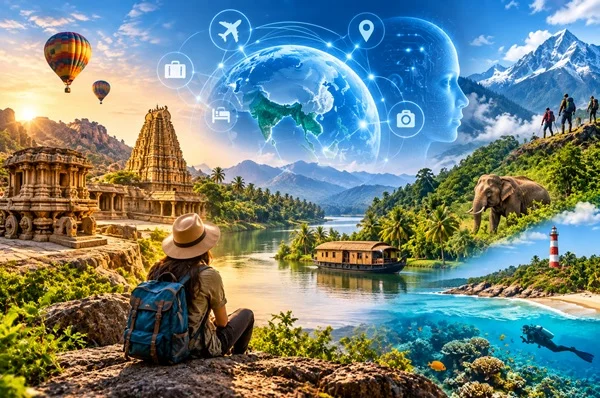
World Tourism Day is observed worldwide every year on 27 September.
Key Facts
|
Particular
|
Fact
|
|
Observed on
|
27 September
|
|
First celebrated
|
1980
|
|
Associated organisation
|
UN Tourism
|
|
Historical significance
|
UNWTO Statutes adopted on 27 September 1970
|
|
2026 Theme
|
Digital Agenda and Artificial Intelligence to Redesign Tourism
|
|
Major focus in 2026
|
AI, digitalisation, inclusion and sustainable tourism
|
History
- 27 September 1970 was an important milestone in global tourism governance because the Statutes of the World Tourism Organization were adopted on this date.
- The first World Tourism Day was celebrated in 1980. The observance was created to increase awareness about tourism's social, cultural, political and economic importance.
What is Tourism?
- Tourism generally involves people travelling outside their usual environment for purposes such as leisure, business, culture, religion, health or other personal purposes. It creates an entire economic ecosystem.
Major types of Tourism
- Cultural Tourism: Travel centred around heritage, monuments, museums, traditions, art and festivals.
- Religious and Spiritual Tourism: Travel undertaken for pilgrimage or spiritual purposes.
- Eco-Tourism: Responsible travel to natural areas while promoting environmental conservation and local livelihoods.
- Adventure Tourism: Includes activities such as trekking, mountaineering, river rafting, skiing and scuba diving.
- Wellness Tourism: Travel associated with yoga, Ayurveda, meditation and other wellness practices.
- MICE Tourism: Meetings, Incentives, Conferences and Exhibitions tourism.
AI and the Future of Tourism
- Before travel, AI can help tourists with destination recommendations, personalised itineraries, hotel searches, travel planning and price comparisons.
- During travel, technology can support real-time navigation, language translation, digital payments, virtual assistants and personalised recommendations.
- For tourism businesses, AI can help businesses analyse demand, automate customer services and better understand traveller preferences.
Global Tourism Situation
- According to India's Ministry of Tourism dashboard, global international tourist arrivals reached around 1.534 billion in 2025, registering growth of approximately 4.9% over 2024.
- Global tourism foreign exchange earnings were around $1.884 trillion in 2025.
- The UN notes that the sector provides livelihoods to hundreds of millions of people and has historically accounted for roughly one in ten jobs globally.
Tourism in India
- India possesses considerable tourism potential because of its diversity of geography, culture, religions, languages, cuisine, wildlife, heritage, festivals, traditional knowledge, coastlines and islands.
- India therefore offers opportunities ranging from Himalayan adventure tourism and wildlife tourism to spiritual, cultural, medical and coastal tourism.
- Tourism is also important because its economic benefits can reach sectors such as transport, accommodation, food services, handicrafts and local enterprises.
India's Latest Tourism Snapshot
|
Indicator
|
2025
|
|
Foreign Tourist Arrivals (FTAs)
|
9.15 million
|
|
International Tourist Arrivals (ITAs)
|
20.22 million
|
|
NRI Arrivals
|
11.07 million
|
|
Domestic Tourist Visits
|
~4.287 billion
|
|
Foreign Tourist Visits
|
25.27 million
|
|
Foreign Exchange Earnings
|
~₹2.7 lakh crore
|
|
Indian National Departures
|
32.83 million
|
Importance of Tourism for India
- Economic Importance: Tourism creates both direct and indirect employment. It supports hotels, restaurants, transport, guides, handicrafts, local markets and small businesses. It also generates foreign exchange earnings and can stimulate infrastructure development.
- Social Importance: Tourism encourages interaction among people from different regions and cultures. It can strengthen awareness of India's cultural diversity and promote people-to-people connections.
- Cultural Importance: Revenue generated through tourism can support heritage conservation, traditional arts, handicrafts, local festivals, historic monuments and regional development.
- Employment: Tourism is relatively labour-intensive and creates opportunities for young people, women, guides, artisans and local entrepreneurs.
Tourism Initiatives in India
- Incredible India: India's flagship tourism promotion campaign. It seeks to showcase India's cultural diversity, heritage, spiritual traditions, natural attractions, cuisine, wellness traditions and tourism experiences to domestic and international audiences.
- Swadesh Darshan: Focuses on the development of tourism destinations. Its newer approach places greater emphasis on sustainable and responsible tourism destinations.
- Pilgrimage Rejuvenation and Spiritual Heritage Augmentation Drive (PRASAD): Focuses primarily on developing tourism infrastructure around important pilgrimage and spiritual destinations. This is particularly significant because religious and spiritual travel forms a major component of India's domestic tourism.
- Dekho Apna Desh: The initiative encourages Indians to explore destinations within India. It promotes greater awareness of India's diverse heritage, culture, cuisine, landscapes and tourism destinations.
Tourism and Environmental Challenges
- Over tourism: Excessive tourist concentration can place pressure on roads, water, waste-management systems, local communities, natural ecosystem and waste generation. Popular destinations can face large quantities of plastic and solid waste.
- Pressure on Fragile Ecosystems: Himalayan regions, islands, coastal zones, wetlands and wildlife habitats can be particularly vulnerable.
- Carbon Emissions: Aviation, road transport, hotels and other tourism activities contribute to greenhouse-gas emissions.
- Cultural Commercialisation: Poorly managed tourism can reduce local traditions to commercial attractions rather than supporting their authentic preservation.
Challenges of AI in Tourism
- Algorithmic Concentration: The UN Secretary-General has specifically warned that poorly managed technology can funnel tourists toward the same few destinations and platforms.
- Privacy: Tourism platforms collect significant amounts of information about users' locations, preferences and behaviour.
- Employment: Automation may alter some traditional tourism-sector jobs while creating demand for new digital skills.
- Authenticity: Overdependence on algorithms may reduce spontaneous discovery and direct engagement with local communities.
Prelims MCQ
Q. With reference to World Tourism Day, consider the following statements:
- World Tourism Day is observed annually on 27 September.
- The first World Tourism Day was celebrated in 1980.
- The 2026 theme focuses on Artificial Intelligence and digital transformation of tourism.
Which of the statements given above are correct?
(a) 1 and 2 only
(b) 2 and 3 only
(c) 1 and 3 only
(d) 1, 2 and 3
Mains Practice Question
Q. “Digital technologies and Artificial Intelligence can transform tourism, but their benefits must remain inclusive and sustainable.” Discuss.
|
FAQs
When is World Tourism Day observed?
World Tourism Day is observed every year on 27 September.
When was World Tourism Day first celebrated?
It was first celebrated in 1980.
What is the theme of World Tourism Day 2026?
Digital Agenda and Artificial Intelligence to Redesign Tourism.
Which organisation is associated with World Tourism Day?
UN Tourism.
What is PRASHAD?
It is an Indian government initiative focused on pilgrimage and spiritual heritage tourism infrastructure.
|





 Contact Us
  New Batch : 9555124124/ 7428085757
  Tech Support : 9555124124/ 7428085757