Prelims : (Geography + CA)
Mains : (GS 1 – Physical Geography; GS 3 – Disaster Management, Internal Security, Infrastructure) |
Why in News ?
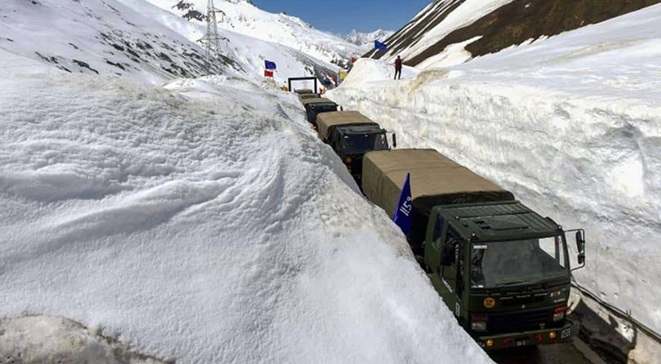
Recently, a massive snow avalanche struck the Zojila Pass, disrupting traffic and highlighting the vulnerability of high-altitude Himalayan passes to extreme weather events.
Background and Context
Zojila Pass is one of the most critical mountain passes in northern India, acting as a lifeline between the Kashmir Valley and Ladakh.
- It is located in the Kargil district at an altitude of about 11,650 feet (3,528 m).
- Lies along the strategic Srinagar–Leh Highway (NH-1), connecting Srinagar – Kargil – Leh.
- Forms a natural gateway between the Greater Himalayas and the Trans-Himalayan region.
- Due to heavy snowfall and extreme weather, the pass remains closed for nearly 6 months annually, isolating Ladakh from the rest of India by road.
Historical Context
- During the Indo-Pakistan War of 1947–48, Zojila was a key battleground.
- Recaptured by Indian forces under Operation Bison (1948), marking one of the first high-altitude tank operations in military history.
About Zojila Pass
- Known as the “Mountain Pass of Blizzards” due to frequent snowstorms.
- Characterized by :
- Steep gradients
- Narrow roads
- Avalanche-prone slopes
- Plays a crucial role in :
- Civilian connectivity
- Tourism (Leh–Ladakh circuit)
- Military logistics for border areas
What is an Avalanche ?
An avalanche is a rapid flow of snow down a slope.
Key Features
- Triggered when snow layers become unstable
- Can reach speeds of 80–300 km/h
- Extremely destructive—can bury infrastructure, vehicles, and people
Conditions Favouring Avalanches
- Steep slopes (30°–45°)
- Lack of vegetation (trees/rocks)
- Presence of weak snow layers
- Sudden weather changes (heavy snowfall, warming, or wind loading)
Significance of Zojila Pass
1. Strategic Importance
- Essential for defence supply lines to Ladakh and forward areas near borders.
- Ensures year-round military preparedness in sensitive regions.
2. Economic and Connectivity Role
- Primary land route for transportingc:
- Fuel
- Food supplies
- Construction materials
- Supports local economies and tourism.
3. Disaster Management Relevance
- Frequent avalanches highlight :
- Need for early warning systems
- Improved infrastructure resilience
- Advanced snow clearance technologies
4. Infrastructure Development
- The upcoming Zojila Tunnel aims to :
- Provide all-weather connectivity
- Reduce travel time drastically
- Enhance strategic mobility
Challenges Associated
- Extreme weather variability due to climate change
- Frequent avalanches and landslides
- Limited rescue and evacuation accessibility
- High cost of infrastructure maintenance
Way Forward
- Installation of avalanche forecasting and monitoring systems
- Use of snow galleries and protective structures
- Accelerating projects like Zojila Tunnel
- Enhancing coordination between :
- BRO (Border Roads Organisation)
- Armed Forces
- Disaster response agencies
Zojila Tunnel Project: Connecting to the Current Avalanche Risk
- The Zojila Tunnel is a 14+ km long bi-directional tunnel, making it one of the longest road tunnels in Asia.
- It is being constructed by the Border Roads Organisation (BRO) under the Ministry of Road Transport and Highways.
- It will bypass avalanche-prone stretches of Zojila Pass, ensuring safe and reliable connectivity.
- The tunnel is designed to remain operational throughout the year, even during extreme winter conditions.
Relevance to Current News :
- The recent avalanche reinforces the urgency of completing the tunnel project.
- It highlights the limitations of surface connectivity in high-altitude regions.
- The tunnel will significantly reduce risks to civilians, tourists, and defence personnel.
FAQs
1. Where is Zojila Pass located ?
It is located in the Kargil district of Ladakh on the Srinagar–Leh highway, connecting Kashmir Valley with Ladakh.
2. Why is Zojila Pass strategically important ?
It is the only major road link supplying essential goods and military logistics to Ladakh.
3. Why does Zojila Pass remain closed in winters ?
Heavy snowfall, blizzards, and avalanche risks make the route unsafe for several months.
4. What is an avalanche and why is it dangerous ?
An avalanche is a fast-moving mass of snow that can bury or destroy anything in its path, causing significant loss of life and infrastructure.
5. What is the significance of the Zojila Tunnel ?
It will provide all-weather connectivity, reduce travel disruptions, and strengthen both economic and strategic capabilities.
|





 Contact Us
  New Batch : 9555124124/ 7428085757
  Tech Support : 9555124124/ 7428085757