Prelims
Current Events of National & International Importance | Environment | Species
|
Why in News ?
A rare alpine flowering plant, Cyananthus hookeri, has been recorded in Arunachal Pradesh after a gap of 158 years, making it one of the most significant botanical rediscoveries in India. Researchers have also proposed that the species should be placed under the endangered category in India because of its limited population and fragile habitat.
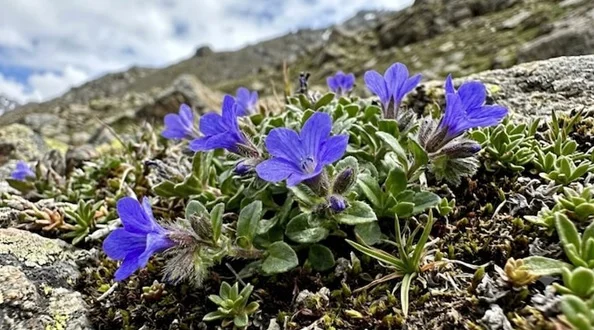
About Cyananthus hookeri
- Scientific Name : Cyananthus hookeri
- Family : Campanulaceae (Bellflower family)
- It is a small perennial alpine herb that forms dense clumps and bears attractive violet to bluish-purple bell-shaped flowers.
- The plant naturally grows in high-altitude alpine meadows of the Eastern Himalayas under extreme climatic conditions.
Recent Discovery
- The species has been rediscovered in Chuna Valley, located in Tawang district of Arunachal Pradesh.
- This is the first authenticated record from Arunachal Pradesh and the first confirmed sighting in India since 1867.
Historical Background
- The last Indian specimen was collected in 1867 from Sikkim.
- It was documented by the renowned British botanist Sir Joseph Dalton Hooker, who made pioneering contributions to Himalayan botany.
Geographical Distribution
The species has a restricted distribution across the eastern Himalayan region and is known from :
Despite occurring in multiple countries, its populations are small, isolated, and sparsely distributed.
Habitat & Growth Conditions
Cyananthus hookeri thrives in cold alpine ecosystems, where environmental conditions are highly demanding.
It survives in :
- High-altitude grasslands
- Rocky and nutrient-poor soils
- Low temperatures
- Strong mountain winds
- Short flowering and growing seasons
These harsh conditions naturally restrict its abundance.
Conservation Concerns
Scientists have recommended listing the species as Endangered in India under the IUCN Red List criteria due to :
- Limited geographical range
- Small and fragmented populations
- Highly fragile alpine habitat
- Increasing threats from climate change and human activities
Why is this Rediscovery Important ?
- Confirms the continued presence of a species that had not been recorded in India for over one and a half centuries.
- Adds a valuable record to the rich floral diversity of the Eastern Himalayas, a global biodiversity hotspot.
- Highlights the importance of botanical exploration in remote Himalayan regions.
- Reinforces the need for conservation of vulnerable alpine ecosystems.






 Contact Us
  New Batch : 9555124124/ 7428085757
  Tech Support : 9555124124/ 7428085757