
- UPSC Exam
- State PCS
- One Day Exam
- Current Affairs
- PT Quiz
- Downlaods
- About Coaching
- Blog
- Videos

| Prelims: (Environment & Ecology + Current Affairs) Mains: (GS 3 – Environment, Biodiversity, Conservation) |
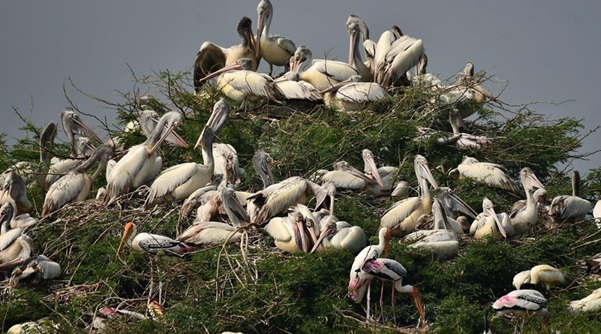
The Flamingo Festival recently drew large numbers of families and nature enthusiasts to the Nelapattu Bird Sanctuary near Sullurpeta in Andhra Pradesh, highlighting growing public interest in wetland conservation and avian biodiversity. The event has also brought attention to the sanctuary’s role as a critical breeding ground for several waterbird species, particularly the spot-billed pelican.
Wetlands play a crucial role in:
India is home to several bird sanctuaries located near lakes, lagoons, and coastal wetlands. Nelapattu Bird Sanctuary, located close to the ecologically significant Pulicat Lake, is one such protected area that contributes to regional biodiversity conservation and eco-tourism.
Nelapattu Bird Sanctuary is a protected avian habitat located in Andhra Pradesh, known primarily as one of the most important breeding sites for the spot-billed pelican in southern India. Its proximity to Pulicat Lake, the second-largest saltwater lake in India, enhances its ecological importance by providing abundant feeding and nesting opportunities for waterbirds.
The sanctuary benefits from the rich nutrient flow and aquatic biodiversity associated with Pulicat Lake.
The sanctuary supports distinctive plant communities, including:
These vegetation types provide suitable nesting and roosting habitats for large colonial waterbirds.
Notable plant species found in the sanctuary include:
The sanctuary serves as a breeding and nesting ground, especially during favourable seasonal conditions.
FAQs1. Where is Nelapattu Bird Sanctuary located ? It is located in Andhra Pradesh near Sullurpeta, close to Pulicat Lake. 2. Why is Nelapattu Bird Sanctuary important ? It is a major breeding site for the spot-billed pelican and several other waterbird species. 3. Which vegetation types are found in the sanctuary ? Barringtonia swamp forests and southern dry evergreen scrub dominate the vegetation. 4. What are the major bird species found here ? Spot-billed pelican, black-headed ibis, Asian openbill, black-crowned night heron, and little cormorant. 5. Why was Nelapattu Bird Sanctuary recently in the news ? Due to the Flamingo Festival, which attracted families and highlighted wetland biodiversity and conservation. |



Our support team will be happy to assist you!

 Contact Us
  New Batch : 9555124124/ 7428085757
  Tech Support : 9555124124/ 7428085757