| (Prelims: General Issues Related to Environmental Ecology, Biodiversity, and Climate Change) (Mains, General Studies Paper-3: Conservation, Environmental Pollution and Degradation, Environmental Impact Assessment, Disaster and Disaster Management) |
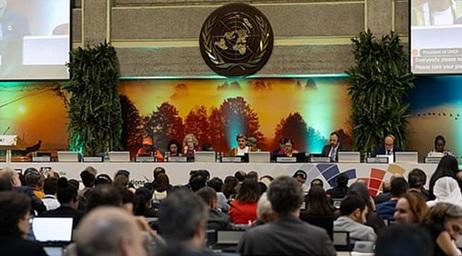
UNEA is the world's highest-level decision-making body on environmental matters and provides a global platform to address serious environmental challenges.
|
Characteristic |
Description |
|
Established |
2012 (Post Rio+20 Conference) |
|
Membership |
Universal (All 193 UN Member States) |
|
Meeting Frequency |
Every two years |
|
Meeting Venue |
Nairobi, Kenya |
|
Mandate |
Sets the global environmental agenda, provides broad policy guidance, and defines UNEP’s strategic direction |
UNEA-7: Striving Towards a Resilient Planet
The seventh session of the UNEA (2025) was held in Nairobi under the theme "Advancing Sustainable Solutions for a Resilient Planet." This session took place at a time when climate change, biodiversity loss, and pollution crises are intersecting and exacerbating global risks.
India's proposal on forest fires at UNEA-7 emerges as an important intervention in global environmental governance. It not only addresses a serious and growing threat but also points the way forward for the international community towards coordinated, science-based, and community-centered solutions. At a time when political differences are challenging multilateral cooperation, this resolution is a reminder that solutions to environmental crises are possible only through shared responsibility and collective action.
The Central Government has approved the proposal to conduct the 2027 Census of India. ₹11,718.24 crore has been approved for this purpose. This decision was taken at the Union Cabinet meeting on December 12, 2025. Census 2027 will be the eighth census of independent India and the 16th census of the country overall.

|
Parameter |
Details |
|
Census Year |
2027 |
|
Approved Cost |
₹11,718.24 crore |
|
Significance |
16th Census of India; 8th Census after Independence |
|
Legal Framework |
Census Act, 1948 and Census Rules, 1990 |
|
Previous Census |
2021 Census could not be conducted due to COVID-19 |
This will be the 'first digital census', adopting the following methodologies:
According to the government, Census 2027 is considered to be the "world's largest administrative and statistical exercise." Under this initiative, the Census-as-a-Service initiative will be launched, which will provide clean, machine-readable, and usable data to various ministries. The data will be disseminated through improved visualization tools to ensure quick availability of information needed for policymaking.
Census 2027 is being conducted in two phases:
|
Phase |
Duration |
Details |
|
First Phase |
April – September 2026 |
Houselisting and Housing Census; conducted over 30 days as per convenience of States/UTs |
|
Second Phase |
February 2027 |
Population Enumeration (PE) |
Non-synchronous Areas: The population census for the snow-affected areas of the Union Territories of Ladakh and Jammu & Kashmir, and the states of Himachal Pradesh and Uttarakhand, will be conducted in September 2026.
Census 2027 will play a pivotal role in India's administrative, social, and economic planning. The inclusion of digital technology and caste data will make this exercise more inclusive, transparent, and policy-oriented, which is expected to significantly improve the effectiveness of governance and development plans.
| Prelims: (Polity & Governance+ CA) Mains: (GS 1 – Indian Culture, Heritage; GS 2 – Governance, Public Policy, Federalism) |
In a major policy shift, the Government of India has decided to allow private sector participation in the core conservation of centrally protected monuments, a responsibility that has traditionally rested exclusively with the Archaeological Survey of India (ASI).
The move seeks to overcome capacity constraints within the ASI, accelerate conservation timelines, and better utilise Corporate Social Responsibility (CSR) funds, while retaining regulatory oversight with the State.

India has one of the world’s richest cultural legacies, with thousands of monuments spanning ancient, medieval, and colonial periods.
Despite this institutional framework, conservation outcomes have often been constrained by limited manpower, procedural delays, and underutilisation of available funds.
Eligibility Criteria for Conservation Architects
Several countries successfully combine private participation with strong state regulation:
These models demonstrate that Public–Private Partnerships (PPPs) can enhance conservation outcomes without compromising authenticity, provided regulatory oversight is robust.
FAQs1. Why is India allowing private participation in monument conservation ? To overcome ASI’s capacity constraints, speed up conservation, and better utilise CSR funding. 2. Will private agencies replace the ASI ? No. The ASI will retain full regulatory and supervisory authority. 3. How is this different from the ‘Adopt a Heritage’ scheme ? Earlier schemes were limited to tourist amenities; this model allows participation in core conservation work. 4. What safeguards exist against commercialisation of heritage ? ASI-approved DPRs, audits, strict conservation norms, and continuous supervision. 5. Which monuments will be covered under this initiative ? Initially, around 250 identified monuments, with scope for donor-proposed sites subject to approval. |
| Prelims: (Environment & Ecology + CA) Mains: (GS 2 – Governance; GS 3 – Environment, Biodiversity) |
Eminent ecologist Madhav Gadgil passed away at the age of 83 in Pune, reviving national attention on his most influential contribution—the Western Ghats Ecology Expert Panel (WGEEP) report.
Though never fully implemented, the report’s warnings against unregulated development in the Western Ghats continue to gain relevance, particularly after recurring landslides, floods, and ecological disasters in the region. The renewed debate highlights the enduring tension between environmental protection, livelihoods, and federal politics.
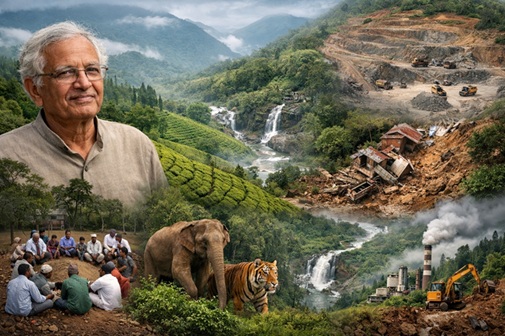
The Western Ghats, stretching over 1,600 km from Gujarat to Tamil Nadu, are among the world’s eight “hottest” biodiversity hotspots.
Despite this, the region has faced growing pressure from mining, dams, roads, tourism, quarrying, and urban expansion, intensifying ecological fragility.
In March 2010, the Union Ministry of Environment and Forests constituted the WGEEP, chaired by Madhav Gadgil.
In response to widespread opposition, the Centre constituted a High-Level Working Group (2012) under K. Kasturirangan, former ISRO chief.
Recurring landslides, floods, and extreme rainfall events have repeatedly validated the ecological warnings of the Gadgil report.
As climate change intensifies, the debate is no longer about whether regulation is needed, but how to balance:
The Gadgil Report increasingly serves as a moral and scientific benchmark, even when politically inconvenient.
FAQs1. Why is the Gadgil Report considered controversial ? Because it proposed strict environmental regulations across the entire Western Ghats, raising fears of economic disruption and loss of State control. 2. How does the Gadgil Report differ from the Kasturirangan Report ? The Gadgil report adopted a holistic, ecosystem-based approach, while the Kasturirangan report narrowed ESAs to specific villages and natural landscapes. 3. What role did Gram Sabhas play in the Gadgil vision ? Gram Sabhas were central to decision-making, ensuring decentralised and participatory environmental governance. 4. Why has implementation of ESA notifications been delayed ? Persistent opposition from States, livelihood concerns, and disputes over ESA boundaries have stalled consensus. 5. Why is the Gadgil Report still relevant today ? Increasing climate disasters in the Western Ghats underline the costs of ignoring ecological limits and unregulated development. |
| Prelims: (Science & Technology + CA) Mains: (GS 3 – Infrastructure, Environment, Indigenous Technology, Climate Change) |
India has taken a major step towards sustainable infrastructure as the Union Minister of State for Science and Technology announced the successful technology transfer of “Bio-Bitumen via Pyrolysis: From Farm Residue to Roads.” This breakthrough signals the beginning of a “Clean, Green Highways” era, reducing dependence on petroleum-based materials while tackling agricultural waste and carbon emissions.
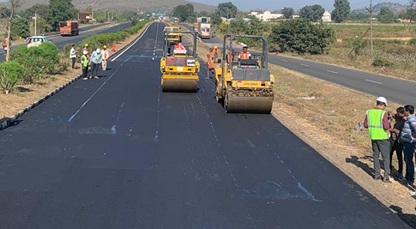
India has one of the world’s largest road networks, and bitumen—a petroleum-derived binder—is a critical input for highway construction.
However, conventional bitumen poses three major challenges:
Simultaneously, India faces a persistent problem of post-harvest residue burning, particularly rice straw in northern States, contributing to severe air pollution. The convergence of these challenges created an opportunity for indigenous, climate-friendly alternatives, leading to the development of bio-bitumen technology.
Bio-bitumen is a sustainable alternative to petroleum-based bitumen, manufactured using renewable organic materials such as:
Through controlled processing, these materials are converted into a binder with properties comparable to conventional bitumen.
The technology “Bio-Bitumen via Pyrolysis: From Farm Residue to Roads” is an indigenously developed innovation by:
FAQs1. What is bio-bitumen ? Bio-bitumen is a renewable, low-carbon alternative to petroleum-based bitumen made from biomass such as agricultural waste and plant oils. 2. Which institutions developed India’s bio-bitumen technology ? CSIR-CRRI and CSIR-IIP jointly developed the indigenous bio-bitumen via pyrolysis technology. 3. How much conventional bitumen can bio-bitumen replace ? Studies show that 20–30% replacement is possible without compromising road performance. 4. How does bio-bitumen help address stubble burning ? It creates economic demand for crop residues like rice straw, reducing the incentive to burn them. 5. Why is bio-bitumen important for India’s green highways vision ? It lowers carbon emissions, reduces oil imports, and promotes sustainable, climate-resilient infrastructure. |
| Prelims: (Polity & Governance + CA) Mains: (GS 2 – Health Governance, Social Sector Reforms) |
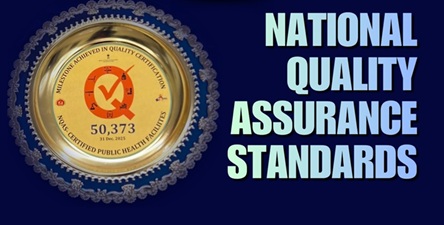
India has crossed a major public health milestone, with 50,373 public health facilities across all States and Union Territories certified under the National Quality Assurance Standards (NQAS). This marks a significant leap in institutionalising quality, safety, and patient-centric care across the public healthcare system.
India’s public healthcare system serves a vast and diverse population, often under conditions of high patient load, limited resources, and regional disparities.
Historically, the focus remained on expanding access—building hospitals, increasing manpower, and rolling out national health programmes—while quality assurance remained uneven.
With rising health awareness, epidemiological transition towards non-communicable diseases, and increased public expectations, quality of care emerged as a critical governance challenge.
In this context, the Ministry of Health and Family Welfare (MoHFW) institutionalised a national framework to move beyond infrastructure and ensure standardised, measurable, and patient-focused healthcare delivery.
The National Quality Assurance Standards (NQAS) are a comprehensive quality framework developed by the MoHFW to improve and standardise healthcare services in public health facilities.
The core philosophy of NQAS is to shift public healthcare from service delivery based only on availability to care based on safety, effectiveness, and patient dignity.
At present, NQAS standards apply to a wide spectrum of public health institutions:
Crossing 50,000 certified facilities reflects deep penetration of quality benchmarks from tertiary hospitals to the grassroots level, aligning with the vision of comprehensive primary healthcare under Ayushman Bharat.
NQAS standards are structured around eight interlinked domains that together define healthcare quality:
This structure ensures that certification goes beyond infrastructure to assess processes and outcomes.
Standardised care protocols and emphasis on patient rights enhance public confidence in government facilities.
NQAS complements the Ayushman Arogya Mandir vision by ensuring that expanded access is matched with assured quality.
Uniform national benchmarks help reduce inter-State and rural–urban variations in healthcare quality.
The self-assessment and audit process builds managerial and clinical capacity within health institutions.
NQAS aligns India’s public healthcare quality framework with global best practices in quality assurance.
FAQs1. What is the main objective of NQAS ? To ensure standardised, safe, patient-centric, and continuously improving healthcare services in public health facilities. 2. Which ministry implements NQAS ? The Ministry of Health and Family Welfare (MoHFW). 3. Is NQAS mandatory for public health facilities ? No, it is voluntary, but strongly encouraged as a quality improvement and certification framework. 4. How is NQAS linked with Ayushman Bharat ? NQAS ensures quality assurance for Ayushman Arogya Mandir facilities delivering comprehensive primary healthcare. 5. Why is NQAS important for health governance in India ? It institutionalises accountability, improves patient trust, and shifts focus from mere access to quality outcomes. |
| Prelims: (Economy + CA) Mains: (GS 3 – Indian Economy, Global Markets, Resource Security, Industrial Demand, Inflation) |
Despite a sharp one-day fall of nearly 10% in late December, silver staged a rapid recovery and closed December 2025 with gains exceeding 30%. Over the full year, silver prices surged by more than 160%, significantly outperforming gold and most other asset classes.
While global trade tensions and US Federal Reserve rate cuts supported precious metals broadly, silver’s rally was driven by distinct industrial, supply-side, and speculative factors, making it fundamentally different from gold’s traditional safe-haven rise.

Historically, silver has occupied a hybrid position in the global economy—part precious metal, part industrial input. Unlike gold, which is primarily held as a store of value, silver’s demand is deeply embedded in manufacturing, energy transition technologies, electronics, and healthcare.
Over the past decade, structural changes such as the rise of renewable energy, electric vehicles, and advanced electronics have steadily increased silver’s industrial relevance. By 2025, these long-term trends converged with geopolitical disruptions and financial speculation, triggering an extraordinary price rally.
Silver is largely mined as a byproduct of copper, zinc, and lead extraction, limiting the ability to scale supply quickly in response to rising demand.
These conditions sustained the global commodities upcycle.
FAQs1. Why did silver outperform gold in 2025 ? Because silver benefits from both investment demand and rapidly growing industrial usage, especially in clean energy and electronics. 2. How did geopolitics influence silver prices ? US critical mineral designation, tariff fears, and China’s export curbs created supply insecurity, driving stockpiling and price spikes. 3. What role did ETFs play in the silver rally ? ETF inflows required physical silver purchases, tightening supply and creating a feedback loop that pushed prices higher. 4. Why is silver supply slow to respond to price increases ? Most silver is produced as a byproduct, limiting miners’ ability to expand output quickly. 5. Is silver’s price rise sustainable ? Long-term fundamentals remain strong, but short-term volatility is likely due to speculative excess and potential policy shifts. |

Our support team will be happy to assist you!


 Contact Us
  New Batch : 9555124124/ 7428085757
  Tech Support : 9555124124/ 7428085757