New
Hindi Medium: (Delhi) - GS Foundation (P+M) : 21st Sept. 2026, 11:30 AM Hindi Medium: (Prayagraj) - GS Foundation (P+M) : 22nd Sept. 2026, 8:00 AM English Medium: (Delhi) - GS Foundation (P+M) : 6th Aug 2026 English Medium: (Prayagraj) - GS Foundation (P+M) : 19th Aug 2026, 11:00 AM Hindi Medium: (Delhi) - GS Foundation (P+M) : 21st Sept. 2026, 11:30 AM Hindi Medium: (Prayagraj) - GS Foundation (P+M) : 22nd Sept. 2026, 8:00 AM English Medium: (Delhi) - GS Foundation (P+M) : 6th Aug 2026 English Medium: (Prayagraj) - GS Foundation (P+M) : 19th Aug 2026, 11:00 AM

Current Affairs for 10 September 2026

India–France Strengthen Space Cooperation with New Private-Sector Deals

Prelims: Space Cooperation, ISRO, CNES, TRISHNA Mission, SBS-III Constellation, Space Situational Awareness, Dhruva Space, Safran Space, NewSpace India
Mains: GS Paper II: India–France Strategic Partnership, International Cooperation GS Paper III: Space Technology, Private Space Sector, Science and Technology, National Security
Keywords: ISRO, CNES, India–France Strategic Partnership, Dhruva Space, Safran Space, SBS-III, Space Situational Awareness, TRISHNA Mission, Microsatellites, NewSpace, Make in India, Space Surveillance, Private Space Sector

Why in News?

  • India and France have further strengthened their long-standing space partnership through three new private-sector agreements covering satellite technology, launch services, space surveillance and microsatellites.
  • A major highlight is the cooperation between French company Safran Space and Indian company Dhruva Space for technologies linked to India's planned 52-satellite space-surveillance constellation.

What Are the Three Major Agreements?

1. Safran Space–Dhruva Space Agreement

  • France's Safran Space has signed contracts worth more than €5 million with India's Dhruva Space. Under the agreement, Safran will provide technologies including communication systems, inertial navigation units, optical payloads and ground stations.
  • These technologies are expected to support India's planned SBS-III space-surveillance constellation, which envisages the deployment of 52 satellites between 2027 and 2030.
  • The cooperation is particularly important for strengthening India's sovereign capabilities in monitoring activities in space and improving space-based surveillance.

2. RIDE –TakeMeToSpace Agreement

  • French launch-services company RIDE It has entered into an agreement to launch two satellites for Indian space start-up TakeMeToSpace.
  • TakeMeToSpace is developing the concept of orbital data centres, where data processing and computing capabilities can be deployed in space.
  • The partnership reflects the growing role of Indian private companies in advanced areas of the global space economy.
  • RIDE! has already been working with Indian space companies and has participated in missions involving India's Polar Satellite Launch Vehicle (PSLV).

3. U-Space–AXISCADES Cooperation

  • French space company U-Space and Indian technology firm AXISCADES have signed a commercial cooperation agreement focused on India's growing microsatellite market.
  • The companies will explore opportunities to meet commercial as well as institutional demand for small satellites.
  • The partnership is expected to follow a phased roadmap under India's Make in India programme, combining French space technology with Indian manufacturing and system-integration capabilities.

What Is the SBS-III Constellation?

  • The SBS-III space-surveillance constellation is envisaged as a network of 52 satellites to be deployed between 2027 and 2030.
  • The constellation would strengthen India's ability to undertake space-based surveillance and improve awareness of activities affecting national security.
  • A larger satellite surveillance network can provide more frequent observation, improve coverage and strengthen India's ability to monitor strategically important regions.
  • The project also reflects the growing importance of space-based intelligence, surveillance and reconnaissance capabilities in modern security architecture.

International Space Summit 2026

  • The summit brought together governments, space agencies, private companies, scientists and technology organisations from different countries.
  • According to summit announcements, around 51 initiatives and agreements representing nearly €20 billion in contracts, investments and other commitments were announced.
  • The summit highlights the transformation of the global space sector from a primarily government-driven domain into an increasingly commercial and private-sector-led ecosystem.

Background of India–France Space Cooperation

  • India and France have maintained cooperation in the space sector for more than five decades.
  • The institutional foundation of the partnership has primarily been built through cooperation between the Indian Space Research Organisation (ISRO) and the French space agency CNES.
  • Over the years, the partnership has expanded beyond satellite development to Earth observation, climate monitoring, human spaceflight, maritime surveillance, launch technologies and space security.
  • France has emerged as one of India's most important international partners in the space sector.

Strategic Space Dialogue

  • India and France have institutionalised their space-security engagement through a Strategic Space Dialogue.
  • The first Strategic Space Dialogue was held in Paris in June 2023, while the second meeting took place in New Delhi in March 2024.
  • The dialogue covers both civil and defence-related space cooperation.
  • This mechanism is significant because space infrastructure is increasingly becoming important for communications, navigation, intelligence, military operations and national security.

Long History of Commercial Launch Cooperation

  • India and France already have a strong record of cooperation in satellite launch services.
  • India's PSLV has commercially launched French satellites.
  • At the same time, France's Arianespace has provided launch services for several Indian geostationary satellites.
  • This complementary relationship has helped both countries build trust in the commercial and technological dimensions of the space sector.

Importance of Private-Sector Cooperation

  • The latest agreements represent an important transition in India–France relations.
  • Earlier space cooperation was largely dominated by government agencies such as ISRO and CNES. The latest developments show increasing participation by private companies and start-ups.
  • India's space reforms have opened the sector to private companies in satellite manufacturing, launch services, ground infrastructure, data services and advanced space applications.
  • Partnerships with French companies can provide Indian firms access to specialised technology, international supply chains and global markets.
  • At the same time, French companies can benefit from India's growing space market, engineering capabilities and competitive manufacturing ecosystem.

Significance for India–France Strategic Partnership

  • Space cooperation is increasingly becoming an important pillar of the broader India–France strategic partnership.
  • Both countries support strategic autonomy and have strong interests in maintaining secure access to space.
  • The partnership also complements India–France cooperation in defence, maritime security, emerging technologies and the Indo-Pacific.
  • Greater involvement of private companies adds an economic and industrial dimension to a relationship that has traditionally been driven by governments and strategic institutions.

Key Challenges

  • India still needs to significantly expand domestic manufacturing capacity for advanced satellite components and space-grade electronics.
  • Some critical technologies remain highly specialised and are controlled by a limited number of global suppliers.
  • The rapid increase in the number of satellites also raises challenges related to orbital congestion and space debris.

Way Forward

  • India should encourage greater collaboration between ISRO, IN-SPACe, Indian start-ups and international technology companies.
  • Domestic production of critical space components should be expanded to reduce strategic dependencies.
  • India and France can deepen cooperation in reusable launch vehicles, climate-monitoring satellites, human spaceflight, space situational awareness and planetary exploration.

Conclusion

  • The latest private-sector agreements mark a new phase in the India–France space partnership. What began primarily as cooperation between ISRO and CNES is now expanding into commercial launches, microsatellites, space-surveillance systems and private manufacturing.
  • For India, this cooperation can strengthen sovereign space capabilities, support its rapidly growing private space industry and improve national security. For France, India offers a rapidly expanding market and a strong technology and manufacturing ecosystem.

Prelims MCQs

Q. The TRISHNA mission is being jointly developed by India and which country?

A. United States
B. France
C. Japan
D. Russia

Mains Question

“India–France space cooperation is evolving from traditional government-led collaboration into a broader strategic and commercial partnership.” Discuss its significance for India's space economy and national security.

FAQs

Why are the latest India–France space agreements important?

They mark the expansion of bilateral space cooperation from government agencies to private companies working in satellite surveillance, launch services and microsatellite technology.

What is India's planned SBS-III constellation?

It is envisaged as a 52-satellite space-surveillance constellation, planned for deployment between 2027 and 2030.

Which agencies form the traditional foundation of India–France space cooperation?

The partnership has primarily developed through cooperation between India's ISRO and France's CNES.

What is the TRISHNA mission?

TRISHNA is a joint India–France Earth-observation mission focused on high-resolution thermal infrared observations of Earth's surface.

Why is space situational awareness important?

It helps countries monitor satellites, space debris and other orbital objects, improving the safety and security of space infrastructure.

Rashtriya Poshan Maah 2026: Focus on Dietary Diversity, Protein Intake and Hot Cooked Meals

Prelims: Government Schemes, Poshan Abhiyaan, Anganwadi Services, PMMVY, Mission Saksham Anganwadi and Poshan 2.0
Mains: GS Paper II – Government Policies and Interventions, Welfare Schemes for Vulnerable Sections, Health, Nutrition and Human Resource Development

Why in News?

  • The Ministry of Women and Child Development launched the ninth edition of Rashtriya Poshan Maah 2026 on September 9, 2026.
  • The month-long nationwide campaign will continue until October 8, 2026 under the theme “Hamari Anganwadi, Hamari Jimmedari.”

Background

  • Rashtriya Poshan Maah is an important component of India's broader fight against malnutrition.
  • The Government of India launched Poshan Abhiyaan in 2018 to improve nutritional outcomes among children, pregnant women, lactating mothers and adolescent girls.
  • Over the years, the programme has increasingly focused on behavioural change, convergence among government departments, technology-based monitoring and community participation.
  • Poshan Abhiyaan is now being implemented within the broader framework of Mission Saksham Anganwadi and Poshan 2.0, which seeks to improve both nutrition delivery and the quality of Anganwadi infrastructure.
  • More than 150 crore Jan Andolan activities have been conducted through Poshan Maah, Poshan Pakhwada and other community-based initiatives.

Key Features of Rashtriya Poshan Maah 2026

1. Dietary Diversity

  • The campaign emphasises that nutrition should not be limited to providing sufficient calories.
  • Children and mothers require a diverse diet containing cereals, pulses, fruits, vegetables, milk products, proteins, vitamins and minerals.
  • Promoting locally available nutritious foods is therefore an important part of Poshan Maah 2026.

2. Focus on Adequate Protein Intake

  • Protein deficiency can affect children's physical growth, muscle development, immunity and overall health.
  • The campaign therefore seeks to improve awareness regarding affordable sources of protein such as pulses, milk, eggs and other locally available protein-rich foods.
  • Protein intake has been placed among the major nutritional priorities of the 2026 campaign.

3. Fresh Hot Cooked Meals

  • Greater emphasis is being placed on providing Hot Cooked Meals (HCM) through Anganwadi Centres.
  • Freshly prepared meals can improve dietary quality while also ensuring that eligible children receive nutritious food on a regular basis.
  • Anganwadi Centres also provide Take Home Ration (THR) to eligible beneficiaries, including children, pregnant women and lactating mothers.

4. First 1,000 Days of Life

  • Rashtriya Poshan Maah 2026 has highlighted the importance of the first 1,000 days, beginning from conception and continuing until a child's second birthday.
  • This period is considered crucial for physical growth, brain development, immunity and long-term health.
  • Poor nutrition during this phase can have lasting consequences for a child's development.

Pradhan Mantri Matru Vandana Yojana

  • Rashtriya Poshan Maah 2026 also marks 10 years of implementation of the Pradhan Mantri Matru Vandana Yojana (PMMVY).
  • PMMVY is a maternity benefit scheme designed to provide financial support to eligible pregnant and lactating women.
  • According to the government, more than ₹21,000 crore has been transferred through Direct Benefit Transfer to over 4.65 crore mothers under the scheme.
  • The programme seeks to provide income support to mothers and encourage appropriate health and nutrition practices during pregnancy and childbirth.

Way Forward

  • India needs to move from simply providing supplementary nutrition towards ensuring nutritional quality and dietary diversity.
  • Anganwadi Centres should be further strengthened with better infrastructure, trained workers, regular monitoring and adequate resources.
  • Local foods and region-specific nutritional practices should be incorporated into meal planning wherever possible.
  • Greater convergence is required among the Ministries dealing with health, women and child development, education, sanitation, drinking water and rural development.

Conclusion

  • Rashtriya Poshan Maah 2026 represents India's continuing effort to transform nutrition from a government welfare programme into a nationwide community movement.
  • Its focus on dietary diversity, adequate protein intake, fresh Hot Cooked Meals, maternal health, early childhood development and stronger Anganwadi Centres reflects a more comprehensive approach to tackling malnutrition.
  • The theme “Hamari Anganwadi, Hamari Jimmedari” also highlights an important policy shift towards greater community ownership and accountability.

Prelims MCQs

Q. Rashtriya Poshan Maah 2026 is being organised under which Union Ministry?

A. Ministry of Health and Family Welfare
B. Ministry of Women and Child Development
C. Ministry of Rural Development
D. Ministry of Education

Mains Question

“India's nutrition challenge cannot be addressed through food distribution alone; it requires dietary diversity, behavioural change, community participation and stronger grassroots institutions.” Discuss in the context of Rashtriya Poshan Maah and Mission Saksham Anganwadi and Poshan 2.0.

Frequently Asked Questions

What is Rashtriya Poshan Maah?

Rashtriya Poshan Maah is an annual nationwide campaign aimed at improving nutrition awareness, encouraging community participation and strengthening nutrition services, particularly through Anganwadi Centres.

When is Rashtriya Poshan Maah 2026 being observed?

It is being observed from September 9 to October 8, 2026.

What is the theme of Poshan Maah 2026?

The theme is “Hamari Anganwadi, Hamari Jimmedari.”

What is Saksham Anganwadi?

Saksham Anganwadis are upgraded Anganwadi Centres with improved infrastructure and facilities for nutrition services and early childhood care and education.

Why are the first 1,000 days important?

Nutrition during pregnancy and the first two years of a child's life plays an important role in brain development, physical growth, immunity and long-term health.

GRSE Launches Indigenous Ocean Research Vessel ‘Sagar Manthan’

Prelims: Oceans, Marine Resources, Indian Ocean Region and Oceanographic Features.
Science & Technology - Deep-Sea Exploration, Underwater Vehicles and Indigenous Technology.
Mains: GS Paper III - Science & Technology, Environment and Ecology and Economy
Keywords: Sagar Manthan, GRSE, Ocean Research Vessel, Indigenous Ocean Research Vessel, Deep Ocean Mission, NCPOR, Deep-Sea Exploration, Oceanographic Research, Marine Research, Blue Economy, Indian Ocean, Southern Ocean, Bay of Bengal, Marine Mineral Resources, Manganese Nodules, Polymetallic Sulphides, Profiling, Geophysical Surveys, Seabed Exploration, Ocean Technology, Indigenous Shipbuilding, Marine Scientific Research.

Why in News?

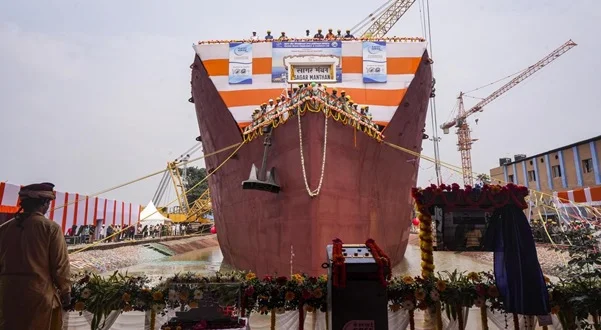
Kolkata-based Garden Reach Shipbuilders and Engineers (GRSE) launched ‘Sagar Manthan’ on September 9, 2026. The indigenous ocean research vessel is being built for the National Centre for Polar and Ocean Research (NCPOR) under the Ministry of Earth Sciences.
Important Points

  • ‘Sagar Manthan’ is an indigenous ocean research vessel being constructed by GRSE.
  • The vessel is being built for the National Centre for Polar and Ocean Research (NCPOR).
  • It is being developed under the government’s Deep Ocean Mission.
  • The vessel was launched at GRSE’s Rishi Bankim Shipyard.
  • It will have a maximum speed of 14 knots at 90% maximum continuous rating.
  • It can conduct swath multibeam and geophysical seismic surveys up to 6 km depth.
  • It will support Conductivity, Temperature and Depth (CTD) profiling and water sampling.
  • It can launch and recover Autonomous Underwater Vehicles (AUVs) and Remotely Operated Vehicles (ROVs).
  • It will operate in the Indian Ocean, Bay of Bengal and Southern Ocean, including waters around Antarctica.
  • The vessel is expected to be ready for use by early 2028 and will strengthen India’s capabilities in deep-sea exploration, oceanographic research and marine resource studies.

Scientific Capabilities of ‘Sagar Manthan’

The vessel will be equipped with advanced scientific systems for oceanographic and geophysical research. These include:

  • Sub-bottom profilers for studying layers beneath the seabed.
  • Seismic equipment for geophysical surveys.
  • Advanced oceanographic instruments.
  • Doppler weather radar for atmospheric observations.
  • Systems for multibeam and geophysical seismic surveys.
  • Conductivity, Temperature and Depth (CTD) profiling.
  • Facilities for water and biological sampling.
  • Equipment for seabed sampling using corers and grabs.
  • Facilities for rock dredging.
  • Systems for mooring and data buoy operations.
  • Instruments for meteorological and ocean-current measurements.

Role in Deep-Sea Research

  • ‘Sagar Manthan’ has been designed to conduct research in both coastal and deep-sea areas. It will support scientific studies in the Indian Ocean, Bay of Bengal and Southern Ocean, including waters around Antarctica.
  • The vessel will be capable of operating in severe sea conditions, allowing Indian scientists to conduct research in difficult and remote ocean regions.

Role in Deep-Sea Exploration

  • ‘Sagar Manthan’ will allow Indian scientists to conduct research in deep and difficult ocean environments.
  • It will be capable of undertaking surveys at depths of up to 6 km, helping scientists study the seabed, geological structures, marine ecosystems and other deep-ocean features.
  • The vessel’s ability to operate in severe sea conditions will also support research in the Southern Ocean and Antarctic waters.

Support for Underwater Vehicles

  • The vessel will also be capable of launching and recovering Autonomous Underwater Vehicles (AUVs) and Remotely Operated Vehicles (ROVs).
  • These underwater systems are being developed by the National Institute of Ocean Technology (NIOT) under the Deep Ocean Mission.

Role in Marine Mineral Exploration

  • The vessel will strengthen India’s ability to explore marine mineral resources, particularly:
    • Manganese nodules
    • Polymetallic sulphides
    • Other deep-sea mineral resources
  • Such exploration is important for understanding India’s marine resource potential and supporting the sustainable use of ocean resources.

Deep Ocean Mission

  • The Deep Ocean Mission (DOM) is an Indian government initiative aimed at developing technologies and capabilities for the sustainable exploration of deep-sea resources.
  • It focuses on areas such as:
  • Deep-sea mining technologies
  • Manned submersible technology
  • Ocean climate change advisory services
  • Biodiversity exploration
  • Deep-sea survey and exploration
  • Capacity building in marine sciences
  • ‘Sagar Manthan’ will complement these efforts by providing a specialised platform for oceanographic and geophysical research.

Importance for India’s Blue Economy

  • The vessel is also expected to contribute to India’s Blue Economy objectives.
  • Ocean-based scientific research can support sectors such as: 
    • shipping, 
    • marine resources, 
    • Ocean energy
    • logistics, 
    • tourism,
    • fisheries,
    • Coastal and deep-sea activities
  • Better understanding of the ocean will help India develop marine resources while promoting scientific and sustainable management of ocean ecosystems.

Research and Training Facilities

  • ‘Sagar Manthan’ will also function as a floating research platform.
  • Scientists will be able to conduct analysis and data processing onboard. 
  • The vessel will also provide facilities for the training and education of scientists and technical personnel.

Significance for India

The launch of ‘Sagar Manthan’ is significant because it will:

  • Strengthen India’s indigenous ocean research capabilities.
  • Increase the capacity of India’s scientific research fleet.
  • Support deep-sea exploration and oceanographic studies.
  • Improve research capabilities in the Indian Ocean Region.
  • Support exploration of marine mineral resources.
  • Strengthen India’s activities in the Southern Ocean and Antarctic region.
  • Contribute to the objectives of the Deep Ocean Mission and Blue Economy.
  • Promote indigenous shipbuilding for specialised scientific research.

Challenges

  • High Cost: Building and maintaining specialised ocean research vessels and advanced deep-sea equipment requires significant financial investment. 
  • Technological Complexity: Deep-sea exploration involves extreme pressure, low temperatures and difficult operating conditions, requiring highly advanced technologies. 
  • Environmental Risks: Exploration and extraction of marine minerals may disturb deep-sea ecosystems and affect marine biodiversity. 
  • Limited Scientific Infrastructure: India needs more specialised research vessels, underwater technologies and advanced ocean-monitoring systems. 
  • Skilled Manpower: Deep-sea research requires trained scientists, engineers, technicians and underwater technology experts. 
  • Harsh Ocean Conditions: Severe weather and rough sea conditions, particularly in the Southern Ocean, can make research operations challenging. 
  • Data and Knowledge Gaps: Large parts of the deep ocean remain poorly explored, creating challenges in mapping, monitoring and understanding marine ecosystems. 
  • International Coordination: Research in international waters and the Southern Ocean requires adherence to international maritime and environmental regulations.

Way Forward

  • Strengthen Indigenous Technology: Invest in advanced underwater vehicles, sensors, seabed mapping and deep-sea exploration technologies. 
  • Expand Ocean Research Infrastructure: Increase India’s fleet of specialised research vessels to support regular and comprehensive oceanographic surveys. 
  • Promote Sustainable Resource Exploration: Explore marine minerals such as manganese nodules and polymetallic sulphides while ensuring environmental sustainability. 
  • Enhance International Cooperation: Strengthen partnerships with other countries and international organisations for research in the Indian Ocean and Southern Ocean. 
  • Accelerate the Deep Ocean Mission: Increase investment in deep-sea technologies, scientific research and skilled manpower. 
  • Promote the Blue Economy: Balance economic opportunities from ocean resources with marine ecosystem conservation and sustainable resource management. 
  • Build Scientific Capacity: Develop specialised training and research programmes for scientists, engineers and technical personnel.

Conclusion

The launch of ‘Sagar Manthan’ marks an important step in strengthening India’s ocean research infrastructure. With its advanced scientific equipment, deep-sea survey capabilities and ability to operate in challenging waters, the vessel will help Indian scientists undertake research from the Indian Ocean to the Southern Ocean and waters around Antarctica. It is expected to play an important role in India’s Deep Ocean Mission, marine resource exploration and Blue Economy vision.

Prelims practice question

Q. With reference to ‘Sagar Manthan’, consider the following statements:

  1. It is an indigenous ocean research vessel being built by GRSE.
  2. It is being built for the National Centre for Polar and Ocean Research.
  3. It is designed to conduct surveys at depths of up to 6 km.
  4. It will operate only in the Bay of Bengal.

Which of the statements given above are correct?

A. 1, 2 and 3 only
B. 1 and 2 only
C. 2, 3 and 4 only
D. 1, 2, 3 and 4

Mains practice Question

Q. India’s deep-sea exploration capabilities are important for both scientific research and the development of the Blue Economy. Discuss the significance of indigenous research vessels such as ‘Sagar Manthan’ in strengthening India’s ocean capabilities.

FAQs

Q1. What is ‘Sagar Manthan’?

‘Sagar Manthan’ is an indigenous ocean research vessel being built by GRSE for NCPOR.

Q2. What is the cost of ‘Sagar Manthan’?

The vessel is being constructed at an estimated cost of ₹840 crore.

Q3. Who is building ‘Sagar Manthan’?

The vessel is being built by Garden Reach Shipbuilders and Engineers (GRSE) at its Rishi Bankim Shipyard.

Q4. What is the role of NCPOR?

The National Centre for Polar and Ocean Research (NCPOR) will coordinate the vessel’s research activities under the Ministry of Earth Sciences.

Q5. How deep can ‘Sagar Manthan’ conduct surveys?

The vessel will be capable of conducting swath multibeam and geophysical seismic surveys at depths of up to 6 km.

UIDAI Launches Face Authentication Software to Simplify Digital Onboarding

Prelims: Aadhaar, UIDAI, Face Authentication, AI/ML, e-KYC, Digital Identity, Cybersecurity, Data Privacy.
GS Paper II e-Governance, Government Policies & Interventions, GS Paper III – Science & Technology, Cybersecurity and Digital Technology.
Keywords : Aadhaar Face Authentication, UIDAI, Aadhaar Authentication, Aadhaar SDK, Aadhaar Sandbox, Face Authentication SDK, Artificial Intelligence, Machine Learning, Liveness Detection, Anti-Spoofing, Digital Onboarding, Digital Identity, Digital Public Infrastructure, BFSI, Fintech, e-KYC, Digital Financial Inclusion, Cybersecurity, Data Privacy, Aadhaar Act 2016

Why in News?

The Unique Identification Authority of India (UIDAI) has launched a new Aadhaar Face Authentication Software Development Kit (SDK) and a dedicated Sandbox at the Global Fintech Fest 2026.

Important Points

  • UIDAI launched the Aadhaar Face Authentication SDK and Sandbox
  • Enables integration with Android and iOS apps
  • Uses AI/ML-based liveness detection and anti-spoofing. 
  • Simplifies digital onboarding for banks, fintech and insurance firms. 
  • Sandbox enables authentication testing before deployment. 
  • Data privacy and cybersecurity remain key concerns.
  • The initiative aims to make digital onboarding easier, faster and more secure by allowing banks, fintech companies, insurance firms and other eligible entities to integrate Aadhaar Face Authentication directly into their mobile applications.

What is Aadhaar Face Authentication?

  • Aadhaar Face Authentication is a biometric authentication method that uses a person's face to verify their identity against Aadhaar records.
  • UIDAI's Face Authentication technology uses Artificial Intelligence (AI) and Machine Learning (ML)-based capabilities, including liveness detection and anti-spoofing mechanisms.
  • It was developed by UIDAI and has been used across government and private-sector services.

What is the New Aadhaar Face Authentication SDK?

  • The Software Development Kit (SDK) is a technology package that allows eligible organisations to integrate Aadhaar Face Authentication into their own Android and iOS applications.
  • For example, a customer using a bank or insurance application can complete Aadhaar face authentication within the same application instead of being redirected to a separate application.

Key Features of the New SDK

The Aadhaar Face Authentication SDK includes several security features:

  • AI and Machine Learning-based liveness detection to check whether the person is physically present.
  • Anti-spoofing technology to help prevent fraudulent attempts.
  • Secure handling and encryption of authentication data.
  • Support for Android and iOS applications.
  • Integration with consumer smartphones without requiring external biometric hardware.

The SDK can be used by government departments, banks, Non-Banking Financial Companies (NBFCs), fintech companies, insurance firms and other organisations.

What is the Aadhaar Face Authentication Sandbox?

  • The Sandbox is a controlled testing environment that allows organisations to integrate and test Aadhaar authentication services before deploying them in a live environment.
  • UIDAI's developer ecosystem already uses sandbox environments to help eligible entities integrate and test Aadhaar authentication services.
  • The new facility can help developers and Quality Assurance (QA) teams test:
    • User provisioning and consent
    • Face capture
    • Liveness checks
    • Authentication
    • Error handling
    • Response validation
    • Network interruptions and timeouts
    • Spoofing attempts
    • Invalid digital signatures

The testing process does not require external biometric hardware.

Why is it Important for the BFSI Sector?

  • The Banking, Financial Services and Insurance (BFSI) sector increasingly relies on digital identity verification for customer onboarding.
  • The new SDK can help these organisations provide a seamless authentication experience within their existing applications.
  • It can:
    • Reduce the number of steps involved in digital onboarding.
    • Improve customer convenience.
    • Support remote identity verification.
    • Facilitate faster integration of Aadhaar authentication.
    • Strengthen security through liveness detection and anti-spoofing.

Growing Aadhaar Authentication Ecosystem

  • Aadhaar authentication is increasingly being used as an identity layer for digital services.
  • According to recent statements by UIDAI Chairman Neelkanth Mishra, Aadhaar authentication volumes have reached around 10 crore transactions per day, while UIDAI is preparing its infrastructure to handle 25–30 crore authentications per day. More than 600 entities currently use Aadhaar.
  • UIDAI has also been working on strengthening its technology infrastructure, including the use of Artificial Intelligence for fraud detection and post-quantum cryptography as part of its technology roadmap.

Applications of Aadhaar Face Authentication

Aadhaar Face Authentication has applications across several sectors.

It is used for:

  • Jeevan Pramaan and Digital Life Certificates for pensioners.
  • Beneficiary authentication under Ayushman Bharat.
  • Direct Benefit Transfer (DBT)-related services.
  • Aadhaar-enabled payment services.
  • SIM activation through e-KYC.
  • Beneficiary authentication under government schemes.

UIDAI has also demonstrated Face Authentication use cases in areas such as government attendance systems and bank customer acquisition.

Playbook on Ease of Onboarding

  • UIDAI also unveiled a Playbook on Ease of Onboarding at the Global Fintech Fest 2026.
  • The playbook is intended to guide organisations in the banking, financial services and insurance sectors on joining and using the UIDAI authentication ecosystem.
  • It can support identity verification for:
    • Customers
    • Employees
    • Business partners
    • Other eligible users

Significance for India

  • The initiative is important in the context of India's growing Digital Public Infrastructure (DPI) ecosystem.
  • Aadhaar provides a digital identity layer, while platforms such as UPI provide digital payment infrastructure. Integrating Aadhaar Face Authentication directly into financial applications can further reduce friction in digital service delivery.
  • The initiative can contribute to:
    • Digital financial inclusion: Easier identity verification can support access to digital financial services.
    • Ease of doing business: Organisations can integrate authentication directly into their applications.
    • User convenience: Customers may not need to switch between multiple applications.
    • Security: AI-based liveness detection and anti-spoofing mechanisms can help address fraudulent authentication attempts.

Challenges and Concerns

Despite its potential benefits, wider use of biometric authentication also requires strong safeguards.

1. Data Privacy

Biometric information is highly sensitive. Organisations must ensure that authentication data is handled securely and only for legitimate purposes.

2. Cybersecurity

As authentication systems become more widely used, they may become attractive targets for cyberattacks.

3. Spoofing and Deepfakes

Advances in AI-generated images and videos could create new forms of identity fraud. Continuous improvement of liveness detection and anti-spoofing systems is therefore necessary.

4. Digital Exclusion

People with limited access to smartphones, internet connectivity or digital services may face difficulties in accessing technology-driven authentication systems.

5. Reliability

Authentication systems need to work effectively across different devices, lighting conditions, network environments and user groups.

Way Forward

  • India should focus on a security-by-design approach while expanding Aadhaar-based digital authentication.
  • This requires:
    • Strong encryption and privacy safeguards.
    • Continuous improvement of anti-spoofing technology.
    • Regular security audits and testing.
    • Clear consent mechanisms.
    • Robust grievance- redressal systems.
    • Alternative authentication mechanisms for users facing technological difficulties.
    • Greater awareness among users about safe digital authentication practices.

UIDAI (Unique Identification Authority of India)

  • UIDAI is the statutory authority responsible for issuing and managing Aadhaar numbers in India.
  • Established: 2009 
  • Ministry: Ministry of Electronics and Information Technology (MeitY) 
  • Aadhaar: A 12-digit unique identification number for residents of India. 
  • Key Functions: Aadhaar enrolment, authentication and identity verification. 
  • Legal Status: UIDAI is a statutory authority under the Aadhaar Act, 2016.

Conclusion

The launch of the Aadhaar Face Authentication SDK and Sandbox represents an important step in strengthening India's digital identity ecosystem. By allowing Aadhaar Face Authentication to be integrated directly into banking, fintech and insurance applications, UIDAI aims to make digital onboarding simpler, faster and more secure. At the same time, strong privacy, cybersecurity and inclusion safeguards will be essential for ensuring public trust in biometric digital infrastructure.

Prelims Practice Question

Q. With reference to Aadhaar Face Authentication, consider the following statements:

  1. It uses Artificial Intelligence and Machine Learning-based technologies.
  2. The Aadhaar Face Authentication SDK can be integrated into mobile applications.
  3. The Aadhaar Face Authentication Sandbox provides a controlled environment for testing authentication services.
  4. Face Authentication requires external biometric hardware in every case.

Which of the statements given above is/are correct?

A. 1, 2 and 3 only
B. 1 and 4 only
C. 2 and 3 only
D. 1, 2, 3 and 4

Mains Practice Question

“Aadhaar Face Authentication can simplify digital onboarding, but it also raises concerns related to data privacy and cybersecurity. Discuss.”

FAQs

Q1. What is Aadhaar Face Authentication?

Aadhaar Face Authentication is a biometric authentication method that uses facial features to verify an individual's identity against Aadhaar records.

Q2. What is the Aadhaar Face Authentication SDK?

It is a Software Development Kit that allows eligible organisations to integrate Aadhaar Face Authentication directly into their Android and iOS applications.

Q3. What is the Aadhaar Face Authentication Sandbox?

It is a controlled testing environment that allows organisations to test and validate Aadhaar Face Authentication integration before deploying it in a live environment.

Q4. Which sectors can benefit from the new SDK?

The facility is particularly relevant to the banking, financial services and insurance (BFSI) sector. Government departments, fintech firms and other eligible organisations can also benefit.

Q5. What technologies are used in Aadhaar Face Authentication?

The system uses Artificial Intelligence (AI), Machine Learning (ML), liveness detection and anti-spoofing technologies.

Tata Advanced Systems Emerges as Lowest Bidder for Zorawar Light Tank Project

Prelims: Project Zorawar, Light Battle Tank, DRDO, Tata Advanced Systems Limited, Make-I Category, High-Altitude Warfare
Mains: GS Paper III: Defence Technology, Indigenisation of Defence Manufacturing, Border Security and Atmanirbhar Bharat
Keywords: Project Zorawar, Tata Advanced Systems Limited, TASL, DRDO, CVRDE, Larsen & Toubro, Mahindra Defence Systems, Light Battle Tank, Make-I Category, High-Altitude Warfare, LAC, Type-15 Tank, Active Protection System, Atmanirbhar Bharat, Defence Indigenisation

Why in News?

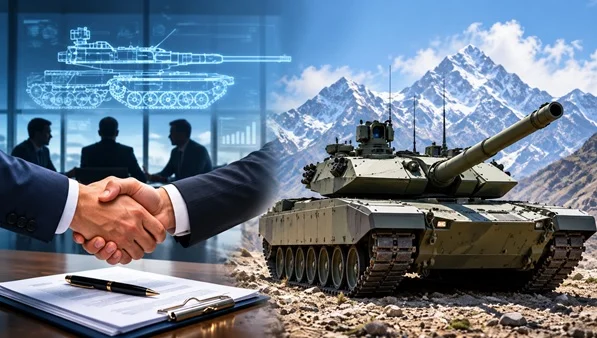
Tata Advanced Systems Limited (TASL), a Tata Group company, has reportedly emerged as the lowest bidder (L1) in the competition to develop the next-generation Zorawar light battle tank for the Indian Army.

Background

  • Project Zorawar was initiated to meet the Indian Army's requirement for a lightweight battle tank capable of operating effectively in high-altitude areas, particularly along India's northern borders.
  • The requirement gained greater strategic importance after the India-China military standoff in eastern Ladakh in 2020, where difficult mountainous terrain highlighted the limitations of deploying heavier main battle tanks.
  • The Zorawar light tank has been designed and developed by the Combat Vehicles Research and Development Establishment (CVRDE) of the Defence Research and Development Organisation (DRDO), in collaboration with Larsen & Toubro (L&T). Several Indian industries and MSMEs have also participated in the development of its subsystems.
  • The Indian Army plans to acquire a total of 354 light tanks. Of these, an initial 59 tanks are associated with the DRDO-L&T development programme, while the remaining 295 tanks are planned under the Make-I route.

What is the Zorawar Light Tank?

  • Zorawar is an indigenously developed 25-tonne-class light battle tank specifically designed for high-altitude warfare.
  • Unlike heavier main battle tanks, Zorawar places greater emphasis on mobility, rapid deployment and operation over difficult mountainous terrain while retaining considerable firepower and protection.
  • The government has officially confirmed that the tank has been designed as a 25-tonne-class armoured fighting vehicle for high-altitude applications.
  • The tank is named after General Zorawar Singh, the 19th-century military commander known for his campaigns across the Himalayan region.

Why Does India Need a Light Tank?

  • India's T-72 and T-90 main battle tanks provide substantial firepower and protection, but their heavier weight creates additional logistical and mobility challenges in high-altitude terrain.
  • Mountain roads, bridges, narrow passes, extreme temperatures and low oxygen levels make the movement and operation of heavy armoured vehicles more difficult.
  • China's deployment of lighter armoured vehicles, particularly the Type-15 light tank, during the Ladakh tensions also strengthened the operational case for India to develop its own high-altitude light tank. DRDO-related material has specifically linked the Zorawar requirement with the need for greater mobility in extreme-altitude areas.
  • Zorawar is therefore intended to provide the Indian Army with a combination of high mobility, significant firepower, rapid deployment and greater operational flexibility in mountainous regions.

Major Features of Zorawar

  • Lightweight Design: The maximum combat weight of Zorawar is around 25 tonnes, making it substantially lighter than conventional main battle tanks.
  • High-Altitude Capability: Zorawar has been specifically developed for operations in high-altitude regions such as Ladakh.
  • Firepower: The Zorawar is equipped with a 105 mm gun system. DRDO material has identified the John Cockerill 105 mm gun as part of the tank's configuration.
  • Engine and Mobility: According to the latest report, Zorawar is powered by a 760 horsepower diesel engine coupled with a Renk HMPT-800 transmission. It is reported to achieve a maximum road speed of around 70 km/h, while its cross-country speed is approximately 35-40 km/h.
  • Air Transportability: One of Zorawar's major advantages is its ability to be transported by military transport aircraft.
  • Protection: A light tank faces the difficult challenge of maintaining adequate battlefield protection without increasing its weight excessively.
  • Amphibious Capability: Zorawar has also been designed with amphibious capability, increasing its usefulness in areas containing rivers, lakes and other water obstacles.

What is TASL's Role in the Project?

  • Tata Advanced Systems has reportedly emerged as the L1 bidder for the competitive Make-I portion of the Zorawar programme.
  • The company is expected to develop two prototypes and demonstrate their capabilities within approximately 130 weeks. Mahindra Defence Systems has reportedly emerged as the L2 bidder.
  • However, TASL becoming the lowest bidder should not be interpreted as the company having already received the entire order for 295 tanks.
  • The prototypes must first satisfy the required technical and operational standards. According to the report, once the prototypes are cleared, the eventual production order is expected to be divided between qualifying L1 and L2 vendors, although the final ratio has not yet been disclosed.

What is the Make-I Category?

  • The Make-I category is an important part of India's defence procurement framework aimed at promoting indigenous development of strategically important military equipment.
  • Under the Zorawar programme, the government is reported to provide up to 70% funding for prototype development.
  • The model encourages Indian defence companies to acquire the technological, engineering and manufacturing capabilities required to develop complex military systems domestically.
  • It also reduces dependence on imported finished platforms and creates opportunities for private companies, MSMEs and specialised technology firms to participate in India's defence industrial ecosystem.

Strengthening India's Private Defence Sector

  • The competitive participation of Tata Advanced Systems and Mahindra Defence Systems represents a significant development for India's private defence manufacturing industry.
  • Complex armoured vehicles require expertise in propulsion, armour, weapons, electronics, sensors, communication systems, fire-control systems and advanced manufacturing.
  • Developing these capabilities within Indian private industry could generate long-term benefits extending well beyond the Zorawar programme.

Significance for Atmanirbhar Bharat

  • Project Zorawar represents an important example of India's attempt to create a broader indigenous defence manufacturing ecosystem.
  • DRDO has confirmed that Larsen & Toubro and numerous Indian industries, including MSMEs, have already participated in the development of the light tank and its subsystems.
  • Greater private-sector participation can reduce India's dependence on imported defence platforms while improving domestic design capability, manufacturing capacity and supply-chain resilience.
  • If successfully developed and produced at scale, the Zorawar programme could also enhance India's ability to offer specialised light armoured vehicles to international markets.

Way Forward

  • India should use Project Zorawar not merely as a tank procurement programme but as an opportunity to create an indigenous ecosystem for next-generation armoured warfare.
  • Greater focus will be required on indigenous power packs, active protection systems, counter-drone technologies, advanced ammunition, battlefield networking, artificial intelligence and manned-unmanned teaming.
  • Rigorous trials in high-altitude, desert and amphibious environments will also remain essential before large-scale induction.

Prelims MCQs

Q. Consider the following statements regarding the Zorawar Light Tank:

  1. It belongs to the approximately 25-tonne class.
  2. It has been designed for high-altitude applications.
  3. Its airlift capability has been demonstrated by the Indian Air Force.

Which of the statements given above are correct?

A. 1 only
B. 1 and 2 only
C. 2 and 3 only
D. 1, 2 and 3

Mains Question

“Project Zorawar represents both an operational response to India's high-altitude security challenges and a significant step towards defence indigenisation.” Discuss.

FAQs

What is Project Zorawar?

Project Zorawar is India's programme to develop a lightweight battle tank capable of operating effectively in high-altitude and difficult terrain. The platform has been designed by DRDO's CVRDE in collaboration with Larsen & Toubro.

What is the weight of the Zorawar tank?

Zorawar is designed as a 25-tonne-class armoured fighting vehicle, making it significantly lighter than conventional main battle tanks.

Why does India need Zorawar?

The tank is intended to provide greater mobility, rapid deployment and effective firepower in mountainous regions, particularly along India's northern borders.

How many Zorawar light tanks does the Indian Army plan to acquire?

The reported overall requirement is 354 light tanks, including 59 associated with the initial DRDO-L&T programme and another 295 planned through the Make-I route.

Has Tata Advanced Systems received the order for 295 tanks?

No final production order for all 295 tanks has been announced. TASL has reportedly emerged as the lowest bidder and is expected to move to the prototype-development stage. 

National Forest Martyrs Day 2026: Theme, Key facts, History, Significance and Challenges

Why in News?

India observes National Forest Martyrs Day (राष्ट्रीय वन शहीद दिवस) every year on 11 September to honour forest personnel and others who have sacrificed their lives while protecting the country’s forests, wildlife and biodiversity. 

Key Facts

Observed on

11 September every year

2026 Theme

Remembering Martyrs, Protecting Forests

Purpose

To honour forest personnel and others who sacrificed their lives while protecting forests, wildlife and biodiversity

Historical connection

Khejarli Sacrifice

Khejarli incident

1730

Place

Khejarli village, Rajasthan, near Jodhpur

Community

Bishnoi 

Key personality

Amrita Devi Bishnoi

Tree protected

Khejri Tree

Number of people who sacrificed their lives

363 Bishnois

Core idea

Community-based forest and biodiversity conservation

Forester Memorial

Forest Research Institute (FRI), Dehradun

What is National Forest Martyrs Day?

  • A national observance dedicated to remembering the men and women who lost their lives in the line of duty while protecting forests, wildlife and other natural resources.
  • India’s forests are protected on the ground by forest officers, forest guards and other frontline personnel. Their work can involve confronting timber smugglers and poachers, controlling forest fires, responding to human-wildlife conflict and protecting ecologically sensitive areas. 
  • The Ministry of Environment, Forest and Climate Change has specifically recognised these sacrifices through the observance of Forest Martyrs Day.

Why on 11 September?

  • The choice of 11 September is associated with the historic Khejarli sacrifice of 1730 in present-day Rajasthan. In Khejarli village near Jodhpur, members of the Bishnoi community, led by Amrita Devi Bishnoi, resisted the cutting of Khejri trees. 

The Khejarli Sacrifice of 1730

  • In 1730, the ruler of the erstwhile Jodhpur State required wood, and men were sent to cut trees in the Khejarli area. The Bishnoi community strongly opposed the cutting of the Khejri (Prosopis cineraria) trees, which have great ecological and cultural importance in Rajasthan.
  • Amrita Devi Bishnoi resisted the felling and embraced a tree to protect it. Other members of the community followed her example. Ultimately, 363 Bishnois were killed while protecting the trees, according to Rajasthan government records.
  • The sacrifice is often regarded as a historical precursor to later tree-protection movements in India, particularly the Chipko Movement of the 1970s. Rajasthan government material also identifies Khejarli as an inspiration for the later Chipko movement.
  • The Government of Rajasthan has continued to commemorate this legacy; for example, the state's forestry records describe the Amrita Devi Park in Jaipur, dedicated to the memory of Amrita Devi and the 363 people. 

Why is the Khejri Tree Important?

  • The Khejri tree (Prosopis cineraria) is especially important in the arid and semi-arid landscapes of Rajasthan. It is adapted to harsh climatic conditions and is culturally significant to communities in the region. Its protection at Khejarli illustrates how traditional societies understood the importance of vegetation in sustaining fragile desert ecosystems.

Forest Personnel: The Frontline Guardians of Biodiversity

  • The Day brings attention to the contemporary role of India's forest personnel. Their responsibilities can include preventing illegal logging, tackling poaching and wildlife crime, responding to forest fires, conducting patrols, managing protected areas, rescuing wildlife and dealing with human-wildlife conflict.
  • These duties may expose personnel to attacks by criminals as well as dangerous natural conditions and wildlife encounters. The Environment Ministry has previously highlighted deaths linked to forest fires, smugglers and wildlife attacks while commemorating forest martyrs.

Forester Memorial at Forest Research Institute, Dehradun

  • It is to commemorate forest personnel who sacrificed their lives while protecting India's forests and biodiversity. The foundation stone of the memorial pillar was laid on 3 October 2012 near Brandis Road at FRI.
  • In 2025, National Forest Martyrs Day was observed at this memorial with floral tributes and a two-minute silence. Officials and trainees from forestry institutions participated and reaffirmed their commitment to conserving natural resources for future generations.

Significance 

  • Recognition of sacrifice: It honours forest personnel who have lost their lives while protecting India's natural heritage.
  • Environmental awareness: It reminds citizens that forests provide ecological services such as biodiversity conservation, soil protection, water regulation and climate regulation.
  • Community conservation: The Khejarli story demonstrates the potential of local communities to act as custodians of natural resources.
  • Frontline protection: The day highlights the need for better training, safety equipment, institutional support and welfare mechanisms for forest staff.
  • Environmental ethics: The sacrifice of the Bishnoi community represents the idea that nature possesses value beyond its immediate commercial use.

Major Challenges Faced by Forest Protectors

  • Challenges include illegal logging and timber smuggling, poaching and wildlife trafficking, forest fires, human-wildlife conflict, illegal mining and encroachment, difficult terrain, inadequate equipment in some regions and climate-related ecological stresses.
  • The Environment Ministry has previously connected Forest Martyrs Day with the risks posed by smugglers, forest fires, wildlife attacks and illegal resource extraction.

FAQs

When is National Forest Martyrs Day observed in India?

It is observed every year on 11 September.

Why was 11 September chosen for this day?

The date commemorates the historic Khejarli sacrifice of 1730 in Rajasthan.

Who was Amrita Devi Bishnoi?

She was a Bishnoi woman who sacrificed her life while protecting Khejri trees at Khejarli.

Which tree was protected during the Khejarli sacrifice?

The Khejri tree (Prosopis cineraria).

Where did the Khejarli sacrifice take place?

It took place at Khejarli village near Jodhpur in Rajasthan.

First International Space Summit 2026: Key facts, 51 announcements, Ariane 6, PAM-6, Haven-1, European ISS Crew, Importance for India and Significance

Prelims: International Space Summit 2026, European Space Agency (ESA), Ariane 6, International Space Station (ISS), Low Earth Orbit (LEO), private human spaceflight, IRIS² satellite constellation, space debris and commercial space economy
Mains: GS Paper II: Space diplomacy, Europe’s strategic autonomy, international cooperation in outer space and changing geopolitics of the global space sector
GS Paper III: Commercialisation of space, private-sector participation, satellite constellations, human spaceflight, launch capabilities, space sustainability and India’s emerging private space ecosystem

Why in news?

The first International Space Summit opened at the Grand Palais in Paris, France, on 9 September 2026, bringing together delegations from around 120 countries and roughly 2,000 participants.

Key Facts

Event

First International Space Summit

Date

9-10 September 2026

Venue

Grand Palais, Paris

Host country

France

Participants

Around 2,000

Representation

Around 120 countries/delegations

Opening-day announcements

51

Special envoys

Thomas Pesquet and entrepreneur Helene Huby

Major European launcher

Ariane 6

Amazon announcement

6 additional Ariane launches

Total Amazon Ariane commitment

24 launches through 2031

Private ISS mission

PAM-6

Expected commander

Thomas Pesquet, subject to approval

Historic possibility

First non-American to command a U.S. spacecraft

Commercial station

Haven-1

French astronaut linked to Haven-1

Arnaud Prost

EU secure satellite project

IRIS²

Major underlying theme

European strategic autonomy in space

What is the International Space Summit?

  • It is a global-level gathering designed to bring political leaders, space agencies, scientists, astronauts, companies, investors and other stakeholders together to discuss the rapidly changing space sector.
  • The summit addresses not only exploration but also space governance, industry, science, security, sustainability, competitiveness and international cooperation.

Why was the Summit organised?

  • Today, private companies have become major players in rocket launches, satellite constellations, communications, Earth observation and human spaceflight. At the same time, satellites are increasingly connected with national security and economic sovereignty.
  • France therefore presented the summit as an opportunity to create a broader international dialogue about how space should be accessed, governed and used safely and sustainably in the future.

51 Announcements: Why are they important?

  • The opening day was structured heavily around business and programme announcements, with 51 announcements reported. The announcements demonstrate a broader shift in Government programmes, Private investments, Start-ups, Commercial launchers, Satellite operators and Human spaceflight. 

Announcement 1: Amazon Gives Ariane 6 a Major Boost

  • Amazon ordered six additional launches using Europe's Ariane 6 rocket. This increased Amazon's total Ariane launch commitments to 24 launches through 2031. The newly ordered missions are expected to begin with the more powerful Ariane 64 configuration in 2029.

What is Ariane 6?

  • Ariane 6 is Europe's heavy-lift launch system and the successor to Ariane 5. It is operated commercially by Arianespace and was developed under the leadership of the European Space Agency (ESA). It is available principally in two configurations:

Ariane 62: two solid boosters

Ariane 64: four solid boosters

  • Ariane 64 provides greater launch capability for heavier payloads and large satellite deployment missions.

Announcement 2: European Crew for a Private ISS Mission

  • French ESA astronaut Thomas Pesquet is expected to command PAM-6, the sixth private astronaut mission to the International Space Station. 
  • The mission is being planned by Vast in partnership with NASA and is targeted for summer 2027 at the earliest. 
  • His command assignment remains subject to review and approval by the ISS Multilateral Crew Operations Panel (MCOP). 
  • If confirmed, Pesquet would become the first non-American to command a U.S. spacecraft. 

What is PAM-6?

  • PAM-6 refers to the planned sixth private astronaut mission to the International Space Station. The mission is expected to last approximately two weeks and focus on areas such as scientific research, technology demonstrations and educational outreach.
  • France's space agency, CNES, will draw on more than four decades of French experience in crewed spaceflight to support the scientific and technological aspects of the mission.

Major Human-Spaceflight Plan: Haven-1

  • France also announced another important astronaut assignment involving Arnaud Prost. 
  • Prost is expected to participate as a flight test engineer on the first crewed test flight associated with Haven-1, a commercial space station being developed by Vast.

Announcement 3: $1 Billion Satellite Investment

  • The Abu Dhabi-backed Marlan Space Company announced plans to invest approximately $1 billion to build 50 Earth-observation satellites for Loft Orbital. 
  • The satellites are expected to incorporate artificial-intelligence capabilities from French AI Company Mistral AI. 
  • Instead of satellites simply sending huge amounts of raw imagery to Earth, AI can increasingly help analyse and process data for faster decision-making.

Announcement 4: Eutelsat–OroraTech Partnership

  • European satellite operator Eutelsat and German space-technology company OroraTech announced a major infrared-monitoring partnership. OroraTech plans to install up to 96 infrared sensors aboard future Eutelsat LEO satellites. Space for 48 payloads has already been secured, with an option for another 48.

Announcement 5: The Exploration Company Raises $450 Million

  • The company is developing a reusable space capsule designed for cargo missions and, ultimately, broader human-spaceflight applications. 
  • This is strategically significant because Europe has historically depended substantially on partners for certain crewed-spaceflight and orbital transportation capabilities. 
  • Developing reusable spacecraft could therefore strengthen Europe's independent position in the emerging commercial space economy.

European Space Sovereignty

  • Europe possesses world-class capabilities in satellites, science, navigation and launch systems, but remains dependent on non-European providers in some critical areas. 
  • France is pushing the principle that European satellites should launch on European rockets. France views this as an issue of sovereignty and strategic independence. 
  • Germany has been more cautious because it also values access to U.S. providers such as SpaceX for security and operational reasons. 

IRIS²

  • IRIS² stands for Infrastructure for Resilience, Interconnectivity and Security by Satellite. It is the European Union's planned secure satellite communications constellation.
  • Europe wants IRIS² to provide secure connectivity for governments, strategic infrastructure and commercial users while reducing dependence on non-European satellite networks. Full deployment is expected around 2030.
  • The project has gained greater strategic importance because modern conflicts have demonstrated the importance of satellite communications and Earth-observation data.

Why is Europe worried about Space dependence?

  • Modern economies and armed forces increasingly depend on satellites for communication, navigation, intelligence, earth observation, missile warning, weather, financial networks and emergency services. Dependence on another country for these capabilities can therefore become a strategic vulnerability. 

Space Sustainability and Governance

  • France has emphasised the need for the safe and sustainable use of outer space. This is increasingly important because more satellites and constellations mean greater challenges involving Space debris, Orbital congestion, Collision risks, Radio-frequency and orbital-resource coordination, Space traffic management. 

Why is Low Earth Orbit becoming important?

  • LEO is the region extending up to around 2,000 km above Earth. 
  • Offers advantages such as relatively low communications latency and closer Earth-observation access. But the increase in satellite numbers creates challenges related to orbital congestion, debris and collision avoidance.

From Government Space to the “New Space” Economy

  • Old: Government Space Agency Rocket Satellite
  • New: Government Space Agency Startups Investors AI Companies Commercial Rockets Private Space Stations

Why is the Summit important for India?

  • India's experience with ISRO, IN-SPACe, NSIL and emerging private space companies means that many themes discussed in Paris (commercialisation, private investment, launch competition, satellite constellations and space sustainability) have direct relevance for India's evolving space policy.

Significance of the International Space Summit

  • It demonstrates that space is becoming central to geopolitical power and strategic autonomy.
  • 51 announcements highlight the increasing importance of private investment and commercial partnerships.
  • The Thomas Pesquet and Haven-1 announcements demonstrate Europe's ambitions in the emerging era of commercial human spaceflight.
  • Ariane 6 and IRIS² underline Europe's effort to maintain independent launch and communications capabilities.

Prelims MCQ

Q. With reference to recent developments in the global space sector, consider the following statements:

  1. 1Ariane 6 is a launch vehicle developed under the European Space Agency programme.
  2. IRIS² is an initiative of the European Union related to secure satellite connectivity.
  3. The International Space Station operates in Low Earth Orbit.
  4. The European Space Agency is an institution of the European Union and only EU member states can become its members.

Which of the statements given above are correct?

(a) 1 and 2 only

(b) 1, 2 and 3 only

(c) 2, 3 and 4 only

(d) 1, 2, 3 and 4

Mains Practice Question

Q. “The commercialisation of outer space is transforming space capabilities from instruments of scientific exploration into critical components of economic and strategic autonomy.” Discuss. 

FAQs

Where was the first International Space Summit held?

It was held at the Grand Palais in Paris, France.

When was the International Space Summit 2026 held?

The summit was organised on 9–10 September 2026.

How many announcements were made on the opening day?

The opening day featured 51 announcements covering investments, missions, contracts and partnerships.

What is Ariane 6?

Ariane 6 is Europe’s launch vehicle developed under the European Space Agency programme.

What is Haven-1?

Haven-1 is a planned commercial space station being developed by Vast for operations in Low Earth Orbit.

upsc english
« »
  • SUN
  • MON
  • TUE
  • WED
  • THU
  • FRI
  • SAT
Have any Query?

Our support team will be happy to assist you!

OR