New
Hindi Medium: (Delhi) - GS Foundation (P+M) : 10th Aug 2026, 3:00 PM Hindi Medium: (Prayagraj) - GS Foundation (P+M) : 18th Aug 2026, 8:00 AM English Medium: (Delhi) - GS Foundation (P+M) : 6th Aug 2026 English Medium: (Prayagraj) - GS Foundation (P+M) : 15th July 2026, 8:00 AM Hindi Medium: (Delhi) - GS Foundation (P+M) : 10th Aug 2026, 3:00 PM Hindi Medium: (Prayagraj) - GS Foundation (P+M) : 18th Aug 2026, 8:00 AM English Medium: (Delhi) - GS Foundation (P+M) : 6th Aug 2026 English Medium: (Prayagraj) - GS Foundation (P+M) : 15th July 2026, 8:00 AM

Current Affairs for 15 July 2026

Naying Hydroelectric Project, Arunachal Pradesh: Strategic Importance, Environmental Concerns, India–China Dimension

Prelims

Geography of India | Rivers & Drainage | Environment & Ecology | Current Affairs

Mains

GS Paper II – India-China Relations, Border Management

GS Paper III – Infrastructure, Energy Security, Environment & Conservation

Why Is This in the News ?

  • Environmental clearance has been granted to the 1,000 MW Naying Hydroelectric Project (NHEP) on the Siyom (Yomgo) River in Shi-Yomi district, Arunachal Pradesh — a district that hosts the strategically sensitive Mechuka sector close to the India-China Line of Actual Control (LAC).
  • The clearance follows the completion of a mandatory environmental public hearing held at Yapik village in Tato circle, and a subsequent formal notification for acquisition of 331.50 hectares of land in the project area.
  • The project had originally received concurrence from the Central Electricity Authority (CEA) way back in 2013, but progress stalled for over a decade owing to environmental and social concerns, including large-scale forest diversion.

What Is the Naying Hydroelectric Project ?

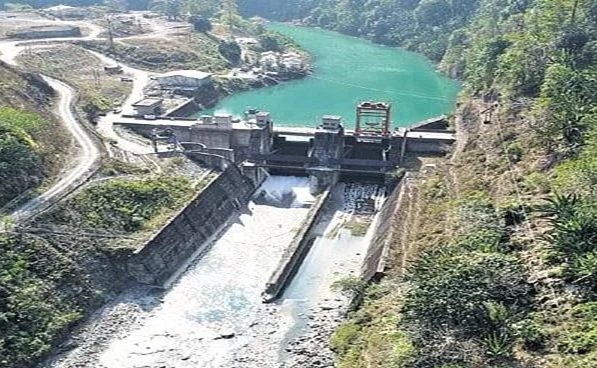
It is a run-of-the-river scheme with peaking power capability, proposed on the Siyom (Yomgo) River a right-bank tributary of the Brahmaputra in Arunachal Pradesh's Shi-Yomi district.

Particular

Details

Location

Tato circle, Shi-Yomi district, Arunachal Pradesh — near the Mechuka sector and the India-China LAC

River

Siyom (Yomgo) River — a right-bank tributary of the Brahmaputra, about 170 km long; the Mouling National Park lies on its east bank

Installed Capacity

1,000 MW (4 x 250 MW)

Developer

North Eastern Electric Power Corporation (NEEPCO) in joint venture with the Arunachal Pradesh Hydropower Corporation Ltd (APHPCL)

Project Type

Run-of-the-river with peaking capability; concrete gravity dam, underground powerhouse, ~7.08 km headrace tunnel; gross head ~285 m

Estimated Cost

Approximately Rs 9,559 crore (Rs 95,590 million)

Expected Output

~4,966.77 GWh (million units) of electricity annually

Land Required

331.50 hectares notified for acquisition in Tato circle; involves diversion of forest land and felling of trees

Timeline

CEA concurrence obtained in 2013; construction expected to begin around 2028; commissioning targeted for 2032

Seismic Zone

Zone V — the highest earthquake-risk category under the Bureau of Indian Standards classification

What is Run-of-River Hydroelectric Project 

  • Run-of-river (RoR) : It generates electricity using the natural flow of a river with little or no large water storage.
  • Features : Minimal reservoir, Lower submergence than conventional dams, reduced greenhouse gas emissions, less displacement compared to large storage dams, and continuous electricity generation depending on river flow.

Why is the Project Strategically Important ? 

  • Strengthening India's Position along the LAC : Its development will help improve electricity supply in remote border areas, strengthen military logistics, support border infrastructure, encourage permanent settlements, and enhance surveillance capabilities. 
  • Border Area Development : Reliable electricity promotes economic activities, tourism, healthcare, education, and digital connectivity. It also reduces migration from border villages, strengthening India's frontier presence. 

Importance for India's Energy Security

  • Hydropower plays an important role in India's clean energy transition. Its advantages are renewable source of energy, low carbon emissions, grid stability, peak-load support, long operational life, and reduced dependence on imported fossil fuels. Hydropower complements solar and wind energy by providing flexible power generation. 

Environmental Concerns

  • Fragile Himalayan Ecosystem : The Himalayas are geologically young, earthquake-prone, and landslide-prone. Large infrastructure projects require extensive geological assessments.
  • Impact on River Ecology : Construction may affect natural river flow, fish migration, sediment movement, and aquatic biodiversity.
  • Forest Diversion : Hydropower projects often require diversion of forest land, which may impact wildlife habitats, biodiversity, and carbon sinks.
  • Climate Change Risks : The Himalayan region faces increasing incidents of Glacial Lake Outburst Floods (GLOFs), cloudbursts, flash floods, and landslides. Hydropower infrastructure must incorporate climate-resilient design.

Importance of Arunachal Pradesh in Hydropower

  • Arunachal Pradesh possesses India's largest untapped hydropower potential due to steep river gradients, perennial Himalayan river, high rainfall, and mountainous terrain.
  • Major rivers include Siang, Subansiri, Dibang, Kameng, Siyom, Lohit. The state is often referred to as the "Hydropower Capital of India."

Government Initiatives

  • National Hydropower Policy : Recognizes large hydropower projects as renewable energy and promotes sustainable development.
  • PM Gati Shakti National Master Plan : Supports integrated infrastructure development, including strategic border connectivity.
  • Vibrant Villages Programme : Promotes comprehensive development of villages along the northern border to improve livelihoods and strengthen border security.
  • National Action Plan on Climate Change (NAPCC) : Hydropower contributes to India's efforts to expand clean energy and reduce carbon emissions.

India–China Dimension

Hydropower development in Arunachal Pradesh has strategic implications because :

  • Several rivers originate in Tibet.
  • China is constructing multiple hydropower projects on transboundary rivers, including the Yarlung Tsangpo (Brahmaputra).
  • India seeks to strengthen infrastructure and ensure effective utilization of its water resources in accordance with international law.

Challenges

  • Ecological degradation
  • Rehabilitation and resettlement of affected communities
  • High construction costs
  • Geological instability
  • Disaster vulnerability
  • Local opposition
  • Delays in project implementation
  • Interstate and transboundary river concerns

Way Forward

  • The Naying Hydroelectric Project reflects India's twin priorities of achieving energy security and strengthening strategic infrastructure along its northern borders. 
  • While the project can accelerate economic development and support India's clean energy transition, its implementation must be guided by scientific planning, robust environmental safeguards, transparent public consultation, and climate-resilient engineering. 
  • A balanced approach that integrates ecological sustainability with strategic and developmental objectives will be essential for ensuring long-term national interests while preserving the fragile Himalayan ecosystem.

PRELIMINARY MCQ

Q. With reference to the Naying Hydroelectric Project, consider the following statements:

  1. It is proposed on the Siyom River in Arunachal Pradesh.
  2. The project is a run-of-the-river hydroelectric project.
  3. The Siyom River is a tributary of the Brahmaputra River.

Which of the statements given above are correct?

(a) 1 and 2 only

(b) 2 and 3 only

(c) 1 and 3 only

(d) 1, 2 and 3

MAINS PRACTICE QUESTION

Q. "Large hydropower projects in the Himalayan region are essential for India's energy security and strategic interests but pose serious environmental challenges." Discuss with reference to the Naying Hydroelectric Project.

FAQs

1. Where is the Naying Hydroelectric Project located ?

It is proposed on the Siyom River in Arunachal Pradesh, near the India–China border.

2. What are the major environmental concerns ?

Potential impacts include ecological degradation, altered river flow, biodiversity loss, forest diversion, and increased disaster vulnerability in the fragile Himalayan ecosystem.

3. Which ministry grants environmental clearance for large hydropower projects ?

The Ministry of Environment, Forest and Climate Change (MoEFCC) grants environmental clearance based on the recommendations of the Expert Appraisal Committee (EAC).

4. Why Arunachal Pradesh is called the "Hydropower Capital of India" ?

Arunachal Pradesh has the largest hydropower potential in India due to its steep Himalayan terrain, perennial rivers, and high rainfall, making it ideal for hydroelectric power generation. 

5. What is the difference between a storage hydropower project and a run-of-the-river project ?

A storage project uses a large reservoir to store water before generating electricity, whereas a run-of-the-river project generates electricity using the natural flow of the river with little or no water storage.

Why Is the US Opposing the International Criminal Court? Marco Rubio's Stand Explained

Prelims

International Relations | International Organisations | Current Affairs

Mains

GS Paper II – Effect of Policies and Politics of Developed and Developing Countries on India's Interests | International Institutions

Why Is This in the News ?

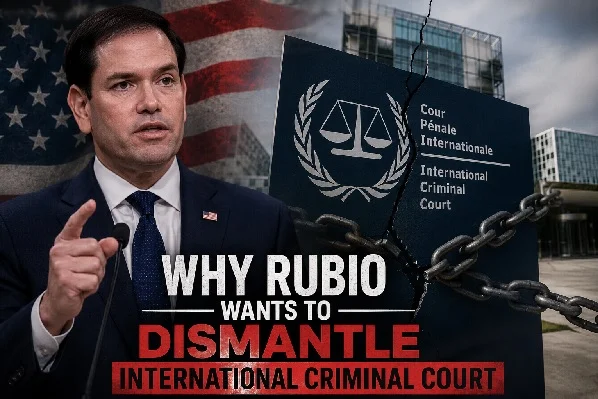
  • U.S. Secretary of State Marco Rubio strongly criticized the ICC and urged the international community to oppose and isolate the court, arguing that it has exceeded its mandate.
  • His remarks followed the ICC's continued investigations and arrest warrants related to the Israel-Hamas conflict.
  • The United States has imposed sanctions on certain ICC officials and reiterated that it does not recognize the Court's jurisdiction over U.S. citizens or those of allied nations such as Israel.

What Is the International Criminal Court (ICC)?

The ICC is the world's first permanent international criminal tribunal established to prosecute individuals—not states—for the most serious international crimes.
Particular  Details 
Established  17 July 1998 (Rome Statute)
Operational Since  1 July 2002
Headquarters  The Hague, Netherlands
Governing Treaty  Rome Statute
Current Members States  125 (as of 2026)
Nature  Independent international judicial institution
Jurisdiction  Individuals responsible for genocide, war crimes, crimes against humanity and aggression

Background of the US-ICC Standoff

  • Originated in the First Trump Term : US hostility towards the court is not new. During his first term, President Trump targeted the ICC over its attempt to investigate alleged war crimes by US forces in Afghanistan, including sanctioning the then chief prosecutor.
  • Sanctions Regime since 2025 : Early in his second term, President Trump issued an executive order declaring a “national emergency” over what he called the ICC's “illegitimate and baseless actions” against the US and Israel, leading to sanctions on Chief Prosecutor Karim Khan, his deputies, and several judges over investigations into conduct in Afghanistan and the Israel-Palestine conflict.
  • Widening the Net : The administration expanded sanctions and restrictions to additional individuals associated with investigations involving Israel.
  • The Judges' Lawsuit : Three sitting ICC judges sued the US administration in a New York court, arguing that the sanctions amounted to unlawful “extra-judicial pressure” intended to undermine their independence — the first time sitting ICC judges have taken such legal action against the US.

Why Does Rubio Want to Dismantle the ICC?

  • Sovereignty Argument : The State Department maintains that the ICC poses an “intolerable threat” to US sovereignty by claiming authority to prosecute American service members and officials, an authority successive US administrations across parties have rejected.
  • Framing as an Attack on America : Rubio has accused the court of “waging a war” against the US, not through military means but through “the force of so-called international law,” and has described it as being driven by NGOs and governments hostile to the US.
  • Protecting Israel : A significant driver has been the ICC's investigations and arrest-warrant proceedings related to Israel's conduct in Gaza, which Washington views as an illegitimate targeting of a close ally.
  • Pre-empting Future Cases : Some analysts argue that the campaign could also discourage future ICC scrutiny of U.S. military or foreign-policy actions.
  • Response to the Judges' Lawsuit : The renewed and more forceful campaign comes directly after ICC judges challenged the legality of existing US sanctions in court, which the administration appears to be countering with an even broader offensive.

Key Elements of the US Campaign

  • Diplomatic Pressure : Calls from the Secretary of State, Deputy Secretary, and US ambassadors to foreign governments urging them to reject the ICC's authority and consider withdrawing support for the court.
  • Conditional Alliances : Countries that partner with US law enforcement, host US military presence, or benefit from the US security umbrella are being asked to publicly reject the ICC's jurisdiction over American nationals.
  • Expanded Sanctions : Increased sanctions, travel bans, and visa revocations against ICC officials, judges, and organisations seen as supporting the court's investigations.
  • Coalition-Building : Encouraging other non-member states of the Rome Statute to use their own diplomatic networks to pressure the ICC alongside the US.
  • Possible Institution-Wide Sanctions : Reports suggest the administration may consider sanctioning the ICC as an institution, which could bar American citizens, banks, and companies from any dealings with the court.

Criticism of the US Campaign

  • Mischaracterisation of Jurisdiction : Legal experts, including former Human Rights Watch head Kenneth Roth, argue the ICC does not claim jurisdiction over conduct occurring within the United States itself.
  • Threat to the Rules-Based Order : Civil society groups argue that undermining the ICC weakens the broader post-World War II framework of international law rather than merely curbing one institution.
  • Selective Application of International Law : Critics note the campaign follows calls for the ICC to examine alleged war crimes linked to recent US military actions, raising questions about whether the effort is aimed at shielding American personnel from scrutiny.
  • Impact on Global Justice : Human rights advocates warn that weakening the ICC could reduce access to international justice mechanisms for victims in conflicts from Ukraine to Sudan.

India's Position on the ICC

  • India is not a party to the Rome Statute and has historically stayed out of the ICC, citing concerns over the court's jurisdiction potentially extending to peacekeeping operations and sovereign military decisions.
  • India has consistently supported the broader idea of international accountability for war crimes and genocide but has favoured strengthening national judicial mechanisms over ceding jurisdiction to an external body.
  • As a non-member, India is not directly bound by US pressure tactics aimed at Rome Statute signatories, but the episode is relevant to India's foreign policy discourse on multilateralism, sovereignty, and reform of global institutions.

Way Forward

  • Institutional Resilience: The ICC and its member states may need to strengthen internal mechanisms to protect judicial independence from external political and economic pressure.
  • Reform Conversations: The episode renews calls for reforming international justice mechanisms to make them more broadly accepted, including addressing concerns of major powers that currently remain outside the Rome Statute.
  • Balancing Sovereignty and Accountability: The standoff highlights the continuing global tension between state sovereignty and international efforts to hold individuals accountable for the gravest crimes, a balance that will shape the future credibility of international law.

PRELIMINARY MCQ

Q. Assertion (A): The United States opposes the exercise of ICC jurisdiction over its nationals.
Reason (R): The United States is not a State Party to the Rome Statute and argues that the ICC should not exercise jurisdiction without its consent.
(a) Both A and R are true, and R is the correct explanation of A.
(b) Both A and R are true, but R is not the correct explanation of A.
(c) A is true, but R is false.
(d) A is false, but R is true.

MAINS PRACTICE QUESTION

Q. “The recent US campaign to dismantle the International Criminal Court reflects the enduring tension between national sovereignty and international accountability.” Discuss the reasons behind the United States' opposition to the ICC and examine its implications for the global rules-based order.

FAQs

1. What is the International Criminal Court ? 

It is a permanent international tribunal established under the 1998 Rome Statute and became operational on 1 July 2002 to prosecute individuals for genocide, war crimes, crimes against humanity, and aggression.

2. Why has the US launched a campaign against the ICC ?

The US views the ICC's claimed authority over American service members and officials as a threat to its sovereignty, and the current campaign follows a lawsuit by ICC judges challenging existing US sanctions.

3. Is the United States a member of the ICC ?

No. The US has never ratified the Rome Statute and does not accept the court's jurisdiction over its nationals.

4. Is India a member of the ICC?

No. India is not a party to the Rome Statute, citing sovereignty concerns, though it supports international accountability for grave crimes through other means.

5. What actions has the US taken against the ICC so far?

Actions include sanctions, travel bans, and visa revocations against ICC officials and affiliated individuals, along with diplomatic pressure on other countries to reject the court's authority.

Explained: Iran’s Pickaxe Mountain Nuclear Facility and Why Trump Wants to Strike It

Prelims

Current Affairs, International Relations, International Organisations (IAEA & UNSC), Nuclear Technology, and Geography (West Asia, Strait of Hormuz & Zagros Mountains).

Mains

GS Paper II – International Relations (Highest Relevance)

GS Paper III – Internal Security & Science and Technology (High Relevance)

Why in the News ?

  • US President Donald Trump has threatened to target Iran's Pickaxe Mountain, a heavily fortified underground nuclear facility.
  • The warning has renewed global attention on one of Iran's most secretive nuclear sites.
  • Experts believe the facility is designed to withstand most conventional bunker-buster bombs.

What is Pickaxe Mountain ?

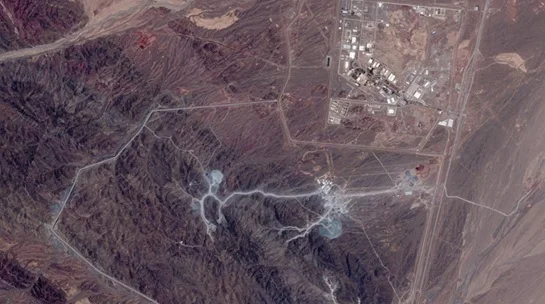
  • Pickaxe Mountain (also called Kūh-e Kolang Gaz Lā) is an underground nuclear facility under construction.
  • It is located near Iran's Natanz uranium enrichment complex.
  • The facility is built deep inside a mountain to protect it from airstrikes.
  • It is considered one of Iran's most secure nuclear installations.

Where is it Located ?

  • Around 1.5 km south of the Natanz nuclear facility in central Iran.
  • Built inside the Zagros mountain range.
  • The mountain provides strong natural protection against missile and bomb attacks.

Why is Pickaxe Mountain Important?

  • According to satellite imagery and security experts, the site may be used for :
    • Uranium enrichment.
    • Assembly of advanced centrifuges.
    • Storage of highly enriched uranium.
    • Protection of Iran's nuclear programme from military attacks.
  • Iran has not officially disclosed the exact purpose of the facility.

Why is the Site So Difficult to Destroy ?

  • The facility is buried deep beneath solid granite rock.
  • It contains two large underground tunnel complexes.
  • Construction reportedly began around 2020.
  • The depth and rock cover make it much harder to target than other Iranian nuclear sites.

Can Existing Bunker-Buster Bombs Destroy It ?

  • The US has bunker-buster bombs designed to destroy underground targets.
  • However, defence experts believe Pickaxe Mountain may be deeper than the penetration capability of many existing conventional bunker-buster bombs.
  • Its location beneath thick granite makes it one of the hardest nuclear facilities to attack.

Why Does It Matter ?

  • Pickaxe Mountain has become a key symbol of Iran's efforts to protect its nuclear programme.
  • Any military strike on the site could significantly escalate tensions between the United States and Iran.
  • The facility is now one of the most closely monitored locations in the Middle East.

IAEA and Nuclear Concerns

  • The International Atomic Energy Agency (IAEA) has had limited access to Pickaxe Mountain.
  • Concerns include :
    • Lack of transparency.
    • Possible installation of advanced IR-6 centrifuges.
    • Potential storage of 60% Highly Enriched Uranium (HEU).
    • Difficulty in verifying Iran's nuclear activities.
    • This has raised concerns regarding the global Nuclear Non-Proliferation Regime.

Geopolitical Significance

  • The issue affects global politics because :
    • The US wants to prevent Iran from developing nuclear weapons.
    • Israel considers Iran's nuclear programme a major security threat.
    • Rising tensions increase the risk of conflict in West Asia.
    • Regional instability may disrupt global energy supplies.

Implications for India

Aspect

Implications

Energy Security

  • India imports a significant share of its crude oil from West Asia.
  • Conflict may disrupt oil supplies and increase global crude oil prices.
  • Higher oil prices can fuel inflation and widen India's Current Account Deficit (CAD).

Strait of Hormuz

  • A major share of India's oil imports passes through the Strait of Hormuz.
  • Military tensions could disrupt shipping routes.
  • Freight and insurance costs may increase, raising import expenses.

Chabahar Port & INSTC

  • India has invested in Chabahar Port and the International North-South Transport Corridor (INSTC).
  • Escalation in the region could delay these connectivity projects.
  • Trade with Central Asia and Afghanistan may be affected.

India's Foreign Policy

  • India maintains strategic relations with both the United States and Iran.
  • The crisis tests India's policy of Strategic Autonomy.
  • India is likely to support dialogue, peaceful resolution, and secure maritime trade routes.

Environmental Concerns

Environmental Issue

Potential Impact

Landslides & Seismic Risk

  • The Zagros Mountains are located in a seismically active region.
  • Heavy bombing could trigger landslides and destabilize the mountain terrain.

Groundwater Pollution

  • Explosions may fracture underground rock layers.
  • Toxic materials and construction debris could contaminate underground aquifers, affecting water quality.

Air Pollution

  • Destruction of tunnels and granite structures could release large amounts of dust and fine silica particles.
  • This may pose respiratory health risks to nearby communities and impact local agriculture.

Conclusion

Pickaxe Mountain is more than an underground nuclear facility—it represents the intersection of nuclear security, strategic deterrence, international diplomacy, and regional geopolitics. For India, developments surrounding the site have important implications for energy security, connectivity projects, maritime trade, and foreign policy, making it a significant topic for UPSC from both International Relations and Internal Security perspectives.

Prelims Practice Questions

Q. Consider the following statements regarding Pickaxe Mountain:

  1. It is an underground nuclear facility located near Iran's Natanz Uranium Enrichment Complex.
  2. It is situated within the Zagros Mountain Range.
  3. The facility has been officially declared by Iran as an active uranium enrichment site under IAEA safeguards.

Which of the statements given above is/are correct?

  1. 1 and 2 only
  2. 2 and 3 only
  3. 1 and 3 only
  4. 1, 2 and 3

Mains Practice Questions

Q. Iran's underground nuclear facilities have become a major source of geopolitical tensions in West Asia. Discuss their strategic significance and implications for regional stability.


FAQs: Iran's Pickaxe Mountain (UPSC Perspective)

Q1. What is Pickaxe Mountain ?

Answer: Pickaxe Mountain (Kūh-e Kolang Gaz Lā) is a heavily fortified underground nuclear facility under construction near Iran's Natanz Uranium Enrichment Complex. It is built deep inside the Zagros Mountains to protect it from air and missile attacks.

Q2. Why is Pickaxe Mountain in the news ?

Answer: The facility came into global focus after US President Donald Trump threatened to target it, raising concerns over Iran's nuclear programme and escalating tensions between the United States and Iran.

Q3. Why is Pickaxe Mountain strategically important ?

Answer: It is believed to support uranium enrichment, advanced centrifuge assembly, and storage of highly enriched uranium (HEU). Its underground location makes it difficult to destroy through conventional military strikes.

Q4. Why is the facility difficult to attack ?

Answer: The facility is built nearly 100 metres beneath solid granite rock and consists of reinforced underground tunnel complexes. This makes it highly resistant to conventional bunker-buster bombs.

Q5. What is uranium enrichment ?

Answer: Uranium enrichment is the process of increasing the concentration of Uranium-235 in natural uranium. Low-enriched uranium is used for civilian nuclear power, while highly enriched uranium can potentially be used in nuclear weapons.

India Launches Campaign for UNSC Non-Permanent Seat 2028–29

Keywords

UNSC, SHANTI, Global South, Multilateralism, Veto Power, UNGA, Peacekeeping, Maritime Security, G4, L.69 Group, OIC, Rules-Based Order, Global Governance, Strategic Autonomy, UNSC Reform.

Prelims

UNSC, UNGA, P5, Non-Permanent Members, Veto Power, Asia-Pacific Group, OIC, UNSC Elections.

Mains

GS-II : UNSC Reforms, Global Governance, India's Permanent Membership, Global South, Multilateralism, India's Foreign Policy.

Why in News ?

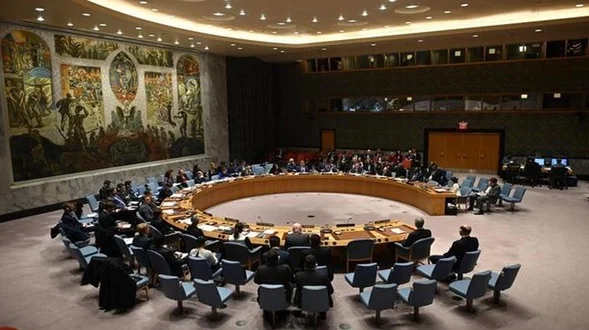
External Affairs Minister Dr. S. Jaishankar officially launched India's campaign for election as a Non-Permanent Member of the United Nations Security Council (UNSC) for the 2028–29 term at the UN Headquarters in New York on 13 July 2026. The election will be held in June 2027, where India and Tajikistan will compete for the sole Asia-Pacific Group seat.
Key Highlights

  • India has officially launched its campaign for the 2028–29 UNSC non-permanent seat.
  • Elections will be conducted by the United Nations General Assembly (UNGA) in June 2027.
  • India is contesting against Tajikistan for the Asia-Pacific Group seat.
  • The campaign is based on the vision of SHANTI (Securing Holistic Advancement through Norms, Trust and Integrity).
  • India has pledged to work towards :
    • Peace and international security
    • Reform of global governance institutions
    • Greater representation for the Global South
    • Maritime security
    • Responsible technology governance
    • Effective UN peacekeeping
  • The campaign comes amid major geopolitical crises, including the Russia–Ukraine war, the Gaza conflict and heightened tensions in West Asia.

India's Vision: SHANTI

India's campaign is based on the concept of SHANTI, which stands for :

Letter

Meaning

S

Securing

H

Holistic

A

Advancement

N

Norms

T

Trust

I

Integrity

What is the United Nations Security Council (UNSC) ?

  • The United Nations Security Council (UNSC) is one of the six principal organs of the United Nations, established under the UN Charter in 1945. It bears the primary responsibility for maintaining international peace and security.
  • The resolutions of the UN General Assembly, Security Council resolutions adopted under the UN Charter are legally binding on all UN member states.
  • The Council performs several critical functions, including preventing armed conflicts, authorising peacekeeping operations, imposing economic sanctions, recommending the appointment of the UN Secretary-General, approving the admission of new UN members and, when necessary, authorising the use of military force to restore international peace.

Composition of the UNSC

The Security Council consists of 15 members :

Category

Number

Permanent Members (P5)

5

Non-Permanent Members

10

Total Members

15

Permanent Members (P5)

The five permanent members are :

  • United States
  • Russia
  • China
  • United Kingdom
  • France

These countries possess the veto power, allowing any one of them to block a substantive Security Council resolution regardless of the level of international support.

Non-Permanent Members

The remaining 10 members are elected by the UN General Assembly for a two-year term through a secret ballot. A candidate must secure a two-thirds majority of members present and voting. Non-permanent members do not possess veto power.

Regional Distribution of Non-Permanent Seats

Region

Seats

Africa

3

Asia-Pacific

2

Latin America & Caribbean

2

Western Europe & Others

2

Eastern Europe

1

India's Journey in the UNSC

India has previously served as a Non-Permanent Member of the UNSC eight times—in 1950–51, 1967–68, 1972–73, 1977–78, 1984–85, 1991–92, 2011–12 and 2021–22. If elected, 2028–29 will become India's ninth tenure in the Security Council.

During its previous terms, India consistently focused on counter-terrorism, maritime security, UN peacekeeping reforms, women-led peacebuilding, development-oriented security and reform of multilateral institutions. India has also remained one of the largest troop contributors to UN Peacekeeping Operations.

India's Vision for the 2028–29 Term

India's campaign is centred on the concept of SHANTI – Securing Holistic Advancement through Norms, Trust and Integrity.

Through this vision, India seeks to promote :

  • A peaceful and rules-based international order.
  • Greater participation of developing countries in global decision-making.
  • Strengthened multilateral institutions capable of addressing contemporary challenges.
  • Responsible governance of emerging technologies such as Artificial Intelligence.
  • Secure oceans and uninterrupted maritime trade routes.
  • Stronger international cooperation against terrorism.

India has emphasised that multilateral institutions must evolve to reflect 21st-century geopolitical realities rather than the power structure of 1945.

Key Priorities for India's UNSC Campaign

India's candidature is not limited to winning a seat but also reflects its aspiration to shape global governance.

  • First, India aims to strengthen the voice of the Global South by advocating issues such as food security, energy security, climate justice, development financing and equitable access to technology.
  • Second, India will continue to push for comprehensive reforms of the United Nations Security Council, arguing that emerging powers and underrepresented regions deserve greater participation in international decision-making.
  • Third, India seeks to improve the effectiveness of UN Peacekeeping Operations through better training, technology, protection of peacekeepers and greater participation of women.
  • Fourth, India intends to promote maritime security, freedom of navigation and secure sea lanes, recognising that global trade and energy supplies depend heavily on safe maritime routes.
  • Finally, India aims to promote responsible use of emerging technologies by encouraging international cooperation on Artificial Intelligence, cyber security and digital governance.

Key Issues and Challenges for India's Bid

  • Strong Electoral Competition : India enjoys widespread international goodwill, but the election will be closely contested rather than uncontested.
  • Challenge from Tajikistan : India is competing with Tajikistan for the only Asia-Pacific Group seat in the 2028–29 UNSC election.
  • Possible OIC Support for Tajikistan : Tajikistan is expected to receive support from several members of the Organisation of Islamic Cooperation (OIC), making the electoral contest more competitive.
  • Need for Wider Diplomatic Outreach : India must strengthen diplomatic engagement with countries across Africa, Latin America, the Caribbean, Pacific Island States and Europe to secure the required two-thirds majority in the UN General Assembly.
  • Active Foreign Policy Engagement : Recent visits by the External Affairs Minister to the Gulf region and other strategic partners reflect India's efforts to build broader international support ahead of the election.
  • Complex Global Environment : The election will be held amid major geopolitical challenges, including the Russia–Ukraine conflict, the Gaza crisis, Iran–Israel tensions, supply chain disruptions and maritime security concerns, highlighting the need for a more effective and representative UNSC.

Why Does India Seek Permanent Membership ?

India has consistently argued that it deserves permanent membership because it is :

  • The world's largest democracy.
  • The world's most populous country.
  • One of the fastest-growing major economies.
  • A founding member of several important multilateral initiatives.
  • One of the largest contributors to UN Peacekeeping Missions.
  • A responsible nuclear power with a strong record on international law.
  • A leading representative of the Global South.

India is also a member of the G4 Group (India, Brazil, Germany and Japan), which advocates expansion of both permanent and non-permanent seats in the Security Council. India has additionally worked with the L.69 Group to build support for comprehensive UN reforms.

Challenges before the UNSC

  • Despite being the world's premier security body, the Security Council faces several structural challenges.
  • The Council's composition no longer reflects present-day geopolitical realities. Africa, despite comprising 54 countries, has no permanent representation, while major powers such as India, Brazil, Germany and South Africa remain outside permanent membership.
  • The veto power has frequently paralysed decision-making during international crises, allowing geopolitical rivalries among permanent members to prevent collective action. This has raised concerns regarding the effectiveness, legitimacy and democratic character of the Security Council.
  • Many countries also argue that the Council should become more transparent, accountable and representative to address emerging global challenges more effectively.

Way Forward

  • Reform of the United Nations Security Council (UNSC) is essential to make global governance more effective, representative and credible.
  • The Council should be expanded by increasing both permanent and non-permanent membership to reflect present-day geopolitical realities.
  • Greater representation should be provided to Africa, Latin America and the Global South, ensuring a more balanced and inclusive decision-making process.
  • The working methods of the UNSC should become more transparent, accountable and participatory, with wider consultation among member states.
  • The use of veto power should be exercised responsibly to prevent paralysis in addressing global security and humanitarian crises.
  • The UN should strengthen peacekeeping operations through better coordination, modern technology and adequate resources.
  • India will continue to advocate for a rules-based, inclusive and equitable international order, while promoting the interests and concerns of the Global South through multilateral cooperation.

Conclusion

India's campaign for the 2028–29 United Nations Security Council reflects its growing diplomatic stature and commitment to shaping global governance. While winning the election would strengthen India's international influence, its broader objective remains the reform of the Security Council into a more representative, democratic and effective institution. Through its vision of SHANTI, India seeks to promote peace, inclusive multilateralism and a stronger voice for developing nations in global decision-making.

Prelims MCQ

Q. With reference to the United Nations Security Council (UNSC), consider the following statements:

  1. The UNSC consists of 15 members, including five permanent members with veto power.
  2. Non-permanent members are elected by the UN General Assembly for a two-year term.
  3. India has served as a non-permanent member of the UNSC eight times.

Which of the statements given above is/are correct?

A. 1, 2 and 3
B. 1 and 2 only
C. 2 and 3 only
D. 1 only

Mains Practice Question

India's bid for the 2028–29 UNSC reflects its growing global role. Discuss its significance in the context of UNSC reforms, Global South leadership and India's foreign policy.

Frequently Asked Questions (FAQs)

1. Why is India contesting the 2028–29 UNSC election ?

India seeks to strengthen its role in global governance, represent the interests of the Global South and contribute to international peace and security while advancing its long-standing demand for comprehensive UNSC reforms.

2. Who are the permanent members of the UNSC ?

The five permanent members are China, France, Russia, the United Kingdom and the United States. Each possesses veto power over substantive Security Council resolutions.

3. How are non-permanent members elected ?

Non-permanent members are elected by the United Nations General Assembly through a secret ballot for a two-year term, requiring a two-thirds majority of members present and voting.

4. What does SHANTI represent in India's campaign ?

SHANTI stands for Securing Holistic Advancement through Norms, Trust and Integrity and represents India's vision for peace, inclusive multilateralism, responsible technology, maritime security and equitable global governance.

5. Why is UNSC reform considered necessary ?

Many countries believe the present Security Council no longer reflects contemporary geopolitical realities. Expanding membership, improving regional representation and reforming the veto system would enhance the Council's legitimacy, effectiveness and credibility in addressing global security challenges.

India’s Iron and Steel Sector Moves towards CCTS Compliance: Significance for Decarbonisation and Green Steel

Prelims

Environment & Ecology + Economy + Current Affairs – Carbon Credit Trading Scheme (CCTS), Carbon Markets, Emissions Trading System (ETS), Green Steel, Climate Change, and Steel Industry.

Mains

GS Paper III : Environment – Climate Change, Carbon Markets, Carbon Credit Trading Scheme (CCTS), Green Steel and Sustainable Development

GS Paper III : Economy – Industrial Growth, Energy Efficiency, Steel Industry and Low-Carbon Transition.

Why is it in News ?

  • India has taken a major step towards operationalising its carbon market by notifying draft emission-intensity targets for the iron and steel sector under the Carbon Credit Trading Scheme (CCTS). The notification covers 255 steel plants and marks the beginning of compliance for one of India's most carbon-intensive industries.
  • As the world's second-largest steel producer, India's steel sector contributes 10–12% of the country's total CO emissions, making its decarbonisation crucial for achieving India's climate commitments.

What is the Carbon Credit Trading Scheme (CCTS) ?

  • The Carbon Credit Trading Scheme (CCTS) is India's domestic Emissions Trading System (ETS) that aims to reduce greenhouse gas emissions through a market-based mechanism.
  • Instead of imposing a carbon tax, industries receive emission-intensity targets. Companies emitting below their target earn Carbon Credit Certificates (CCCs), while those exceeding the target must purchase credits or improve their efficiency.

Objective

  • Reduce industrial carbon emissions.
  • Promote cleaner technologies.
  • Create a domestic carbon market.
  • Help India achieve its Net Zero 2070 target.

Why Has the Steel Sector Been Included ?

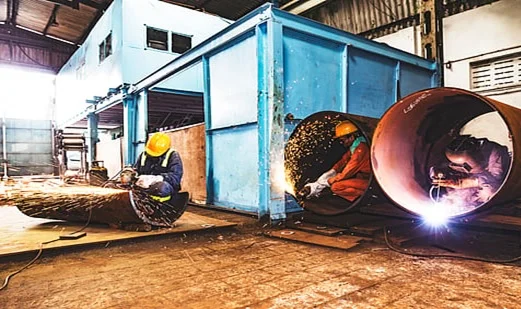
  • Steel is one of India's most energy-intensive industries.

Key Facts

  • Steel Production (FY 2024–25) : ~151 Million Tonnes
  • Global Rank : 2nd Largest Producer
  • Share in India's CO₂ Emissions : 10–12%
  • Average Emission Intensity (India) : 2.54 tCO per tonne of crude steel
  • Global Average : 1.9 tCO per tonne
  • The Ministry of Steel aims to reduce emission intensity to 2.2 tonnes CO per tonne of crude steel by 2030.

What Do the Draft Targets Say ?

  • The latest notification makes compliance mandatory from FY 2026–27.

Coverage

  • 255 steel plants
  • 358.6 MtCOe baseline emissions

Target Reduction

  • Steel plants must reduce emission intensity by :
    • Minimum : 2.1%
    • Maximum : 9.3%
    • Average : Around 5.5%
  • Plants with higher emissions have been assigned stricter targets.

What Has Changed from the Earlier Draft?

  • Compared to the 2025 draft notification:

New Companies Added

  • Bilasraika Sponge Iron India Pvt Ltd
  • OCL Iron & Steel Ltd
  • Orissa Metalliks Pvt Ltd

Removed

  • Hare Krishna Metallics Ltd

Renamed

  • Bhushan Power & Steel Ltd → JSW Sambalpur Steel Ltd

Target Revisions

  • 126 plants received revised baseline emissions.
  • 73 plants received relaxed targets.
  • 24 plants received stricter targets.
  • These revisions reflect updated technical data and stakeholder consultations.

A Major Concern: Coal-Based Steel Production

  • Although India is promoting carbon trading, its steel industry continues to rely heavily on coal.

Current Production Routes

Route

Share

Blast Furnace–Basic Oxygen Furnace (BF-BOF)

42.7%

Induction Furnace (IF)

35.4%

Electric Arc Furnace (EAF)

21.9%

Why Is This a Challenge ?

  • The Induction Furnace (IF) route has expanded in recent years despite being highly carbon-intensive.
  • Meanwhile, the cleaner Electric Arc Furnace (EAF) route-which mainly uses recycled scrap steel and can run on renewable electricity-is losing share.

Risk of Carbon Lock-In

  • According to Global Energy Monitor:
  • India has 258 Million Tonnes Per Annum (MTPA) of steel capacity under development.
  • More than two-thirds is based on the BF-BOF route.
  • Only 13% is based on Electric Arc Furnaces (EAFs).
  • More than 90% of new iron-making capacity will depend on coal.
  • This could lock India into high-carbon steel production for the next 20–30 years, making future decarbonisation more difficult and expensive.

Can CCTS Truly Decarbonise the Steel Sector?

Short-Term Impact of CCTS

  • Energy efficiency : Encourages industries to use energy more efficiently.
  • Waste heat recovery : Promotes the reuse of waste heat generated during production.
  • Better fuel management : Improves fuel consumption and reduces energy wastage.
  • Operational improvements : Encourages process optimisation to lower emissions.
  • Result : These measures can reduce carbon emissions at relatively low cost while improving industrial efficiency.

In the Long Term

  • Real decarbonisation will require major technological transformation, including :
    • Green Hydrogen-based Steelmaking
    • Electric Arc Furnaces (EAF)
    • Greater Scrap Recycling
    • Renewable Energy Integration
    • Carbon Capture, Utilisation and Storage (CCUS)
    • Low-carbon Iron-making Technologies
  • Without these investments, carbon trading alone may not significantly reduce emissions.

Why Does It Matter ?

  • The inclusion of steel under the CCTS is a significant milestone because :
    • It expands India's carbon market.
    • It strengthens India's climate policy framework.
    • It encourages industries to improve efficiency.
    • It prepares exporters for global carbon regulations such as the Carbon Border Adjustment Mechanism (CBAM).
  • It supports India's long-term Net Zero strategy.

Challenges

  • Continued dependence on coal-based steelmaking.
  • Lack of sub-sector classification in the notification.
  • High investment required for cleaner technologies.
  • Carbon lock-in due to new coal-based projects.
  • Need for clear carbon credit pricing and monitoring mechanisms.

Way Forward

  • To ensure meaningful decarbonisation, India should :
    • Expand Electric Arc Furnace capacity.
    • Promote Green Hydrogen Mission for steelmaking.
    • Increase scrap-based steel production.
    • Encourage renewable energy use in steel plants.
    • Strengthen carbon market transparency.
    • Align CCTS with Green Steel Taxonomy and international carbon standards.

Conclusion

The notification of emission targets under the Carbon Credit Trading Scheme (CCTS) marks a major step in operationalising India's carbon market. However, compliance through energy efficiency alone will not be sufficient. The real success of the CCTS will depend on whether it encourages industries to shift away from coal-based production and invest in low-carbon technologies. As one of the world's largest and fastest-growing steel producers, India's decisions today will shape both its industrial competitiveness and its ability to meet future climate commitments.

Prelims Question

Q. Consider the following statements regarding the Carbon Credit Trading Scheme (CCTS):

  1. It is India's domestic carbon market mechanism.
  2. It is based on absolute emission reduction targets.
  3. Industries emitting below the prescribed target can earn carbon credits.

Which of the statements given above is/are correct?

  1. 1 only
  2. 1 and 2 only
  3. 1 and 3 only
  4. 1, 2 and 3

Mains Question

Q. Discuss the significance of the Carbon Credit Trading Scheme (CCTS) in promoting industrial decarbonisation in India. Examine its potential and limitations with reference to the iron and steel sector.


FAQs

Q1. What is the Carbon Credit Trading Scheme (CCTS) ?

Answer: The Carbon Credit Trading Scheme (CCTS) is India's domestic carbon market that encourages industries to reduce greenhouse gas (GHG) emissions through a market-based mechanism. Industries that emit less than their prescribed targets earn carbon credits, which can be traded. 

Q2. Why is the iron and steel sector included under CCTS ?

Answer: The iron and steel sector contributes 10–12% of India's total CO emissions and is one of the country's most energy-intensive industries. Including it under CCTS will help reduce industrial emissions and support India's climate goals. 

Q3. How many steel plants are covered under the draft notification ?

Answer: The draft notification covers 255 iron and steel plants across India. 

Q4. When will compliance under the CCTS begin for the steel sector?

Answer: Compliance for the iron and steel sector will begin from FY 2026–27. 

Q5. What are emission-intensity targets ?

Answer: Emission-intensity targets require industries to reduce carbon emissions per unit of production, rather than reducing total emissions.

upsc english
« »
  • SUN
  • MON
  • TUE
  • WED
  • THU
  • FRI
  • SAT
Have any Query?

Our support team will be happy to assist you!

OR