
- UPSC Exam
- State PCS
- One Day Exam
- Current Affairs
- PT Quiz
- Downlaods
- About Coaching
- Blog
- Videos

| Prelims : International Relations + Geography + CA Mains : GS Paper 2 – International Relations; GS Paper 3 – Energy Security |
Amid escalating geopolitical tensions in West Asia and disruptions in maritime trade routes, China has urged Iran to ensure the safety and uninterrupted freedom of navigation through the Strait of Hormuz, a critical global energy corridor.
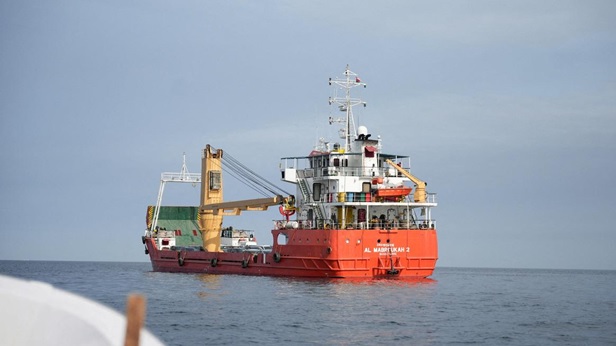
The Strait of Hormuz is one of the most strategically significant maritime chokepoints in the world.
China’s appeal to Iran is rooted in a combination of economic necessity, geopolitical strategy, and global leadership aspirations :
Diverging interests of major powers complicate efforts to achieve consensus on maintaining stability in the region.
Continuous dialogue among regional and global stakeholders is essential to de-escalate tensions and ensure safe navigation.
Countries must adhere to UNCLOS principles to maintain the integrity of global maritime governance.
Collective efforts through international forums can help ensure coordinated responses to crises.
Countries should invest in alternative energy sources and transportation routes to reduce dependence on a single chokepoint.
Prelims
Q. The Strait of Hormuz connects :
(a) Red Sea and Mediterranean Sea
(b) Persian Gulf and Arabian Sea
(c) Arabian Sea and Bay of Bengal
(d) Black Sea and Caspian Sea
Mains
“The Strait of Hormuz remains one of the most critical chokepoints in global geopolitics and energy security.” Analyse in the context of recent developments.
FAQsQ1. Why is the Strait of Hormuz important ?It is a key route for global oil and gas transport. Q2. Why did China intervene ? To protect energy security and global trade stability. Q3. What is the main issue ? Threats to freedom of navigation due to geopolitical tensions. Q4. What does international law say ? It guarantees free transit passage through international straits. Q5. Why is it important for India ? India depends heavily on energy imports through this route. |
| Prelims : Science & Technology + CA Mains : GS Paper 3 – Science & Technology, Emerging Technologies, AI |
Researchers at University of Cambridge have developed a new class of brain-inspired hafnium oxide memristors, which have the potential to drastically reduce the energy consumption of artificial intelligence systems.
This development is particularly significant because energy demand in AI systems is rising exponentially, especially with the growth of large language models, data centres, and high-performance computing, making energy efficiency one of the most pressing challenges in modern technology.
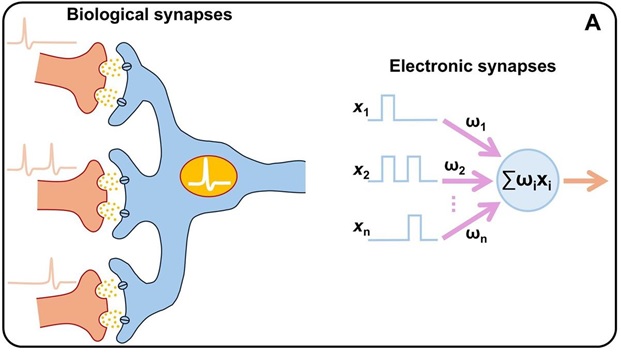
A memristor (memory resistor) is an advanced nanoelectronic device that can simultaneously store data and process information, unlike traditional computing components that separate these two functions.
The newly developed memristors use hafnium oxide (HfO₂), a material already widely used in semiconductor manufacturing, but with significant structural and functional enhancements.
Prelims
Q. Memristors are primarily associated with :
(a) Data storage only
(b) Simultaneous data storage and processing
(c) Optical communication
(d) Quantum encryption
Mains
“Neuromorphic computing using memristors can address the growing energy challenges of artificial intelligence systems.” Discuss.
FAQsQ1. What is a memristor ? A device that can store and process data simultaneously. Q2. Why is it important for AI ? It improves efficiency and reduces energy consumption. Q3. What is unique about hafnium oxide memristors ? They offer high stability and ultra-low power usage. Q4. What is neuromorphic computing ? Brain-inspired computing architecture. Q5. What is the key benefit ? Significant reduction in AI energy consumption. |
| Prelims : Infrastructure + Science & Technology + CA Mains : GS Paper 3 – Infrastructure, Economy, Technology |
India is moving towards large-scale implementation of the Multi-Lane Free Flow (MLFF) Tolling System, with pilot projects already operational and plans to expand the system across multiple national highways in the coming years.
This initiative reflects a broader push by the government to modernise highway infrastructure, eliminate congestion at toll plazas, and improve efficiency in logistics and transport systems.
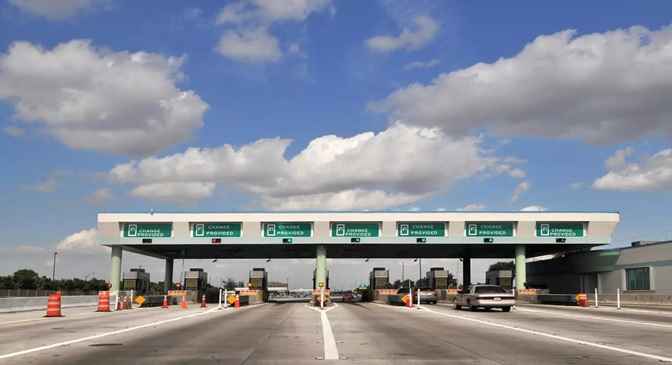
The Multi-Lane Free Flow (MLFF) Tolling System is a barrier-less, stop-free toll collection system that allows vehicles to pass through toll points at normal highway speeds without stopping or even slowing down.
The functioning of the MLFF system involves a combination of advanced technologies working seamlessly together:
Thus, MLFF represents the next generation of electronic toll collection systems.
Prelims
Q. The MLFF tolling system is based on which of the following technologies ?
(a) 1 only
(b) 1 and 2 only
(c) 2 and 3 only
(d) 1, 2 and 3
Mains
“Adoption of MLFF tolling system reflects India’s transition towards smart and efficient infrastructure.” Discuss.
FAQsQ1. What does MLFF stand for ? Multi-Lane Free Flow. Q2. What is its main feature ? Barrier-less, stop-free toll collection. Q3. How is toll collected ? Through FASTag and number plate recognition. Q4. What is its biggest advantage ? Zero waiting time at toll plazas. Q5. When will it be fully implemented ? Targeted nationwide rollout in the coming years. |
| Prelims : Polity + CA Mains : GS Paper 2 – Polity, Federalism, Electoral Reforms |
India is approaching a crucial phase where a comprehensive delimitation exercise is expected after 2026, coinciding with proposals to expand the Lok Sabha and redraw electoral constituencies across the country.
This development has triggered widespread political and academic debate because it has the potential to fundamentally alter the balance of political power among states, reshape electoral representation, and influence the implementation of women’s reservation, thereby making it one of the most consequential reforms in India’s democratic framework in recent decades.
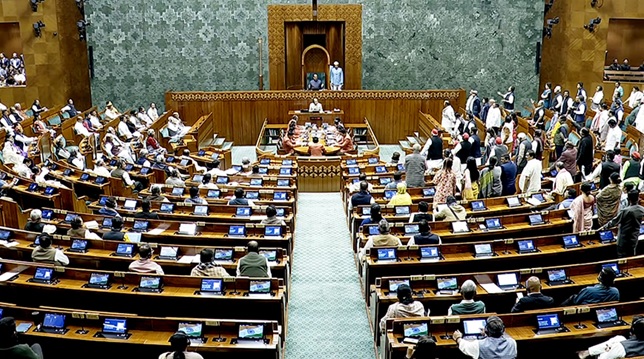
Delimitation refers to the systematic process of redrawing the boundaries of electoral constituencies and reallocation of seats in legislative bodies based on changes in population over time.
Delimitation is anchored in a robust constitutional framework that aims to balance democratic representation with institutional stability :
The history of delimitation in India reflects the evolving priorities of democracy, population control, and federal balance :
The upcoming reform is expected to bring structural and transformative changes to India’s electoral system, with several key proposals:
Enhancing the role of institutions like the Rajya Sabha can help balance representation and protect the interests of smaller states.
Prelims
Q. Delimitation in India is carried out by :
(a) Election Commission
(b) Parliament
(c) Delimitation Commission
(d) Supreme Court
Mains
“Delimitation reform in India raises a fundamental tension between democratic equality and federal balance.” Critically examine.
FAQsQ1. What is delimitation ? It is the process of redrawing electoral constituency boundaries. Q2. When will the next delimitation take place ? After 2026. Q3. Why is it controversial ? Because it may alter the balance of power among states. Q4. Which body conducts delimitation ? Delimitation Commission of India. Q5. Why is it important ? It ensures fair and equal representation in democracy. |
|
Prelims : Governance + CA |
The National Backward Classes Finance and Development Corporation has recently reported record performance in FY 2025–26, achieving its highest-ever financial disbursement and significantly expanding its outreach across multiple states and union territories.
This development has brought renewed attention to the role of National Backward Classes Finance and Development Corporation in promoting financial inclusion, self-employment, and socio-economic upliftment of Other Backward Classes (OBCs) and other disadvantaged groups.
The National Backward Classes Finance and Development Corporation is a Government of India undertaking under the Ministry of Social Justice and Empowerment, established with the objective of addressing economic backwardness among socially disadvantaged communities.
Key features include :
The corporation is guided by the broader goal of achieving inclusive growth and social justice, particularly by addressing structural inequalities in access to finance and opportunities.
Its major objectives include :
Recent developments highlight the growing importance and effectiveness of the National Backward Classes Finance and Development Corporation :
These developments underline its evolving role as a key institution for inclusive economic development.
Prelims
Q. NBCFDC is associated with :
(a) Environmental conservation
(b) Financial assistance to backward classes
(c) Infrastructure development
(d) Defence production
Mains
“Institutions like NBCFDC are essential instruments for achieving inclusive growth and social justice in India.” Discuss.
FAQsQ1. What is NBCFDC ? A government corporation providing concessional finance to backward classes. Q2. Which ministry governs it ? Ministry of Social Justice and Empowerment. Q3. What is its main function ? Providing loans and skill development support. Q4. Who are its beneficiaries ? OBCs and other economically weaker sections. Q5. Why is it important ? It promotes financial inclusion and reduces inequality. |

Our support team will be happy to assist you!


 Contact Us
  New Batch : 9555124124/ 7428085757
  Tech Support : 9555124124/ 7428085757

