- UPSC Exam
- State PCS
- One Day Exam
- Current Affairs
- PT Quiz
- Downlaods
- About Coaching
- Blog
- Videos


1. Article 39A of the Constitution
2. Legal Services Authorities Act, 1987
A Lok Adalat generally consists of:
This ensures a balance of legal expertise, social sensitivity, and humanitarian approach.
Lok Adalats deal only with compromise-able cases, such as:
1. National Lok Adalat (NLA)
2. Permanent Lok Adalat (PLA)
3. E-Lok Adalat and Mobile Lok Adalat
|
Level |
Authority |
Head |
Major Functions |
|
1 |
National Legal Services Authority (NALSA) |
Chief Justice of India (Patron-in-Chief) |
Policy formulation, monitoring, regulation |
|
2 |
State Legal Services Authority (SLSA) |
Chief Justice of the High Court / Executive Chairman |
Implementation of NALSA policies, organisation of Lok Adalats |
|
3 |
District Legal Services Authority (DLSA) |
District & Sessions Judge |
District-level Lok Adalats, legal aid |
|
4 |
Taluka Legal Services Committee |
Senior-most Judicial Officer |
Taluka-level Lok Adalats, first point of citizen interaction |
| (Preliminary Examination: Current Events of National and International Importance) (Main Examination, General Studies Paper-3: Impact of liberalization on the economy, changes in industrial policy and their effect on industrial growth; Infrastructure: Energy, Ports, Roads, Airports, Railways, etc.) |
Recently, the Government of India has approved the Atomic Energy Bill, 2025, which has now been renamed the ‘Harnessing and Advancement of Nuclear Energy for Transforming India (SHANTI) Bill’. It is also being referred to as the SHANTI Bill.
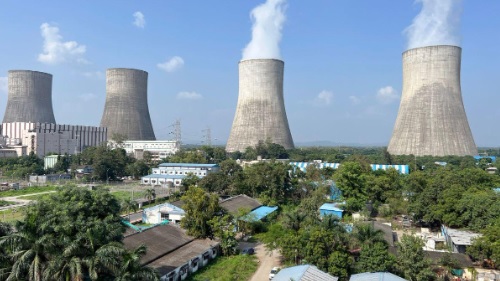
Importance of SMRs
|
The Nuclear Energy Bill 2025 marks a significant shift in India's energy policy, guiding the country towards a strategic, investment-friendly, and climate-conscious nuclear energy framework.
| Prelims: (Cannabis + CA) Mains: (GS 2 - Governance, Social Justice; GS 3 - Agriculture, Security) |
The Kandhamal district of Odisha has emerged as a major hotspot for illicit cannabis cultivation, with record seizures reported in 2025, bringing national attention to the growing nexus between rural distress, geography, and the illegal narcotics economy.

Kandhamal, a tribal-dominated and forest-rich district in central Odisha, is known for its GI-tagged Kandhamal turmeric, celebrated for its high curcumin content and export potential.
Paradoxically, despite this agricultural recognition, large sections of the population continue to face chronic poverty, weak market access, and limited livelihood diversification.
This development deficit has increasingly pushed vulnerable communities toward illicit cannabis cultivation, which offers:
The phenomenon reflects a deeper policy and governance paradox—where legally promoted crops coexist with illegal but economically more viable alternatives.
1. Favourable Geography
2. Climatic Suitability
3. Economic Distress and Livelihood Gaps
Together, these factors make illicit cultivation an economic coping strategy rather than merely a criminal choice.
What is Cannabis?
Cannabis Cultivation in India
NDPS Act, 1985
Permissible Exceptions
State-Level Developments
International Context
This gap highlights failures in inclusive rural development, where benefits of legal recognition fail to translate into sustainable livelihoods.
Integrated Development Approach
Alternative Livelihoods
Targeted Enforcement
Policy Reforms
FAQsQ1. Why is Kandhamal emerging as a cannabis cultivation hotspot? Due to favourable climate, difficult terrain, weak surveillance, and economic distress among tribal communities. Q2. Is cannabis completely illegal in India? Yes, ganja and charas are illegal under the NDPS Act, though industrial hemp cultivation is permitted under licence. Q3. What is the significance of Kandhamal turmeric? It has a GI tag and is valued for high curcumin content, but lacks adequate market and processing support. Q4. Which state first legalised industrial cannabis cultivation? Uttarakhand. Q5. What is the main psychoactive compound in cannabis? Delta-9 tetrahydrocannabinol (THC). |
| Prelims: (Space Technology + CA) Mains: (GS 3 – Science & Technology, Infrastructure, Climate Change) |
Google has announced Project Suncatcher, a long-term research initiative aimed at deploying solar-powered data centres in outer space, beginning with experimental satellite launches by 2027, as revealed by CEO Sundar Pichai. The project marks a radical rethinking of digital infrastructure amid rising energy, climate, and scalability constraints on Earth.

The global AI boom has triggered an unprecedented expansion of data centres, which now form the backbone of cloud computing, machine learning, and digital governance. However, terrestrial data centres are increasingly criticised for:
With global data centre power demand projected to rise by up to 165% by 2030, technology companies are exploring unconventional solutions. Against this backdrop, Project Suncatcher reflects a broader shift toward space-based infrastructure as a potential answer to energy, sustainability, and geopolitical constraints.
1. Energy and Climate Advantages
2. Infrastructure Stability and Security
3. Data Sovereignty and Legal Flexibility
4. Falling Launch Costs
The idea of extraterrestrial computing is gaining momentum:
FAQsQ1. What is Google’s Project Suncatcher? It is a research initiative to deploy solar-powered data centres in space using satellite constellations equipped with AI chips. Q2. Why are tech companies considering space for data centres? Due to rising energy demand, climate concerns, grid instability, and data sovereignty constraints on Earth. Q3. When will Project Suncatcher begin operations? Prototype satellite launches are planned for 2027, with scaling expected over the following decade. Q4. What treaty governs activities in outer space? The Outer Space Treaty, 1967, which bans national sovereignty claims and promotes peaceful use of space. Q5. What are the main challenges of space-based data centres? High costs, repair difficulties, latency, cybersecurity risks, and regulatory uncertainty. |
| Prelims: (History & Culture + CA) Mains: (GS 1 - Art & Culture) |
Recently, the Vice President of India released a commemorative postage stamp in honour of Perumbidugu Mutharaiyar II, also known as Suvaran Maran, recognising his historical contributions as a prominent ruler and administrator of early medieval South India.

Identity and Titles
Political Role
Military Contributions
Religious Tolerance
Temple and Cultural Contributions
FAQsQ1. Who was Perumbidugu Mutharaiyar II? He was a prominent ruler of the Mutharaiyar dynasty (705–745 CE), also known as Suvaran Maran, and a powerful Pallava feudatory in Tamil Nadu. Q2. Why is he historically important? He played a key military role alongside Pallava kings, administered Cauvery regions efficiently, and patronised religion and temple architecture. Q3. What is the significance of the Mutharaiyars? They were influential regional rulers who helped bridge Pallava rule and the later rise of the Cholas. Q4. Which religions flourished under his reign? Shaivism was patronised, but Jainism also enjoyed support, reflecting religious tolerance. Q5. Why was a commemorative stamp issued in his honour? To recognise his contributions to Indian history and highlight the importance of regional dynasties in nation-building. |
| Prelims: (Tuberculosis (TB) + CA) Mains: (GS 2 - Health; GS 3 - Science & Technology) |
The WHO Global Tuberculosis Report 2025 presents a mixed assessment of India’s TB control efforts—showing the fastest global decline in TB incidence, yet confirming that India continues to bear the largest TB and drug-resistant TB burden worldwide.
Tuberculosis remains one of the most persistent public health challenges globally and in India. While the global target for TB elimination is 2030, India adopted an ambitious national goal of eliminating TB by 2025. The 2025 WHO report evaluates India’s progress as substantial but insufficient to meet this accelerated timeline, underlining the need for renewed policy focus and implementation strength.
Tuberculosis is a chronic infectious disease caused by Mycobacterium tuberculosis.
Types
1. TB Incidence and National Burden
2. Drug-Resistant TB: A Persistent Weak Spot
3. Mortality Trends
Way Forward
FAQsQ1. What share of the global TB burden does India carry? About 25% of global TB cases, the highest for any country. Q2. Why is MDR-TB a major concern for India? India accounts for 32% of global MDR/RR-TB cases, with lower treatment success rates. Q3. Did India meet its TB elimination target of 2025? No, despite significant progress, the target was missed. Q4. What is BPaLM? A newer, shorter, and more effective treatment regimen for drug-resistant TB. Q5. What is the biggest obstacle to TB elimination in India? The combination of drug resistance, malnutrition, diagnostic gaps, and socio-economic disparities. |
| Prelims: (Defence & Security + CA) Mains: GS 3 - Science & Technolog |
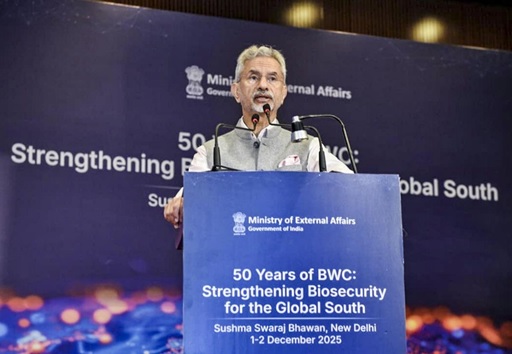
India’s biosecurity preparedness has come under renewed focus following expert assessments warning of rising biological threats driven by rapid advances in biotechnology, increasing capabilities of non-state actors, and structural gaps in India’s existing response systems.
Traditionally, biological threats were viewed largely through the lens of state-sponsored bioweapons. However, the contemporary threat landscape has evolved significantly:
In this context, biosecurity has emerged as a critical component of national security, public health resilience, and economic stability.
Biosecurity refers to policies, practices, and systems designed to prevent the intentional misuse of biological agents, toxins, or technologies.
Key Components of Biosecurity
1. Geographic and Ecological Vulnerability
Vast land borders and coastline
High population density and biodiversity
Faster spread potential for natural or engineered outbreaks
2. High Dependence on Agriculture
3. Threat from Non-State Actors
4. Rapid Biotechnology Advancements
Institutional Framework
Legal and Policy Framework
International Engagement
Despite multiple institutions, India lacks a unified national biosecurity framework, resulting in fragmented oversight.
Key Weaknesses
International Models
Key Lessons
1. Establish a National Biosecurity Framework
2. Upgrade Surveillance and Infrastructure
3. Modernise Legal and Regulatory Systems
4. Leverage New-Age Technologies
5. Strengthen International Cooperation
FAQsQ1. What is biosecurity? Biosecurity involves measures to prevent deliberate misuse of biological agents and technologies. Q2. How is biosecurity different from biosafety? Biosafety prevents accidental exposure; biosecurity prevents intentional misuse. Q3. Why is India vulnerable to biothreats? High population density, biodiversity, agricultural dependence, and porous borders increase risks. Q4. Which global treaty governs biological weapons? The Biological Weapons Convention (BWC), 1975. Q5. What approach integrates human, animal, and environmental health? The One Health Approach. |
| Prelims: (Environment + CA) Mains: (GS Paper 3 – Ecology & Environment, Conservation of Environment, Climate Change) |
A recent study published in Current Biology has uncovered the cellular and evolutionary mechanisms that enable mangroves to survive extreme salinity. The findings have important implications for developing salt-tolerant crops in the context of climate change, sea-level rise, and increasing soil salinisation.
Climate change is intensifying coastal flooding, sea-water intrusion, and soil salinity—posing serious risks to agriculture and food security, especially in low-lying coastal regions. Mangroves, which thrive in highly saline and waterlogged environments, have long been recognised for their ecological role as coastal buffers. However, the precise biological mechanisms behind their salt tolerance were not fully understood.
The Current Biology study bridges this gap by providing cell-level insights, opening new avenues for climate-resilient agriculture and nature-based solutions.

1. Unique Cellular Adaptations
2. Specialised Salt Management Strategies
Mangroves use two broad strategies:
3. Evolutionary Plasticity
4. Distinct from Other Drought-Tolerant Plants
Climate-Resilient Agriculture
Policy and Research Alignment
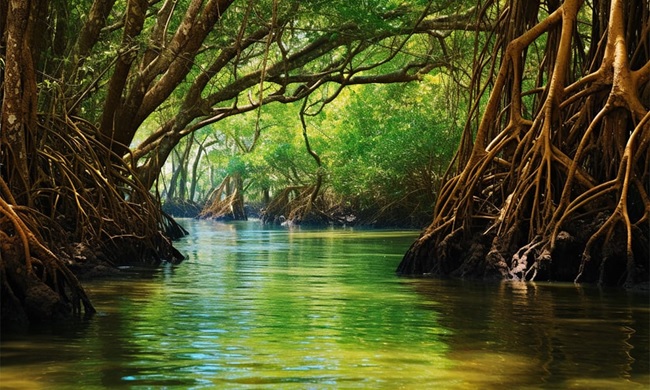
What are Mangroves?
Habitat Conditions
Physiological Adaptations
Reproductive Adaptation
Global
Mangroves in India
1. Climate Change Mitigation
2. Disaster Risk Reduction
3. Biodiversity Conservation
4. Livelihood Support
5. Nature-Based Solutions
FAQsQ1. Why are mangroves important for climate change adaptation? Mangroves reduce coastal erosion, absorb carbon, and buffer extreme weather events, making them vital for climate resilience. Q2. How do mangroves tolerate high salinity? Through thick cell walls, selective salt exclusion at roots, and salt excretion via specialised leaf glands. Q3. What is blue carbon? Carbon stored in coastal ecosystems like mangroves, seagrasses, and salt marshes, which have high carbon sequestration potential. Q4. Which Indian state has the largest mangrove cover? West Bengal, primarily due to the Sundarbans delta. Q5. How can mangrove research help Indian agriculture? It can guide the development of salt-tolerant crops for saline-prone regions affected by sea-level rise and climate change. |

The Press Club of India is one of the most prestigious journalist bodies in the country. Over the decades, it has played a crucial role in protecting the professional interests of journalists, upholding freedom of expression, promoting ethical journalism, and strengthening democratic discourse in India.
Issuing a postage stamp in honour of Perumbidugu Mutharaiyar II:

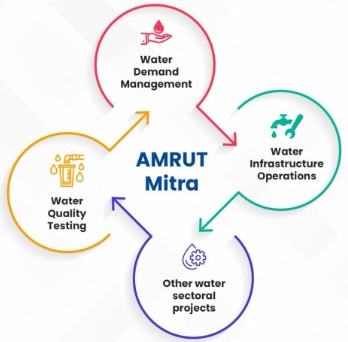
Objectives:
Key Challenges
Committee’s Recommendations
Implementation and Institutional Framework: Neglect of Local Governance
Slow pace of implementation
Committee’s Recommendations
Key Challenges
Poor reliability of data related to:
Severe shortfall in sewage treatment:
A large share of wastewater continues to be discharged untreated into rivers.
Way Forward
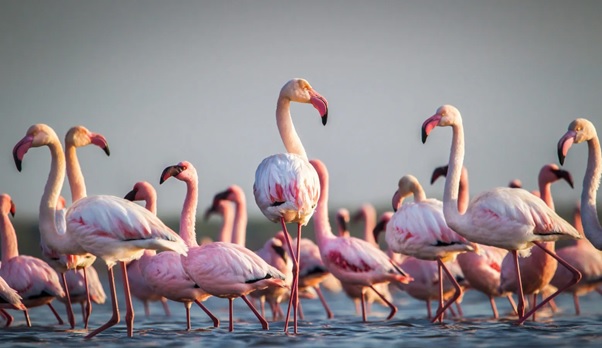
Kopra Reservoir
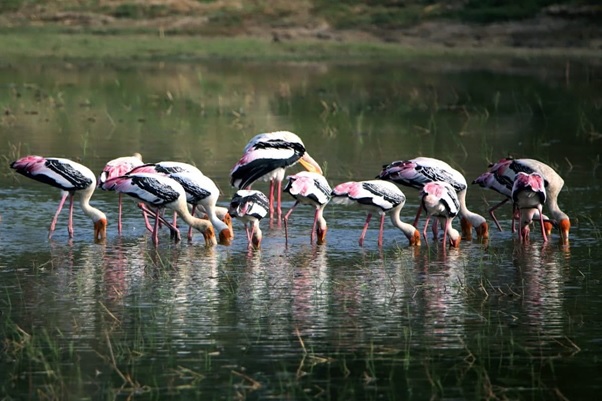
Siliserh Lake
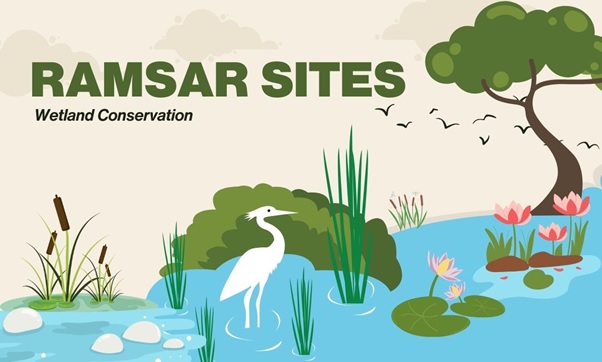
|
Aspect |
Details |
|
Adopted |
2 February 1971 |
|
Entered into force |
21 December 1975 |
|
Headquarters |
Gland, Switzerland |
|
Total Contracting Parties |
172 countries (as of 2024) |
|
India became a member |
1 February 1982 |
|
World Wetlands Day |
2 February |
|
Administrative authority |
International Union for Conservation of Nature (IUCN) |
|
Aspect |
Details |
|
India’s membership |
1 February 1982 |
|
Total Ramsar Sites in India (Jan 2024) |
96 |
|
First Ramsar Sites (1981) |
Chilika Lake (Odisha) & Keoladeo National Park (Rajasthan) |
|
Largest Ramsar Site in India |
Sundarbans Delta (West Bengal) |
|
Smallest Ramsar Site in India |
Rudrasagar Lake (Tripura) |
|
Maximum sites added in a single year |
11 sites in 2022 |
|
Date of addition of 11 sites |
15 August 2022 |
Kolleru Lake
Deepor Beel
Kopra Reservoir
Tso Kar Lake
Tso Moriri Lake
Asan Barrage
Udhwa Lake
Khecheopalri Wetland
Wetland:-
According to the Ramsar Convention, wetlands are classified into three categories:

Our support team will be happy to assist you!

 Contact Us
  New Batch : 9555124124/ 7428085757
  Tech Support : 9555124124/ 7428085757