- UPSC Exam
- State PCS
- One Day Exam
- Current Affairs
- PT Quiz
- Downlaods
- About Coaching
- Blog
- Videos

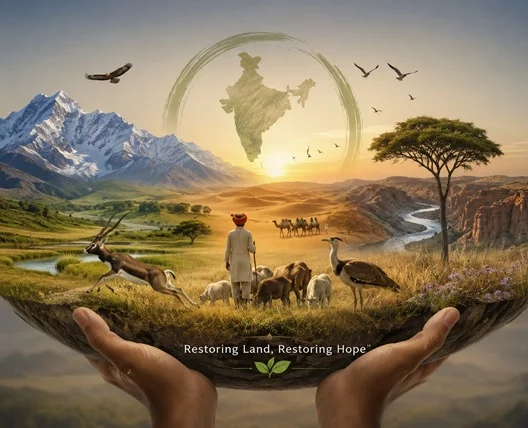
India launched its first-ever Guide to Grasslands and Other Open Natural Ecosystems (ONEs) of India on 17 August 2026 during the 17th Session of the Conference of the Parties (COP17) to the United Nations Convention to Combat Desertification (UNCCD) in Ulaanbaatar, Mongolia.
|
Aspect |
Details |
|
Guide |
First-ever Guide to Grasslands and Other Open Natural Ecosystems of India |
|
Launch |
17 August 2026 |
|
Venue |
Ulaanbaatar, Mongolia |
|
Event |
UNCCD COP17 |
|
Theme |
“Restoring Land, Restoring Hope” |
|
Main focus |
Grasslands and other naturally open ecosystems |
|
Importance |
Biodiversity + Climate + Livelihoods + Land Restoration |
|
Major global framework |
UNCCD |
|
Key concept |
Land Degradation Neutrality |
|
Special 2026 connection |
International Year of Rangelands and Pastoralists |
ONEs are landscapes that are naturally open or sparsely treed not degraded forests characterised by grasses, shrubs, and scattered trees, shaped over millennia by climate, soil, fire, and grazing rather than by deforestation.
|
Law/Policy |
Relevance |
|
Wildlife Protection Act, 1972 |
Wildlife and habitat protection |
|
Environment Protection Act, 1986 |
Umbrella environmental legislation |
|
Biological Diversity Act |
Biodiversity conservation and sustainable use |
|
National Biodiversity Action Plan |
Biodiversity planning |
|
Green India Mission |
Ecosystem restoration |
|
Land degradation programmes |
Restoration and sustainable land management |
|
National Livestock Mission |
Livestock and fodder-related support |
|
Rural employment programmes |
Potential support for soil/water restoration |
Prelims MCQQ. Consider the following statements regarding Open Natural Ecosystems (ONEs) in India:
Which of the statements given above is/are correct? (a) 1 and 2 only (b) 2 and 3 only (c) 1 only (d) 1, 2 and 3 Mains Practice QuestionQ. "India's conservation policy needs to move beyond a forest-centric approach." Discuss with reference to Grasslands and Open Natural Ecosystems. |
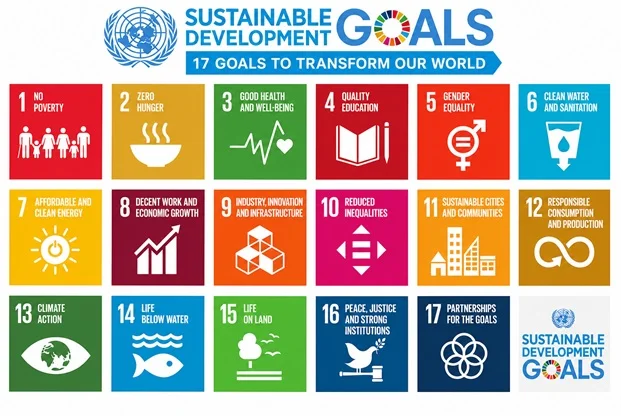
What are Open Natural Ecosystems (ONEs)?Naturally open landscapes dominated by grasses, herbs or shrubs with limited tree cover. What is UNCCD COP17?The 17th UNCCD Conference focuses on land restoration, desertification, drought and sustainable land management. Why are grasslands important ?They support biodiversity, carbon storage, soil conservation, pastoralism and climate resilience. Do grasslands store carbon?Yes, mainly through extensive roots and soil organic carbon stored underground. Which SDG is most relevant?SDG 15 – Life on Land is most directly connected with grassland and biodiversity conservation. |
Indore, Madhya Pradesh, has introduced a new technology-driven attraction at the Kamla Nehru Prani Sangrahalaya (Indore Zoo) a virtual zoo featuring a 14-D cinema and virtual jungle safari.

|
Feature |
Details |
|
Location |
Indore, Madhya Pradesh |
|
Venue |
Kamla Nehru Prani Sangrahalaya (Indore Zoo) |
|
Major attraction |
Virtual/Digital Zoo |
|
Special facilities |
14-D Cinema & Virtual Jungle Safari |
|
Inauguration |
16 August 2026 |
|
Inaugurated by |
CM Dr. Mohan Yadav |
|
Development model |
Public-Private Partnership (PPP) |
|
Reported investment |
Around ₹4.5 crore |
Government support + Private technology/expertise + Public access
The reported investment in the project is around ₹4.5 crore.
|
Traditional Zoo |
Virtual Zoo |
|
Mainly involves live animals |
Mainly uses digital simulations |
|
Physical enclosures required |
Digital environments |
|
Animal welfare and enclosure management are central |
Technology and content management are central |
|
Direct observation of animals |
Simulated/immersive observation |
|
Limited by animal behaviour and location |
Can recreate different habitats |
|
Conservation education through live exhibits |
Conservation education through immersive technology |
The project can provide several benefits:
Prelims MCQQ. With reference to India’s first virtual zoo in Indore, consider the following statements:
Which of the statements given above is/are correct? A. 1 and 2 only B. 2 and 3 only C. 1 and 3 only D. 1, 2 and 3 Mains QuestionQ. “Virtual zoos can complement traditional wildlife conservation and environmental education.” Discuss in the context of India’s first virtual zoo in Indore. |
1. Where is India’s first virtual zoo located?It is located at the Kamla Nehru Prani Sangrahalaya (Indore Zoo), Madhya Pradesh. 2. What are its major attractions?The major attractions include a virtual zoo, 14-D cinema and virtual jungle safari. 3. What is a virtual zoo?A virtual zoo uses technologies such as VR, 3D visuals and digital simulations to recreate wildlife and natural habitats. 4. What is special about the 14-D cinema?It combines visual content with effects such as motion, vibration, wind and water to create an immersive experience. 5. Why is the Indore project important?It demonstrates how technology can be integrated with wildlife education, tourism and conservation awareness. |
The RBI had introduced a special US dollar-rupee forex swap facility on June 8, 2026.
Under the facility:
Following the strong response, the RBI has now decided to close the window for fresh FCNR(B) mobilisation on August 31, 2026, earlier than originally envisaged.
According to data reported by authorised dealer banks, the three components of the special forex facility had attracted $56.846 billion in foreign currency inflows up to August 13, 2026.
|
Component |
Inflows |
|
FCNR(B) deposits |
$52.3 billion |
|
Overseas Foreign Currency Borrowings (OFCBs) |
$2.805 billion |
|
External Commercial Borrowings (ECBs) |
$1.741 billion |
|
Total |
$56.846 billion |
The FCNR(B) component accounted for the overwhelming majority of the inflows.
The facility was part of a broader policy response aimed at strengthening India's external-sector position.
Several banks reportedly offered FCNR(B) deposit rates of around 7% following the temporary relaxation of the interest-rate ceiling.
|
Feature |
FCNR(B) |
ECB |
OFCB |
|
Main source |
NRIs/PIOs |
Overseas lenders |
Overseas borrowing |
|
Nature |
Foreign currency deposit |
Foreign currency borrowing |
Foreign currency borrowing |
|
Main purpose |
Mobilise foreign currency deposits |
Raise overseas capital |
Access foreign currency funding |
|
Special window |
Closes Aug. 31, 2026 |
Open till Dec. 31, 2026 |
Open till Dec. 31, 2026 |
|
RBI swap support |
Yes |
Yes |
Yes |
The facility was introduced at a time when the Indian rupee was facing pressure amid:
Large foreign currency inflows can increase the supply of foreign exchange and potentially reduce pressure on the rupee.
However, the inflows do not automatically translate into a sharp appreciation of the rupee. According to CareEdge Ratings, the facility should primarily be viewed as a liquidity and stability measure rather than a mechanism for generating a sharp appreciation of the rupee or a major increase in forex reserves.
The RBI's decision to close the FCNR(B) window early indicates that the facility has achieved a strong mobilisation response.
The $52.3 billion inflow through FCNR(B) deposits demonstrates the effectiveness of combining:
From a macroeconomic perspective, the facility is significant because it can strengthen foreign currency liquidity and external-sector stability.
At the same time, the inflows should not be interpreted simply as a permanent addition to India's forex reserves, because the RBI's swap and forward positions create corresponding obligations.
1. What is the FCNR(B) account?Answer: FCNR(B) stands for Foreign Currency Non-Resident (Bank) Account. It allows NRIs and eligible Persons of Indian Origin to keep fixed deposits in specified foreign currencies without taking direct rupee-exchange-rate risk. 2. Why did the RBI introduce the special FCNR(B) forex swap facility?Answer: The RBI introduced the facility to attract foreign currency inflows, improve forex liquidity, reduce banks’ hedging costs and support external-sector and rupee stability. |
| Prelims: Advanced Medium Combat Aircraft (AMCA) | Rolls-Royce | Reliance Industries | Aero-Engine | Aerospace Gas Turbine | Fighter Jet Propulsion | Strategic Autonomy | Atmanirbhar Bharat | Defence Manufacturing | Technology Transfer Mains: GS Paper III – Defence Technology & Indigenisation | Strategic Autonomy | Defence Manufacturing | Public-Private Partnership | Critical Technologies |
Reliance Industries Limited (RIL) and British aerospace major Rolls-Royce announced, their strategic intent to partner for the design, development, manufacturing and delivery of a sovereign indigenous combat engine for India’s Advanced Medium Combat Aircraft (AMCA) programme.
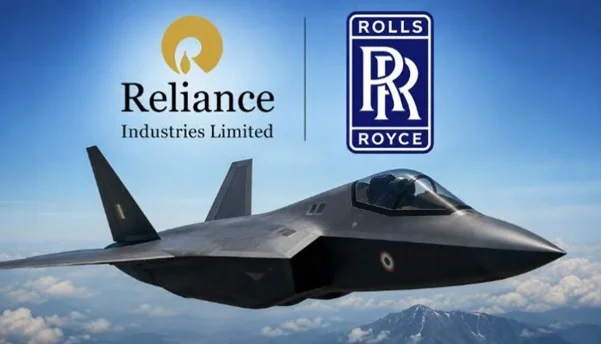
The Advanced Medium Combat Aircraft (AMCA) is India’s proposed twin-engine, stealth-capable, fifth-generation fighter aircraft programme. It is being developed to strengthen the Indian Air Force’s capability in high-end air combat and reduce dependence on foreign combat aircraft and critical technologies.
The engine is arguably one of the most technologically demanding components of the programme because modern fighter engines require advanced materials, high-temperature metallurgy, sophisticated cooling, precision manufacturing and highly reliable propulsion systems.
The proposed collaboration seeks to combine the respective strengths of both companies.
|
Reliance Industries |
Rolls-Royce |
|
Industrial scale |
Advanced propulsion expertise |
|
Manufacturing capabilities |
Century-long aerospace engineering experience |
|
Technology and execution capabilities |
Aero-engine design expertise |
|
Indian industrial ecosystem |
Global engine development experience |
|
Supply-chain and production capabilities |
Power and propulsion technology |
The companies will explore establishing an Aerospace Gas Turbine Complex in India. The proposed complex could eventually create an integrated ecosystem covering:
Design → Development → Manufacturing → Testing → Production → Maintenance & Through-life Support
This end-to-end approach is important because merely assembling foreign-designed engines in India would provide much less strategic autonomy than developing and controlling critical technologies domestically.
A fighter aircraft is only as capable as its propulsion system. Dependence on foreign engines can create strategic vulnerabilities during geopolitical crises, sanctions or supply-chain disruptions. Indigenous engine capability would strengthen India’s strategic autonomy.
India has developed significant capabilities in aircraft design, missiles, radar and space technology, but high-performance fighter aero-engines remain a major technological challenge. The proposed collaboration could help India address this long-standing gap.
The project aligns with India's broader objective of increasing domestic defence manufacturing and reducing dependence on imported military hardware.
A modern fighter engine requires a sophisticated industrial ecosystem involving: Advanced materials, Super alloys, Single-crystal turbine blades, precision machining, Additive manufacturing, Thermal barrier coatings, Digital manufacturing, advanced testing facilities, Maintenance, Repair and Overhaul (MRO). Therefore, the project could generate technological spill overs beyond the AMCA programme.
If India develops competitive aero-engine capabilities, it could eventually participate in the global aerospace supply chain and potentially export components, subsystems and propulsion technologies.
An aero-engine is the propulsion system that generates thrust to propel an aircraft. Modern fighter aircraft generally use gas-turbine engines.
A simplified working sequence is:
Air Intake → Compression → Combustion → Turbine → Exhaust → Thrust
In a turbofan/turbojet-type military engine:
For advanced fighter aircraft, the engine must deliver a difficult combination of:
High thrust + low weight + fuel efficiency + reliability + thermal management + combat survivability
The partnership is significant because it indicates a greater role for private-sector participation in strategic defence technologies. India's defence-industrial ecosystem is increasingly moving from a model dominated by government-owned organisations towards collaboration among:
Government + DRDO/ADA + DPSUs + Private Industry + Global Technology Partners + MSMEs + Start-ups
Such an ecosystem can accelerate innovation, manufacturing capacity and technology absorption.
Despite its potential, developing an indigenous fighter engine will not be easy.
The Reliance–Rolls-Royce proposal should be viewed in the larger context of India's attempt to build sovereign defence capabilities. The most important lesson is that defence self-reliance does not necessarily mean developing every technology in isolation. India can combine:
Foreign technological expertise + Indian manufacturing + domestic R&D + indigenous supply chains
If successfully executed, the proposed Aerospace Gas Turbine Complex could become a major hub for India's future military and civil aerospace propulsion ecosystem.The partnership also has the potential to expand beyond the AMCA engine into defence, civil aerospace and next-generation power and propulsion systems, according to the companies.
UPSC Prelims MCQQ. With reference to the proposed Reliance Industries–Rolls-Royce partnership, consider the following statements:
Which of the statements given above is/are correct? A. 1 and 2 only Mains Practice QuestionQ. “Indigenous aero-engine capability is central to India's strategic autonomy in military aviation.” Discuss the technological, industrial and strategic significance of the proposed Reliance–Rolls-Royce partnership for the AMCA programme. |
1. What is AMCA?Answer: AMCA is India's proposed twin-engine, stealth-capable fifth-generation combat aircraft programme aimed at strengthening the Indian Air Force's advanced air-combat capabilities. 2. What is the Reliance–Rolls-Royce partnership about?Answer: It aims to explore joint design, development, manufacturing and delivery of a sovereign indigenous combat engine for the AMCA programme. 3. What is the proposed Aerospace Gas Turbine Complex?Answer: It is a proposed Indian facility intended to build end-to-end capabilities in aero-engine design, development, manufacturing, testing, production and through-life support. 4. Why is an indigenous fighter engine important for India?Answer: It can reduce dependence on foreign propulsion systems, strengthen strategic autonomy and create a high-end domestic aerospace manufacturing ecosystem. 5. Is the AMCA engine contract finally awarded to Reliance and Rolls-Royce?Answer: No. The August 2026 announcement represents a strategic intent to partner; it is not itself a final government selection or awarded engine contract. |
| Prelims: Hara Mangroves, Qeshm Island, Strait of Hormuz, Avicennia marina, UNESCO Biosphere Reserve, Persian Gulf, Blue Carbon, Ramsar Site, Mangrove Ecosystem Mains: GS Paper I – Geography & Environment, GS Paper III – Environment, Biodiversity & Disaster Management, Marine Pollution, Coastal Ecosystems, Blue Carbon, and India’s Mangrove Conservation Keywords: Hara Biosphere Reserve, Qeshm Island, Mangrove Forest, Oil Spill, Minoan Pioneer, Avicennia marina, Strait of Hormuz, Persian Gulf, Blue Carbon, Coastal Protection, Marine Biodiversity |
A major oil-spill incident in the Persian Gulf is threatening the ecologically important Hara mangrove forests around Qeshm Island, Iran.
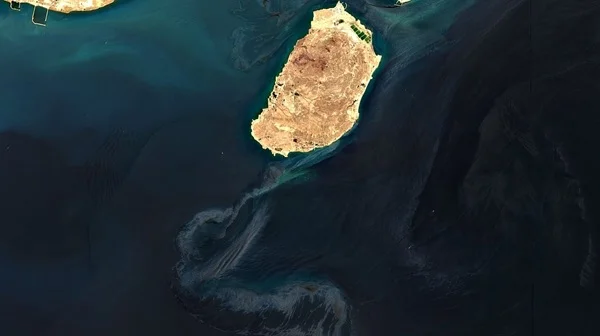
The ecosystem consists primarily of the grey mangrove, scientifically known as Avicennia marina.
Mangroves survive in environments where ordinary terrestrial plants cannot. Avicennia marina possesses specialised mechanisms for dealing with salt. Its roots and leaves help regulate salt and water balance, allowing the species to survive in highly saline coastal environments. This makes Hara an excellent example of halophytic vegetation.
Mangrove roots bind sediments and reduce the energy of waves and tidal currents. Therefore, they help protect coastal communities from:
This function becomes particularly important for low-lying islands such as Qeshm.
Mangroves are among the world's important Blue Carbon ecosystems. They capture atmospheric carbon dioxide and store carbon in:
Hara's complex network of tidal channels provides shelter and breeding habitat for marine organisms. It supports: Fish, Shrimp, Crabs, Molluscs, Other aquatic organisms
Hara is also an important habitat for migratory and wetland birds. UNESCO records species and habitats associated with the reserve, including the great white pelican (Pelecanus crispus), while the wider ecosystem supports numerous waterbirds and herons. The mangrove canopy and surrounding mudflats provide:
The immediate concern is an oil spill following damage to the Minoan Pioneer, a Liberia-flagged dry bulk carrier. According to maritime reports, the vessel was struck by an unidentified projectile while travelling near Oman's side of the Strait of Hormuz. The projectile reportedly hit the engine room, and the crew abandoned the vessel; one seafarer was reported missing. Subsequent satellite observations detected oil slicks near Qeshm.
Oil pollution can be particularly damaging to mangrove ecosystems because mangroves occupy shallow coastal waters and intertidal mudflats.
Oil-spill response in mangrove ecosystems is complicated. Aggressive mechanical cleanup can itself:
Therefore, response agencies have to balance oil removal with ecosystem protection. The current geopolitical situation further complicates emergency response and access to affected areas. Reuters reported that clean up and salvage operations have faced delays linked to the wider regional tensions.
|
Category |
Examples |
|
Dominant mangrove |
Avicennia marina |
|
Birds |
Pelicans, herons, migratory shorebirds |
|
Reptiles |
Green turtle, hawksbill turtle, sea snakes |
|
Marine organisms |
Fish, shrimp, crabs |
|
Habitat |
Tidal mudflats, shallow coves, mangrove channels |
|
Important wetland |
Strait of Khuran |
|
Conservation status |
UNESCO Biosphere Reserve |
UNESCO also records the presence of the critically endangered hawksbill turtle and green turtle-associated feeding habitat in the reserve.
The Hara incident is highly relevant for India because India also possesses extensive mangrove ecosystems along its eastern and western coasts and in the Andaman & Nicobar Islands.
Major Indian mangrove regions include:
Located in the Ganga-Brahmaputra-Meghna delta, the Sundarbans are India's most extensive mangrove ecosystem.
It is globally significant for:
The Sundarbans are also a UNESCO World Heritage Site.
Located in the deltaic region of the Brahmani and Baitarani rivers, Bhitarkanika is one of India's most important mangrove ecosystems.
It is particularly famous for:
The Gulf of Kutch contains extensive mangrove habitats on India's western coast.
Its ecological importance is linked with:
The Gujarat mangrove system is ecologically distinctive because it occurs in a relatively arid environment compared with India's humid eastern mangrove regions.
Mangroves are also present around the Gulf of Khambhat, where strong tidal conditions influence coastal ecosystems.
Pichavaram is one of India's well-known mangrove ecosystems and lies between the Vellar and Coleroon estuaries.
It is important for:
Muthupet lies in the southern Cauvery delta region.
Avicennia marina is particularly important here, demonstrating that the same dominant mangrove species found in Hara also occurs prominently in parts of India's coast.
The Godavari and Krishna delta systems support important mangrove ecosystems.
Coringa Mangroves, near Kakinada, are among India's major mangrove habitats.
The islands possess highly diverse mangrove communities because of their tropical island environment. They also form part of India's important coastal and marine biodiversity network.
|
Feature |
Hara Mangroves |
Indian Mangroves |
|
Country |
Iran |
India |
|
Major region |
Persian Gulf |
Arabian Sea, Bay of Bengal, Indian Ocean |
|
Key location |
Qeshm–Strait of Khuran |
Sundarbans, Odisha, Gujarat, Tamil Nadu, A&N |
|
Major species |
Avicennia marina |
Avicennia, Rhizophora, Bruguiera, etc. |
|
Major function |
Coastal protection & marine nursery |
Coastal protection, fisheries & biodiversity |
|
Carbon role |
Blue Carbon |
Blue Carbon |
|
Major threat |
Oil pollution, coastal pressure |
Pollution, reclamation, aquaculture, erosion, cyclones |
|
Conservation |
UNESCO Biosphere Reserve |
Multiple protected areas & conservation programmes |
India has recognised mangrove restoration as an important component of climate and coastal resilience. The MISHTI – Mangrove Initiative for Shoreline Habitats & Tangible Incomes programme focuses on mangrove restoration and conservation.
Its broader objectives include:
Thus, the Hara oil-spill incident provides a useful international case study for understanding why India's mangroves require protection from oil pollution, industrialisation, coastal development and climate change.
India has a long coastline and several major ports, oil terminals and shipping corridors. Important areas at risk include:
Prelims MCQQ. With reference to the Hara Mangrove Forests, consider the following statements:
Which of the statements given above are correct? A. 1, 2 and 3 only Mains Practice QuestionQ. “Mangroves are natural infrastructure for coastal resilience.” Discuss with reference to the ecological functions of Hara Mangroves and India's major mangrove ecosystems. Also examine the threats posed by oil pollution and suggest suitable conservation measures. |
Q1. Where are the Hara Mangrove Forests located?Answer: They are located in southern Iran, around Qeshm Island and the Strait of Khuran.They form an important Avicennia marina mangrove ecosystem in the Persian Gulf. Q2. What is the UNESCO status of Hara Mangroves?Answer: Hara is recognised as a UNESCO Biosphere Reserve.It is important for biodiversity, marine life and local livelihoods. Q3. Which is the major mangrove species found in Hara?Answer: The dominant species is the Grey Mangrove (Avicennia marina).It is adapted to survive in highly saline coastal environments. Q4. Why are Hara Mangroves in the news?Answer: A major oil spill near Qeshm Island is threatening the Hara mangrove ecosystem.The pollution can damage mangrove roots, marine life, fisheries and coastal biodiversity. Q5. Why are Hara Mangroves important for UPSC?Answer: They link Mangroves, Blue Carbon, Marine Pollution, Strait of Hormuz and Coastal Ecosystems.They can be compared with India’s Sundarbans, Bhitarkanika and Gulf of Kutch. |

Our support team will be happy to assist you!

 Contact Us
  New Batch : 9555124124/ 7428085757
  Tech Support : 9555124124/ 7428085757