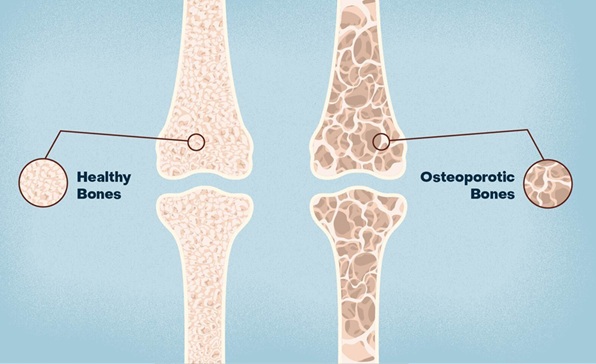
Osteoporosis is a degenerative bone disorder in which bones become thin, weak, and fragile, increasing the risk of fractures even after minor injuries or falls. It is often called the “Silent Disease” because early stages usually show no obvious symptoms.
It occurs more commonly in:
With a rapidly ageing population, osteoporosis is becoming a major public-health concern in India and worldwide.
Bones are not static — they constantly break down and rebuild.
|
Cell Type |
Function |
|
Osteoclasts |
Break down old bone |
|
Osteoblasts |
Form new bone |
When bone breakdown exceeds bone formation, bone density decreases → Osteoporosis develops
Usually absent in early stages. Later symptoms include:
Common fracture sites:
|
Test |
Purpose |
|
DEXA Scan |
Most reliable measurement of bone mineral density |
|
X-ray |
Detect fractures |
|
Blood tests |
Calcium & Vitamin-D levels |
Scientists at the University of Hong Kong discovered how the body senses exercise and strengthens bones.
Research performed on Bone Marrow Mesenchymal Stem Cells (BMMSC)
These cells can become:
When activated:
Removing Piezo1 resulted in:
Researchers believe future medicines may:
Mimic exercise signals in the body — potentially strengthening bones even without physical activity.
Recently, Indian marine researchers discovered a new species of squat lobster near the Lakshadweep Islands coral reef ecosystem. The species has been scientifically named Leiogalathea samudragiri. This discovery is important because Lakshadweep is a sensitive and under-explored marine biodiversity hotspot, especially for reef-dwelling crustaceans.
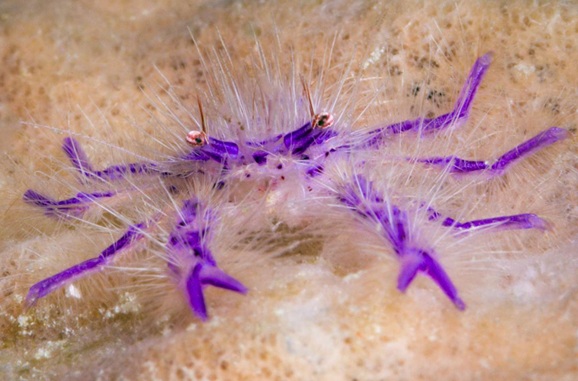
Leiogalathea samudragiri is a new species of squat lobster, a marine crustacean that resembles a small lobster but is not a true lobster.
Squat lobsters are marine crustaceans that look like miniature lobsters, but biologically they belong to a different evolutionary branch.
The Exposome is an emerging scientific concept that refers to the totality of environmental exposures a person experiences throughout life — from conception to death — and how they influence health.
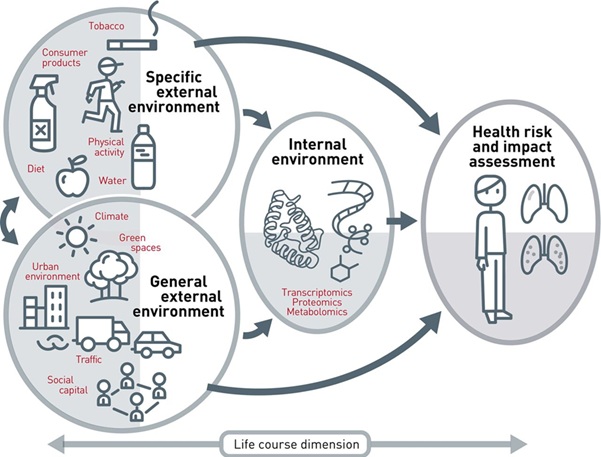
It complements the idea of the genome:
The term was proposed in 2005 by epidemiologist Christopher Wild.
According to the International Human Exposome Network (IHEN), the exposome is: “the integrated collection of all physical, chemical, biological and psychosocial factors and their interactions affecting human health across the lifespan.”
In simple terms: While genes load the gun, the exposome pulls the trigger.
The exposome has two broad categories: external exposures and internal exposures.
These come from the surrounding environment.
a) Environmental Factors
b) Chemical Exposures
c) Biological Agents
d) Psychosocial Factors
These occur within the body in response to external exposures.
These exposures accumulate across life and interact with genes to determine disease susceptibility.
Research suggests:
Thus, the exposome fills the gap left by genome-only research.
|
Exposure |
Possible Disease Outcome |
|
Air pollution |
Asthma, COPD, lung cancer |
|
Heavy metals |
Neurological disorders |
|
Poor diet |
Obesity, diabetes |
|
Chronic stress |
Heart disease, depression |
|
Early-life exposure |
Lifelong cognitive impairment |
Examples
Exposomics = scientific study of the exposome. It uses both internal and external assessment tools.
Uses “-omics” technologies:
These identify biomarkers showing exposure effects.
They help map complex exposure–disease relationships.
Scientists worldwide aim to map the Human Exposome, similar to the Human Genome Project.
1. International Human Exposome Network (IHEN) – 2023
2. Human Exposome Project (HEP)
3. European Human Exposome Network (EHEN) – 2020–2025
4. EIRENE Infrastructure – 2021
India has a high environmental disease burden.
Key concerns:
Environmental factors contribute significantly to public health problems.
Exposomics research is emerging in:
| Prelims: (Economy + CA) Mains: (GS 2 – India & Neighbourhood Relations; GS 3 – Water Resources, Environment & Infrastructure) |
The Jammu & Kashmir government is reportedly considering leveraging the suspended Indus Waters Treaty to divert water from the Ravi River towards the Jammu region and revive the long-pending Tulbul Navigation Barrage Project. The proposal has reignited debate over water management, interstate allocation, and India-Pakistan hydro-diplomacy.
The Indus Waters Treaty (1960), brokered by the World Bank, allocated:
The Tulbul project, initiated in the 1980s, was halted following objections from Pakistan, which argued that it violated treaty provisions regarding storage on the Jhelum River (a Western river). With renewed tensions and treaty uncertainties, discussions around reviving the project have resurfaced as part of broader water strategy considerations.
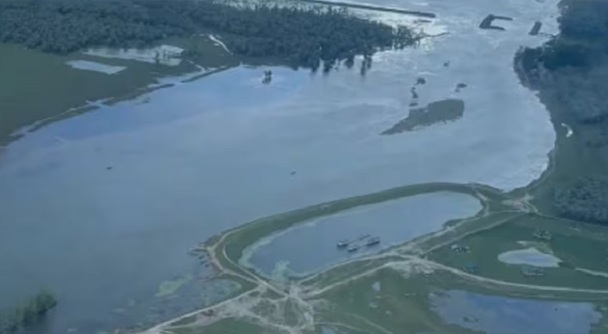
Also known as the Wular Barrage, the Tulbul Navigation Project is located at the outlet of Wular Lake in Jammu & Kashmir.
Key Features:
Additional Benefits:
Wular Lake plays a critical ecological role in flood control, biodiversity conservation, and groundwater recharge.
Navigation Revival
The barrage would restore inland water transport during winter when water levels drop significantly.
Hydropower Optimisation
Regulated water release improves efficiency and consistency in downstream hydropower plants.
Water Management in Jammu Region
Diversion of Ravi waters could enhance irrigation, drinking water supply, and regional water security.
Strategic Leverage
In the context of India-Pakistan tensions, water infrastructure is viewed as a tool of strategic assertion within treaty limits.
While infrastructure revival promises economic gains, concerns remain:
As a Ramsar site, ecological safeguards would be essential before project revival.
Water-sharing arrangements remain a sensitive issue in India-Pakistan relations.
The Tulbul project lies at the intersection of hydro-diplomacy, regional development, and ecological governance.
FAQs1. What is the Tulbul Navigation Barrage Project ? It is a proposed navigation and water regulation structure at the outlet of Wular Lake designed to maintain water flow in the Jhelum River during winter. 2. Why was the project stalled earlier ? Pakistan objected, arguing that it violated storage restrictions under the Indus Waters Treaty. 3. How does the project benefit hydropower generation ? By regulating water flow, it stabilises downstream hydroelectric plants such as the Uri I and II projects. 4. What is the importance of Wular Lake ? It is India’s largest freshwater lake, a Ramsar-designated wetland, and a key ecological buffer in Kashmir. 5. What are the major concerns regarding revival ? Environmental risks, treaty-related diplomatic tensions, and ecological impacts on the Ramsar-listed wetland. |
| Prelims: (Governance + CA) Mains: (GS 2 – Health & Governance; GS 3 – Science & Technology, Digital Infrastructure) |
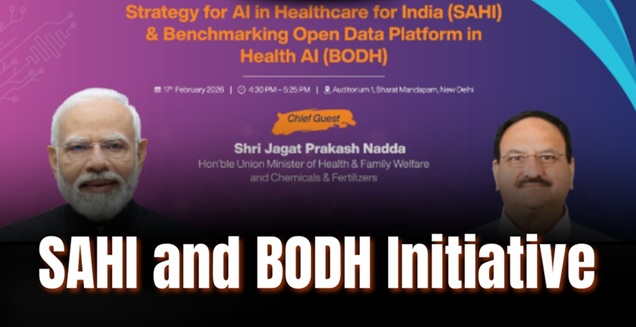
The Union Minister of Health and Family Welfare is set to launch two major national initiatives — SAHI and BODH — at the India AI Summit held at Bharat Mandapam. These initiatives aim to institutionalise ethical governance, transparency, and accountability in the deployment of Artificial Intelligence (AI) across India’s healthcare ecosystem.
India’s healthcare sector is undergoing rapid digitisation under flagship programmes such as the Ayushman Bharat Digital Mission.
The increasing use of AI in diagnostics, imaging, drug discovery, disease surveillance, and hospital management has raised critical concerns regarding:
To address these challenges, the government has introduced structured frameworks to guide responsible AI integration in public health systems.
SAHI is a national guidance framework aimed at ensuring the safe, ethical, and evidence-based adoption of AI technologies in healthcare.
Key Objectives:
Core Components:
SAHI acts as a policy roadmap rather than a regulatory statute, providing strategic direction for national and state-level implementation.
BODH is a privacy-preserving benchmarking platform developed by:
Core Purpose:
To enable rigorous evaluation of AI models using diverse, real-world health data — without sharing underlying datasets.
Key Features:
BODH is recognised as a digital public good under the Ayushman Bharat Digital Mission.
Together, SAHI and BODH aim to create:
The framework ensures that AI deployment in healthcare does not compromise patient confidentiality or clinical integrity.
The initiatives align with India’s broader digital governance vision:
They also reinforce India’s ambition to become a global hub for scalable, low-cost AI solutions tailored for developing economies.
SAHI provides the strategic vision, while BODH ensures operational accountability.
FAQs1. What is SAHI ? SAHI is a national strategy framework guiding the ethical, safe, and evidence-based adoption of AI technologies in India’s healthcare system. 2. What is the purpose of BODH ? BODH is a privacy-preserving benchmarking platform that evaluates AI models using real-world health data without sharing sensitive datasets. 3. How are SAHI and BODH connected ? SAHI provides governance direction, while BODH operationalises model validation and quality assurance. 4. Under which mission is BODH recognised as a digital public good ? It functions under the Ayushman Bharat Digital Mission framework. 5. Why are these initiatives important for India ? They ensure responsible AI deployment in healthcare, enhance patient trust, and position India as a global leader in ethical digital health innovation. |
| Prelims: (Polity & Governance + CA) Mains: (GS 2 – Health & Governance; GS 3 – Food Processing, Public Health & Nutrition) |
The Supreme Court of India has asked the Food Safety and Standards Authority of India to consider introducing mandatory Front-of-Package Warning Labels (FOPL) on packaged food products high in sugar, salt, and saturated fats. The direction comes in the backdrop of increasing concerns over rising lifestyle diseases and the need for stronger preventive public health measures.
India is witnessing a rapid increase in non-communicable diseases (NCDs), including:
Excessive consumption of ultra-processed foods high in sugar, sodium, and unhealthy fats is a major contributing factor.
Currently, nutritional details are printed on the back of food packages in small fonts, limiting effective consumer awareness. Public health experts argue that simplified and visible warnings on the front of packages can significantly influence consumer behaviour and reduce unhealthy consumption patterns.
The Food Safety and Standards Authority of India was established under the Food Safety and Standards Act, 2006.
Nodal Ministry: Ministry of Health and Family Welfare.
To regulate the manufacture, storage, distribution, sale, and import of food to ensure safe and wholesome food for human consumption.
Front-of-Pack Labelling refers to simplified nutrition warnings prominently displayed on the front of packaged food items.
To provide quick and clear information regarding high levels of:
The goal is to ensure consumers can understand nutritional risks instantly without interpreting complex data tables.
Several countries have implemented front-of-pack labelling systems:
Studies indicate that such labelling improves consumer awareness and encourages product reformulation by manufacturers.
The Supreme Court’s direction strengthens the link between:
If implemented, FSSAI may need to amend its packaging and labelling regulations under the Food Safety and Standards Act, 2006.
The move aligns with India’s preventive healthcare approach and broader nutrition security objectives.
Industry stakeholders have raised concerns such as:
There is also debate regarding the design, thresholds, and scientific benchmarks for warning labels.
Mandatory front-of-pack labelling could represent a major shift towards nutrition-focused regulatory policy in India.
FAQsWhat is FSSAI ? FSSAI is India’s apex food regulatory authority responsible for setting food standards and ensuring safe and wholesome food under the Food Safety and Standards Act, 2006. What is Front-of-Pack Labelling (FOPL) ? It is a system of prominently displayed warning labels on packaged food products indicating high levels of sugar, salt, or saturated fat. Why has the Supreme Court asked FSSAI to consider FOPL ? The Court highlighted the need to address rising lifestyle diseases and improve consumer awareness through clearer nutritional information. How can FOPL improve public health ? It enables informed consumer choices and may reduce the consumption of unhealthy processed foods. Will FOPL affect food businesses ? Yes, businesses may need to modify packaging and potentially reformulate products to meet regulatory standards. |
| Prelims: (Defence + CA) Mains: (GS 2 – International Relations; GS 3 – Security & Defence) |
The sail training ship INS Tarangini is among several Indian and foreign naval vessels that arrived in Visakhapatnam for the International Fleet Review and the Exercise MILAN, beginning February 18. The participation of INS Tarangini highlights India’s maritime outreach, naval diplomacy, and commitment to professional training rooted in naval traditions.

INS Tarangini was inducted to provide foundational seamanship training to officer cadets embarking on a naval career.
Its primary objectives include:
Sailing ships require coordinated teamwork, discipline, and mental toughness—qualities essential for naval officers.
The ship provides hands-on training in:
Unlike modern vessels dependent on automation, sail training requires physical effort and close coordination, thereby fostering strong interpersonal bonds and leadership capabilities.
This experiential learning builds character and confidence among cadets before they move on to technologically advanced combat platforms.
INS Tarangini frequently participates in international maritime events and goodwill visits, serving as a floating ambassador of India.
Its participation in Exercise MILAN, a multilateral naval exercise hosted by India, reinforces:
The International Fleet Review in Visakhapatnam also showcases India’s naval strength, maritime heritage, and growing global engagement.
INS Tarangini symbolises the blend of tradition and modernity in India’s naval evolution.
FAQs1. What is INS Tarangini ? INS Tarangini is the Indian Navy’s first Sail Training Ship used primarily for training officer cadets in traditional seamanship skills. 2. Why is sail training important in modern navies ? Sail training builds leadership, teamwork, endurance, and resilience—qualities essential for naval officers despite technological advancements. 3. What was INS Tarangini’s historic achievement ? It became the first Indian naval ship to circumnavigate the globe during 2003–2004. 4. What is Exercise MILAN ? Exercise MILAN is a multilateral naval exercise hosted by India to enhance maritime cooperation and strengthen naval diplomacy in the Indo-Pacific region. 5. How does INS Tarangini contribute to India’s foreign policy ? By participating in international fleet reviews and goodwill visits, it acts as a maritime ambassador, promoting defence diplomacy and regional cooperation. |
| Prelims: (Science & Technology + Defence + CA) Mains: (GS 2 – International Relations; GS 3 – Security & Defence Technology) |
Iran recently released dramatic footage of its Khorramshahr-4 missile, one of Tehran’s most powerful medium-range ballistic missiles, amid rising tensions with the United States. The display is being viewed as a strategic signalling move, highlighting Iran’s evolving missile capabilities and deterrence posture in West Asia.
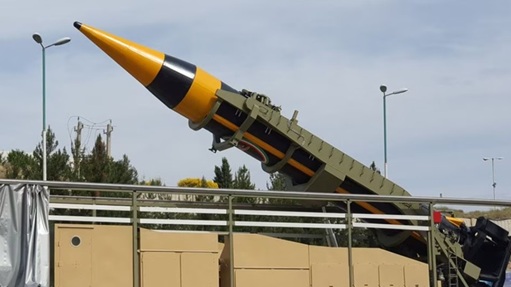
Iran’s missile programme has expanded significantly over the past two decades, primarily as a response to:
Ballistic missiles form a central pillar of Iran’s defence doctrine, serving as a key deterrent tool.
The unveiling of the Khorramshahr-4 comes amid renewed geopolitical friction and reflects Iran’s emphasis on strategic autonomy in defence production.
The 2,000-km range places several regional targets within reach, including parts of the Middle East.
Liquid-fuelled missiles typically require preparation time before launch but can carry heavier payloads compared to some solid-fuel variants.
Iran’s missile development has progressed through multiple generations, including:
Despite sanctions and restrictions under international frameworks, Iran has continued indigenous development of missile systems.
The Khorramshahr-4 represents an upgrade in range, payload, and operational survivability.
The missile’s range allows it to potentially target strategic locations across West Asia.
Implications include:
Missile development remains a contentious issue in negotiations surrounding Iran’s nuclear programme and regional security dynamics.
The Khorramshahr-4 reflects Iran’s continued prioritisation of missile capabilities as a cornerstone of its national security strategy.
FAQsWhat is the Khorramshahr-4 missile ? It is an Iranian medium-range ballistic missile capable of travelling approximately 2,000 kilometres. Who developed the Khorramshahr-4 ? It was developed by Iran’s Aerospace Industries Organization (AIO), a state-owned defence entity. Why is the missile significant ? It strengthens Iran’s deterrence capabilities and affects regional security dynamics. Is the Khorramshahr-4 nuclear-capable ? While primarily described as carrying conventional payloads, ballistic missile capabilities raise international concerns due to potential dual-use applications. Why has Iran showcased the missile now ? The release of footage is widely interpreted as strategic signalling amid rising geopolitical tensions. |

Our support team will be happy to assist you!

 Contact Us
  New Batch : 9555124124/ 7428085757
  Tech Support : 9555124124/ 7428085757