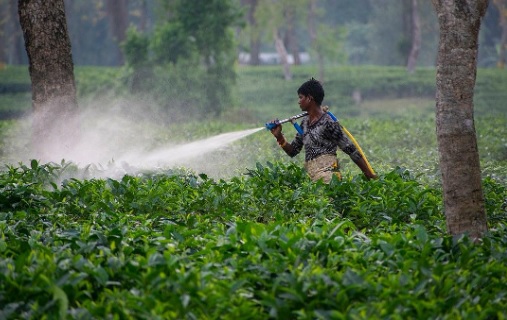
The Central Government has released the revised draft of the Pesticide Management Bill, 2025, seeking suggestions from citizens and stakeholders, with the aim of reforming India's pesticide regulatory system.
Registration Committee
Key Functions of the Committee
Central Insecticides Board
Role of State Governments
| Prelims: (Economics + CA) Mains: (GS 2 – Governance & Federalism; GS 3 – Environment, Infrastructure & Internal Security) |
The National Green Tribunal (NGT) has approved the ₹81,000-crore Great Nicobar infrastructure project, citing its strategic importance and noting that environmental safeguards are in place.
The decision is significant as it may set a precedent for future strategically sensitive infrastructure projects in ecologically fragile regions.
The 166 sq km mega project seeks to transform Great Nicobar Island into a major strategic, maritime, and economic hub. However, the diversion of nearly 130 sq km of forest land and the felling of approximately one million trees have raised serious environmental and social concerns.
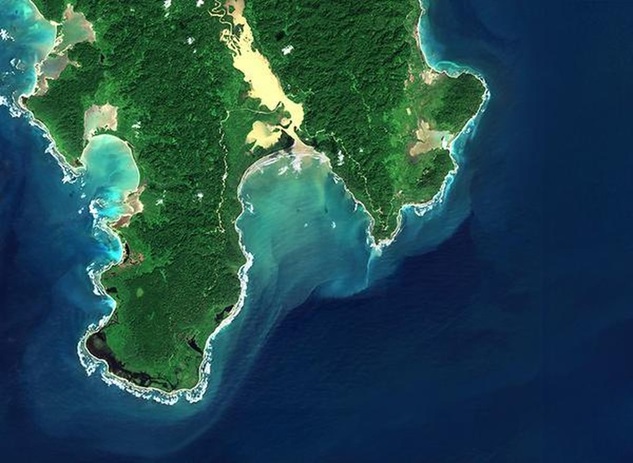
Great Nicobar Island spans approximately 910 sq km and houses India’s southernmost point, Indira Point.
The project aims to convert the island into a strategic gateway in the Indo-Pacific by developing:
The total project area covers 166 sq km, making it one of India’s largest island development initiatives.
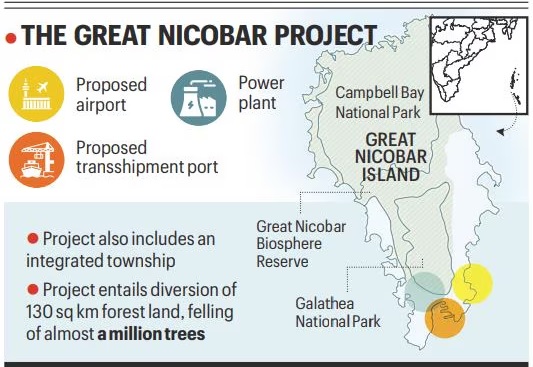
Integrated Township
Transshipment Port at Galathea Bay
Land reclamation of 2.98 sq km is planned for port infrastructure.
Civil and Military Airport
Power Plant
Estimated construction material requirement: 33.35 million cubic metres.
The project represents a coordinated civil-military infrastructure strategy.
Geopolitical and Maritime Advantage
Great Nicobar lies close to the Malacca Strait, one of the world’s most critical maritime chokepoints. Around 94,000 vessels pass through the Strait annually, carrying nearly 30% of global traded goods and a substantial share of maritime oil trade.
Its location provides India a strategic vantage point in Indo-Pacific geopolitics.
Transshipment Hub Ambition
India aims to reduce reliance on foreign ports for transshipment.
Currently, India has one operational transshipment facility at Vizhinjam Port.
The proposed Galathea Bay port aims to compete with:
Projected annual handling capacity: 14.2 million TEUs.
Strengthening Defence Infrastructure
The Andaman and Nicobar Command, India’s only tri-services command, has operated in Port Blair since 2001.
The project includes integrated defence facilities, enhanced airfields, surveillance systems, jetties, and logistics bases.
Large-Scale Forest Diversion
Biosphere and Wildlife Concerns
The island falls within the Great Nicobar Biosphere Reserve.
Impact on Leatherback Turtles
Galathea Bay is a key nesting site for Leatherback turtles. Mitigation includes proposed alternative sanctuaries on nearby islands.
Shompen Tribe
Nicobarese Community
Demographic Transformation
The Great Nicobar project represents a critical case study in reconciling strategic imperatives with ecological prudence.
FAQs1.What is the Great Nicobar Project? It is a ₹81,000-crore mega infrastructure initiative aimed at developing Great Nicobar Island into a strategic maritime, defence, and economic hub. 2.Why is the project strategically important? Its proximity to the Malacca Strait offers India a strategic advantage in maritime trade and Indo-Pacific geopolitics. 3.What are the main environmental concerns? Large-scale forest diversion, impact on biodiversity hotspots, and threats to Leatherback turtle nesting sites. 4.Which indigenous communities may be affected? The Shompen tribe and the Nicobarese community face potential ecological and demographic disruptions. 5.Who approved the project? The National Green Tribunal approved it after reviewing environmental safeguards. |
| Prelims: (Polity & Governance + CA) Mains: (GS 2 – Constitution, Judiciary, Social Justice & Governance) |
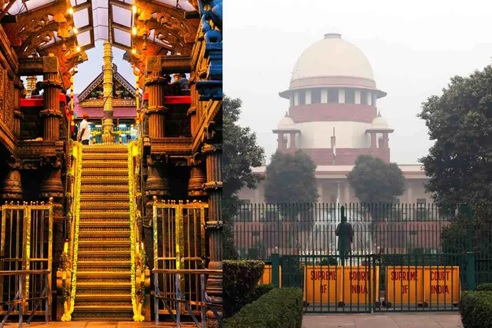
The Supreme Court of India has scheduled hearings from April 7 before a nine-judge Constitution Bench to consider review petitions against its 2018 verdict permitting women of all ages to enter the Sabarimala Temple.
The 2018 ruling had triggered widespread protests during the annual 41-day pilgrimage season and emerged as a politically sensitive issue in Kerala. While the Kerala government has maintained its position supporting women’s entry (as per its 2017 affidavit), the renewed hearings have gained significance amid the backdrop of upcoming Assembly elections.
Location
The temple is located within the Periyar Tiger Reserve in the Western Ghats of Kerala and is one of South India’s most prominent pilgrimage centres.
Deity
It is dedicated to Lord Ayyappa, believed in Hindu tradition to be the son of Lord Shiva and Mohini (the female avatar of Lord Vishnu).
Unique Religious Practice
Devotees undertake a strict 41-day penance (vratham) before the pilgrimage. The observance includes:
Belief in Celibacy
Lord Ayyappa is worshipped as a Naishtika Brahmachari (eternal celibate deity).
Customary Entry Restriction
Traditionally, women between the ages of 10 and 50 (considered menstruating age) were restricted from entering the temple, based on the belief that their presence would violate the deity’s celibate character.
The first major legal challenge arose in 1990, when a petition alleged that women of menstruating age were entering the temple contrary to custom.
In 1991, the Kerala High Court upheld the ban, ruling that:
This judgment remained in force for nearly three decades.
In 2006, the Indian Young Lawyers Association filed a petition under Article 32 of the Constitution challenging Rule 3(b) of the Kerala Hindu Places of Public Worship Rules, 1965.
The petition argued that the restriction violated:
In September 2018, a five-judge Constitution Bench, by a 4:1 majority, struck down Rule 3(b) and allowed entry of women of all ages.
Key Observations
Justice Indu Malhotra dissented, holding that courts should not ordinarily interfere in essential religious practices unless they violate public order, morality, or health.
The verdict triggered widespread protests across Kerala and led to multiple review petitions.
Ahead of the 2019 pilgrimage season, the Supreme Court observed that the Sabarimala ruling may have broader implications for other religious practices across faiths.
The Court referred larger constitutional questions to a bench of at least seven judges but did not stay the 2018 judgment.
In 2020, a nine-judge bench led by then Chief Justice S.A. Bobde held that the review petitions were maintainable.
The bench framed seven key constitutional questions, including:
The matter is now scheduled for substantive hearing.
The case involves a delicate balance between:
The review proceedings may redefine how courts interpret “essential religious practices” and the limits of constitutional morality.
Significance
The outcome could have far-reaching implications for the balance between constitutional values and religious autonomy in India.
FAQs1.What was the 2018 Sabarimala judgment? The Supreme Court allowed women of all ages to enter the Sabarimala Temple, striking down the age-based restriction as unconstitutional. 2.Why is the case being reviewed? Multiple review petitions were filed challenging the 2018 verdict, raising broader constitutional questions about religious freedom and equality. 3.What constitutional provisions are involved? Articles 14, 15, 25, and 26 are central to the debate. 4.What is the essential religious practices doctrine? It is a judicial principle used to determine whether a practice is fundamental to a religion and therefore protected under Article 25 or 26. 5.What could be the impact of the upcoming hearing? The decision may redefine the balance between gender equality and religious autonomy and set important precedents for constitutional law. |
| Prelims: (Polity & Governance + CA) Mains: (GS 2 – Constitution, Separation of Powers, Transparency & Accountability, Media Freedom) |
Three PILs have been filed in the Supreme Court challenging the constitutional validity of the Digital Personal Data Protection Act, 2023 (DPDP Act).
The petitioners argue that while the law seeks to protect digital privacy, certain provisions dilute transparency under the Right to Information Act, 2005, restrict investigative journalism, and expand state surveillance powers.
The Supreme Court has admitted the pleas, issued notice to the Centre, and referred the matter to a five-judge Constitution Bench. However, it declined to stay the Act.

1. Privacy vs Transparency: RTI Amendment at the Core
Amendment to Section 8(1)(j) of RTI Act
Section 44(3) of the DPDP Act amends Section 8(1)(j) of the RTI Act.
Earlier Position:
Post-Amendment Position:
Petitioners’ Concerns
Critics argue that the amendment converts a qualified exemption into an absolute bar, potentially weakening participatory democracy.
2. Proportionality and the Puttaswamy Doctrine
The petitions rely heavily on the Supreme Court’s 2017 judgment in Justice K.S. Puttaswamy v. Union of India, which recognised privacy as a fundamental right under Article 21.
Proportionality Test Requirements:
Petitioners argue that:
3. Impact on Journalism: Data Law vs Press Freedom
Journalists as “Data Fiduciaries”
Under the DPDP framework, journalists collecting personal data during investigations may be classified as “data fiduciaries.”
This imposes obligations such as:
Practical Concerns
Chilling Effect
Petitioners argue this impacts Article 19(1)(a) (freedom of speech and expression).
4. Concerns Over State Power and Surveillance
Section 36: Government Access to Data
Section 36 authorises the Union government to demand information from any “data fiduciary.”
Petitioners claim:
Risks Identified
The challenge raises concerns about balancing national security and individual liberty.
5. Independence of the Data Protection Board
The DPDP Act establishes the Data Protection Board of India.
Key Concern:
Since the Board performs quasi-judicial functions (adjudication, penalties), critics argue that:
FAQs1. What is the core issue in the DPDP challenge? The removal of the public interest override in the RTI Act and expanded executive powers under the DPDP Act. 2. Which Supreme Court judgment is central to the petitions? The 2017 Puttaswamy judgment recognising privacy as a fundamental right. 3. Why are journalists concerned? They may be treated as data fiduciaries, facing consent obligations and heavy penalties. 4. What is controversial about Section 36? It allows the government to demand personal data without independent oversight or appeal. 5. Why is the Data Protection Board’s structure questioned? Because executive dominance in appointments may affect its independence and impartiality. |
| Prelims: (Economy + CA) Mains: (GS 2 – India & Neighbourhood Relations; GS 3 – Infrastructure, Water Resources & Energy) |
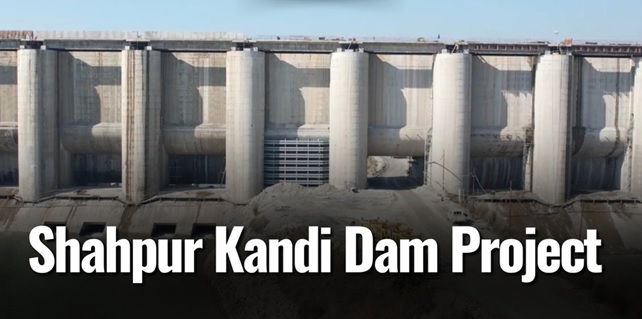
India plans to block the surplus flow of the Ravi River to Pakistan as the long-delayed Shahpur Kandi Dam Project on the Punjab–Jammu & Kashmir border approaches completion.
The development assumes significance in the context of India’s utilisation of its share of eastern rivers under the Indus Waters Treaty (IWT).
Background and Treaty Context
The Indus Waters Treaty (1960) allocates the waters of:
Despite having full rights over the eastern rivers, India has historically been unable to fully utilise its allocated share, resulting in some surplus water flowing into Pakistan.
The completion of the Shahpur Kandi Dam is expected to help India optimise the utilisation of Ravi waters for irrigation and power generation.
The Shahpur Kandi Dam is located in Pathankot district, Punjab, downstream of the Ranjit Sagar Dam.
Key Features
The project involves the construction of a dam and hydropower facilities to regulate and utilise surplus water.
The project experienced delays due to inter-state disputes between Punjab and Jammu & Kashmir over water sharing and power allocation.
Optimal Utilisation of Eastern Rivers
The dam enables India to fully utilise its share of Ravi waters under the Indus Waters Treaty, reducing unutilised outflow to Pakistan.
Irrigation Benefits
Power Generation
The water released from Ranjit Sagar Dam will be used for hydroelectric generation at Shahpur Kandi, enhancing renewable energy capacity.
Strategic Signalling
In the backdrop of fluctuating India–Pakistan relations, efficient utilisation of treaty-allocated waters strengthens India’s strategic position without violating treaty obligations.
The project underscores:
The eventual breakthrough in disputes allowed the project to resume construction after years of stagnation.
Significance
The Shahpur Kandi Dam represents a critical step in optimising eastern river resources while balancing development and treaty obligations.
FAQs1.Where is the Shahpur Kandi Dam located? It is located on the Ravi River in Pathankot district, Punjab, downstream of the Ranjit Sagar Dam. 2.Why is the project important under the Indus Waters Treaty? It helps India fully utilise its allocated share of waters from the eastern rivers. 3.Who is funding the project? Punjab contributes 80 percent of the cost, while the Central Government funds the remaining 20 percent. 4.What are the key benefits of the dam? It provides irrigation support and hydroelectric power generation. 5.Why was the project delayed? Delays occurred due to inter-state disputes between Punjab and Jammu & Kashmir regarding water sharing and power distribution. |
| Prelims: (Polity & Governance + CA) Mains: (GS 2 – Constitution, Judiciary, Governance & Social Justice) |
A Private Member’s Bill has been introduced in Parliament proposing constitutional amendments to promote diversity in judicial appointments and to establish regional benches of the Supreme Court of India.
The Bill has revived debate over judicial independence, representational equity, the collegium system, and structural reforms in the higher judiciary.

The Constitution of India provides the framework for appointing judges to the higher judiciary.
Supreme Court
High Courts
Seat of the Supreme Court
Initially, appointments were dominated by executive primacy. However, concerns regarding judicial independence led to a reinterpretation of constitutional provisions by the judiciary.
The collegium system was not created by constitutional amendment but through judicial interpretation.
First Judges Case (1981)
The Supreme Court upheld executive primacy in judicial appointments.
Second Judges Case (1993)
The Court reversed its earlier stance and established the collegium system, granting primacy to the judiciary.
Third Judges Case (1998)
Clarified the composition and functioning of the collegium.
Composition
Recommendations are sent to the Central Government, which may return them once for reconsideration. If reiterated, the government is constitutionally bound to appoint.
Criticisms of the Collegium
In 2014, Parliament enacted the 99th Constitutional Amendment to establish the National Judicial Appointments Commission Act, creating the National Judicial Appointments Commission (NJAC).
Composition of NJAC
However, in 2015, the Supreme Court struck down the NJAC as unconstitutional, holding that it violated the Basic Structure Doctrine by undermining judicial independence.
Thus, the collegium system continues to function.
The current debate focuses on inadequate representation of marginalised communities in higher judicial appointments.
Data Highlights (2018–2024)
The Private Member’s Bill proposes constitutional mandates for due representation of:
The proposal marks a shift from a purely merit-based model toward a socially representative judiciary.
The debate involves balancing two core constitutional principles:
Supporters argue that a diverse judiciary:
Opponents caution against excessive politicisation or quota-based appointments in constitutional courts.
Currently, the Supreme Court functions only from New Delhi.
As of January 2026, over 90,000 cases are pending before the Court.
The Bill proposes regional benches in:
These benches would handle all matters except constitutional cases, which would remain with Constitution Benches in Delhi.
Under Article 130, regional benches can be created without constitutional amendment, as the CJI may designate alternate seats with presidential approval.
The idea has been previously recommended by:
Rationale
Ensuring diversity in the judiciary requires systemic reform within the collegium process, including:
A long-term solution may involve revisiting a broad-based appointments commission that safeguards independence while ensuring accountability.
International examples such as the UK and South Africa demonstrate that participatory appointment systems can coexist with judicial autonomy.
Regarding regional benches, a phased implementation strategy may be adopted, beginning with one bench and expanding based on performance and administrative feasibility.
The issue represents a pivotal constitutional moment in redefining the character and accessibility of India’s judiciary.
FAQs1.What is the collegium system? It is a system evolved through Supreme Court judgments where senior judges recommend appointments and transfers in the higher judiciary. 2.Why was the NJAC struck down? The Supreme Court held that it violated the basic structure of the Constitution by compromising judicial independence. 3.Why is diversity in the judiciary being debated? There is limited representation of marginalised communities, women, and minorities in higher judicial appointments. 3.Can regional benches of the Supreme Court be established without constitutional amendment? Yes, Article 130 allows the Chief Justice of India to designate alternative seats with presidential approval. 4.What constitutional values are involved in this debate? The debate balances judicial independence with substantive equality and social justice. |

Our support team will be happy to assist you!


 Contact Us
  New Batch : 9555124124/ 7428085757
  Tech Support : 9555124124/ 7428085757