- UPSC Exam
- State PCS
- One Day Exam
- Current Affairs
- PT Quiz
- Downlaods
- About Coaching
- Blog
- Videos

|
Prelims : Governance + CA |
The issue of doping in sports has once again come into focus due to increasing cases of athletes testing positive for banned substances and the strengthening of anti-doping regulations.
This highlights the need for a comprehensive approach to tackle doping, combining regulation, education, and ethical accountability.

Doping refers to the use of prohibited substances or methods by athletes to artificially enhance their performance.
The practice is regulated globally by organizations like the World Anti-Doping Agency (WADA), which maintains a list of banned substances and methods.
However, they provide an unfair advantage over competitors.
This significantly enhances endurance but is highly risky and unethical.
These methods are used to evade detection rather than directly enhance performance.
This reflects systemic issues within sports ecosystems.
It raises fundamental questions about ethics in sports.
Prelims
Q. The term “doping” in sports refers to :
(a) Use of advanced training techniques
(b) Consumption of prohibited substances to enhance performance
(c) Adoption of new sports technologies
(d) Use of nutritional supplements
Mains
“Doping in sports is not only a regulatory issue but also an ethical and health concern.” Discuss.
FAQsQ1. What is doping ? Use of banned substances to enhance performance. Q2. Who regulates doping globally ? World Anti-Doping Agency (WADA). Q3. What is NADA ? India’s anti-doping body. Q4. Why is doping harmful ? It affects health and undermines fair competition. Q5. What is a major challenge ? Evolving doping methods and detection difficulties. |
|
Prelims : Environment + Geography + CA |
Marine Spatial Planning (MSP) in Odisha has emerged as a significant policy innovation as India transitions toward scientific, integrated, and sustainable management of its vast marine and coastal resources.
This development is crucial because it represents a paradigm shift from reactive coastal regulation to proactive spatial planning, integrating economic, environmental, and social objectives.
_in_Odisha.jpg)
Marine Spatial Planning is a comprehensive, ecosystem-based, and participatory planning process that aims to organise human activities in marine and coastal areas in a rational and sustainable manner.
Unlike traditional approaches, MSP recognises that oceans are multi-dimensional spaces where ecological processes and human activities overlap, requiring careful planning similar to urban land-use zoning.
This enhances the resilience of both ecosystems and coastal communities.
For example :
This zoning :
Prelims
Q. Marine Spatial Planning refers to:
(a) Regulation of inland water bodies
(b) Zoning and management of marine areas for sustainable use
(c) Fishing policy reforms
(d) Maritime boundary agreements
Mains
“Marine Spatial Planning is essential for achieving sustainable development of coastal and marine resources.” Discuss with reference to India.
FAQsQ1. What is Marine Spatial Planning ? It is a process of organising marine space for sustainable use. Q2. Why is Odisha important ? It is a pioneer in implementing MSP in India. Q3. What is its main objective ? To balance economic development with environmental conservation. Q4. How does it help coastal communities ? By reducing conflicts and improving livelihoods. Q5. Why is it important for India ? It supports the Blue Economy and climate resilience. |
| Prelims : International Relations + Economy + CA Mains : GS Paper 2 – Bilateral Relations; GS Paper 3 – Security; Economic Development |
India–South Korea relations have entered a new phase of expansion and diversification, reflecting their growing importance in the changing geopolitical and economic landscape of the Indo-Pacific.
This evolving partnership reflects a broader global trend where middle powers are forging deeper collaborations to navigate economic uncertainties and geopolitical challenges.
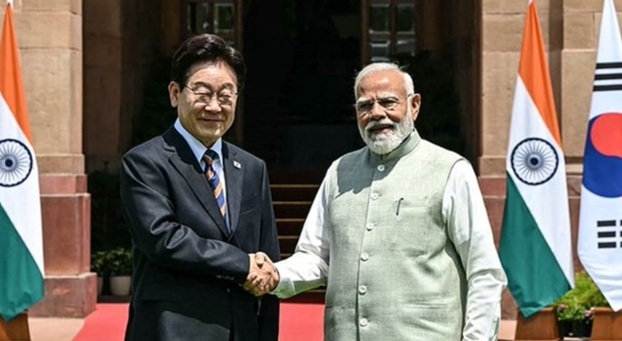
This evolution highlights a gradual transition from limited engagement to a multi-dimensional partnership.
These connections provide a strong soft power foundation, fostering mutual trust and deeper people-to-people engagement.
Overall, political cooperation has evolved into a stable and forward-looking partnership anchored in shared strategic interests.
However, the trade relationship is marked by a persistent imbalance, with India importing more than it exports.
This shift indicates a move toward high-value, technology-driven economic collaboration.
This creates opportunities for mutual learning and strategic coordination.
complement India’s capabilities in :
can drive next-generation industrial growth
This synergy represents a critical pillar of the future partnership.
has strengthened mutual understanding
These interactions build long-term societal connections that reinforce diplomatic relations.
This creates a mutually beneficial economic relationship.
Prelims
Q. With reference to India–South Korea relations, consider the following statements :
Which of the above statements is/are correct ?
(a) 1 and 2 only
(b) 2 and 3 only
(c) 1 and 3 only
(d) 1, 2 and 3
Mains
“India–South Korea relations have evolved from economic cooperation to a comprehensive strategic partnership.” Analyse the opportunities and challenges.
FAQsQ1. When were diplomatic relations established ? In 1973. Q2. What is CEPA ? A trade agreement covering goods, services, and investment. Q3. What is Special Strategic Partnership ? A multi-dimensional partnership including defence, technology, and economic cooperation. Q4. Why is the relationship important ? For Indo-Pacific stability, economic growth, and technological collaboration. Q5. What is the key challenge ? Trade imbalance and underutilisation of CEPA. |
|
Prelims : Science & Technology + CA |
The R-37M missile has attracted significant global attention in recent years due to its growing relevance in contemporary aerial warfare and discussions around its possible induction into various air forces.
Overall, the R-37M reflects a broader shift in military strategy where distance, speed, and information superiority are becoming more decisive than close-range combat manoeuvres.
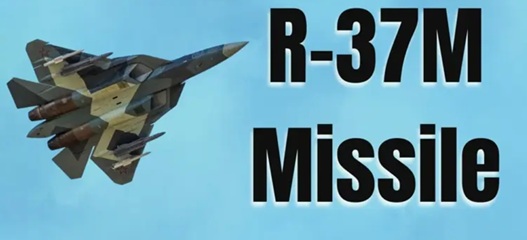
The R-37M is a long-range air-to-air missile developed by Russia, designed primarily to engage and destroy aerial targets at very long distances.
In simple terms, the R-37M enables an aircraft to detect, track, and destroy enemy targets long before entering into close combat, thereby fundamentally altering traditional air combat dynamics.
This extended range has several strategic implications :
Thus, range becomes a decisive advantage in shaping aerial battles even before they begin.
The high speed contributes to :
In essence, speed ensures that once launched, the missile becomes a high-probability kill weapon, especially against large targets.
The R-37M employs a sophisticated guidance mechanism to ensure accuracy over long distances :
This layered guidance system ensures :
It reflects the integration of sensor technology, data links, and automation in modern missile systems.
This allows it to :
Such destructive capability is particularly effective against strategic assets that are critical to air operations.
Unlike conventional air-to-air missiles designed for dogfighting, the R-37M is optimised for :
These targets are :
By neutralising such assets, the missile can cripple an enemy’s entire air combat ecosystem, even without engaging fighter jets directly.
This integration allows :
This marks a transition from manoeuvre-centric warfare to technology-driven warfare.
This enhances :
This is critical for :
This multiplies the effectiveness of existing air power.
Without these, effectiveness may be reduced.
to ensure comprehensive defence capability
Prelims
Q. The R-37M missile is classified as :
(a) Surface-to-air missile
(b) Ballistic missile
(c) Long-range air-to-air missile
(d) Cruise missile
Mains
“Technological advancements such as ultra-long-range air-to-air missiles are redefining the nature of aerial warfare.” Discuss with reference to the R-37M missile.
FAQsQ1. What type of missile is R-37M ? It is a long-range air-to-air missile. Q2. What makes it unique ? Its extremely long range and high speed. Q3. What is its main purpose ? To destroy high-value aerial targets at long distances. Q4. Why is it important strategically ? It enhances stand-off strike capability and deterrence. Q5. What is its limitation ? Less effective against highly manoeuvrable fighter jets. |
| Prelims : Economy + CA Mains : GS Paper 3 – Inclusive Growth; Infrastructure; Industrial Development |
The Vishwa Sutra Initiative has recently gained attention as part of India’s efforts to :
The initiative reflects a strategic push to integrate India’s rich cultural legacy in textiles with global market competitiveness, thereby positioning the country as a comprehensive textile hub.

The Vishwa Sutra Initiative is a government-led effort aimed at promoting India’s textile sector globally by combining :
The term “Vishwa Sutra” symbolically represents :
“Vishwa” – Global or world
“Sutra” – Thread or connection
Thus, the initiative envisions India as a global thread connecting tradition, innovation, and commerce in the textile industry.
This integrated approach enhances India’s competitiveness in global markets.
This reduces reliance on low-value exports and improves foreign exchange earnings.
This helps preserve cultural heritage while providing livelihood opportunities to artisans.
This ensures that the sector remains globally competitive and future-ready.
This reduces inefficiencies and enhances productivity.
Provides them with :
This aligns with global demand for green and ethical fashion.
Prelims
Q. The Vishwa Sutra Initiative is related to :
(a) Agriculture
(b) Textile sector
(c) Space technology
(d) Digital governance
Mains
“India’s textile sector holds immense potential for economic growth and employment generation.” Discuss in the context of initiatives like Vishwa Sutra.
FAQsQ1. What is the Vishwa Sutra Initiative ? It is an initiative to promote India’s textile sector globally. Q2. What is its main objective ? To position India as a global textile hub. Q3. Which sector does it target ? Textiles and apparel. Q4. Why is it important ? It boosts exports, employment, and cultural preservation. Q5. What is the major challenge ? Global competition and need for modernisation. |

Our support team will be happy to assist you!

 Contact Us
  New Batch : 9555124124/ 7428085757
  Tech Support : 9555124124/ 7428085757